Dr Shabana Safdar Khan
Pakistan has finally decided to take waste-to-energy seriously. The government has formed an eighteen-member task force to address regulatory gaps, attract investment, and propose a comprehensive national framework for converting municipal waste into usable energy. This is an encouraging development. It is also, if one is being candid, a development that should have arrived many years ago. The underlying logic has always been difficult to dispute. Very few countries in the world combine such acute waste-management failures with such persistent and crippling energy shortages. The fact that these two problems can be made to solve each other has been apparent for a long time. The question has never been whether this was a good idea. The question has always been why it took so long to act on it.
To understand the significance of this moment, it helps to step back and look at where the rest of the world has gone on this question. Waste-to-energy technologies are not experimental concepts being tested in research laboratories. They are established, refined, and proven components of modern energy and environmental policy across dozens of countries. European nations have spent decades building integrated systems that convert municipal solid waste into electricity, heat, and industrial fuel while simultaneously reducing pressure on overflowing landfills and improving conditions in urban environments. Asian economies including Japan, South Korea, Singapore, and China have followed similar paths, each developing nationally tailored approaches that reflect their specific waste composition, energy needs, and regulatory environments. The technology works. The evidence is overwhelming and it has been available for a long time. What Pakistan has lacked is not information. It has lacked the institutional will to move from discussion into implementation.
That delay has not been cost-free. Pakistani cities have continued to accumulate waste at rates that overwhelm existing disposal systems. Landfills have expanded without adequate management. Urban sanitation has deteriorated in city after city. Environmental pressures have intensified. Meanwhile, the country has remained heavily dependent on imported fossil fuels, running persistent energy deficits that suppress industrial output, raise the cost of doing business, and reduce the quality of life for ordinary citizens. These two failures, one environmental and one economic, have been developing side by side for decades while a straightforward solution remained largely unexamined at the policy level. That is not a minor oversight. It is a significant governance failure, and acknowledging it honestly is the first step toward not repeating it.
The economic case for waste-to-energy deserves particular attention because it reframes the entire conversation. Municipal solid waste is currently treated as a burden. Local governments spend money collecting it, transporting it, and attempting to manage its disposal, often inadequately. Landfill operations carry their own costs, both financial and environmental. The waste produces methane, contaminates groundwater, and creates health hazards in surrounding communities. From a purely accounting perspective, the current approach to waste management in Pakistan is a system that generates costs without producing value.
Waste-to-energy changes that equation. Properly designed and managed facilities can take the same material that currently generates costs and convert it into electricity that can be fed into the national grid, heat that can serve industrial purposes, and residual ash that can in some cases be used in construction. The private sector, which is always searching for viable long-term investment opportunities, has shown consistent interest in waste-to-energy models in markets where regulatory frameworks are clear and contract structures are reliable. Pakistan’s combination of high waste volumes and high energy demand makes it, in principle, an attractive market for exactly this kind of investment. The task force’s mandate to identify legal and regulatory obstacles is therefore not a bureaucratic formality. It is central to whether this initiative produces actual results or remains another promising announcement that fades without implementation.
The inclusion of provincial representatives, private-sector stakeholders, and environmental agencies in the task force structure also deserves recognition. Waste management in Pakistan is not a federal matter alone. Provinces and municipalities generate the waste, manage the disposal systems, and carry the immediate consequences of failure. Any national framework that does not genuinely incorporate provincial realities and build consensus across levels of government will struggle to achieve consistent implementation. The composition of this task force suggests at least an awareness of that challenge, which is more than could be said of some previous reform efforts.
And yet optimism must be held carefully here. Pakistan’s development history is full of task forces, committees, national frameworks, and reform proposals that generated considerable enthusiasm at the announcement stage and then struggled to produce measurable results. Waste-to-energy itself has appeared in Pakistani policy discussions before, only to lose momentum amid bureaucratic delays, regulatory uncertainty, shifting political priorities, and the general institutional inertia that has historically slowed the translation of good ideas into functioning programs. The question is not whether this latest initiative is a good idea. It clearly is. The question is whether the institutional conditions exist to carry it through to completion this time.
There is also an important conceptual point to establish clearly. Waste-to-energy is not a substitute for broader waste management reform. It is a complement to it. Countries that have successfully scaled these technologies have generally done so as part of integrated approaches that also include waste segregation at source, robust recycling systems, improved collection infrastructure, and public education campaigns. Waste-to-energy facilities work best when they receive waste that has already been processed through upstream systems that separate recyclables, organic materials, and hazardous substances. A national policy that treats waste-to-energy as a shortcut around these upstream reforms will produce suboptimal results and miss the larger opportunity.
Pakistan faces growing urbanisation, mounting environmental pressures, and energy challenges that will not resolve themselves. Solutions that address multiple problems simultaneously are precisely what the moment demands. Waste-to-energy belongs in that category. The technology is proven. The need is obvious. The economic logic is compelling. The environmental benefits are real. There is no remaining argument against pursuing this seriously. The only legitimate debate now is about the quality and speed of implementation. Better late than never is a reasonable sentiment when applied to this initiative. Better late and genuinely effective would be far more valuable still. Pakistan has spent enough time talking about this. The time to build has arrived.
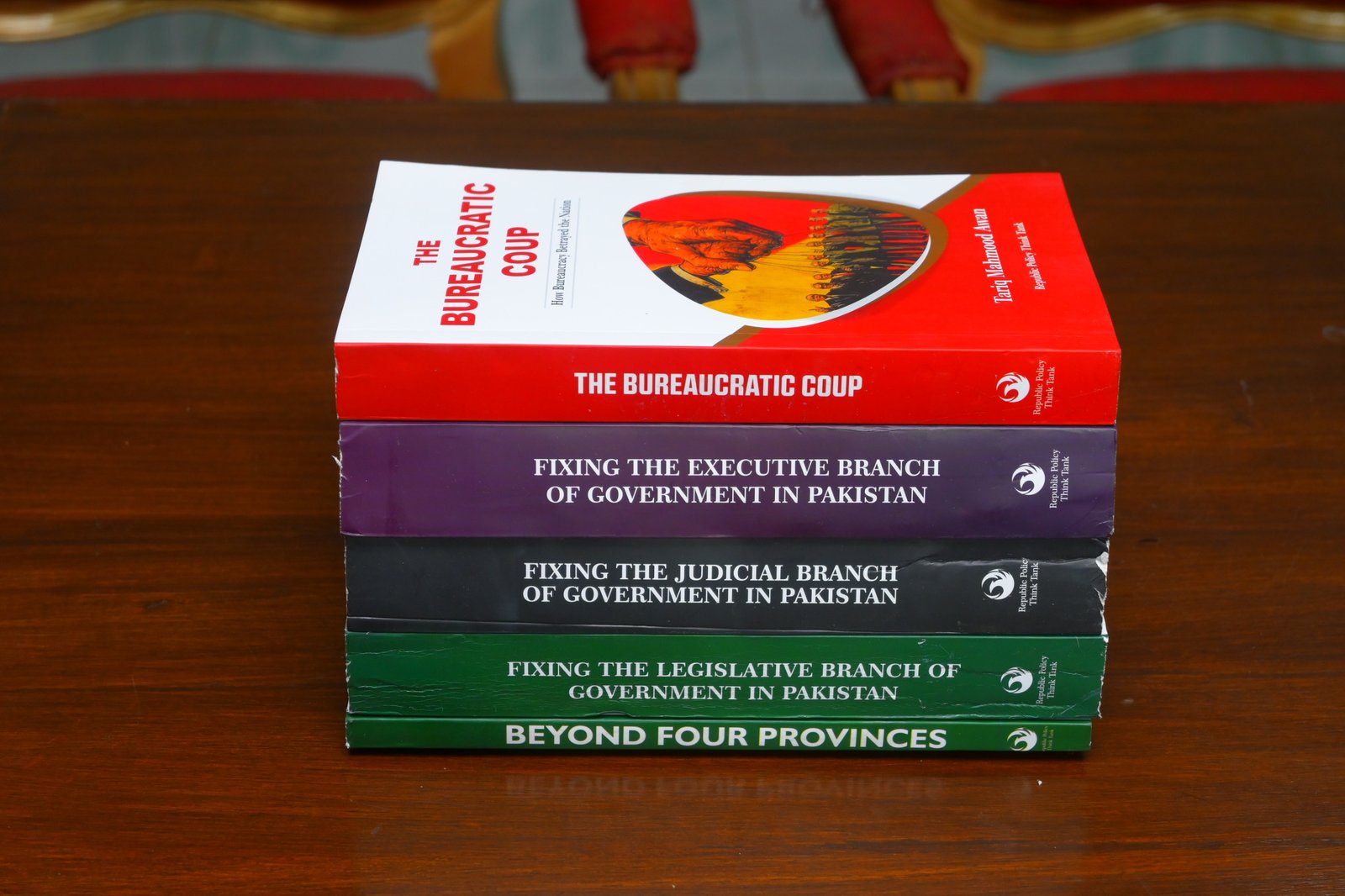
The best-selling books of Republic Policy Think Tank, including the landmark book The Bureaucratic Coup, are available at Vanguard Books, Liberty Books, Readings, Kitab Sarai, Sang-e-Meel, Saeed Book Bank Islamabad, National Book Foundation, and others across Pakistan. Contact for home delivery: 0300 9552542.