Dr Bilawal Kamran
India’s unilateral decision to place the Indus Waters Treaty in abeyance represents a dangerous departure from international law and from decades of established treaty obligations. Yet even as New Delhi attempts this reckless maneuver, Pakistan’s latest Corps Commanders’ Conference has reaffirmed the nation’s unwavering resolve to secure its rightful share of water. This is not merely a diplomatic dispute. It is a confrontation over the survival mechanisms of an entire nation.
For more than six decades, the Indus Waters Treaty has endured as one of the rare and remarkable examples of sustained cooperation between Pakistan and India. Through wars, military stand-offs, and repeated political crises, the treaty held firm when almost every other channel of bilateral engagement collapsed. It survived 1965, it survived 1971, it survived Kargil, and it survived countless diplomatic freezes. That the Modi government now seeks to weaponize water as an instrument of political pressure marks a troubling departure from this long history of restraint. Such a move threatens not only the bilateral relationship between the two nuclear-armed neighbors but the broader peace and stability of the entire region.
Water security cannot be separated from national security. This is not an abstract principle but a lived reality for Pakistan, where agriculture accounts for a substantial share of the national economy and sustains the livelihoods of millions of families. The rivers governed by the Indus Waters Treaty are not simply lines on a map or clauses in a legal document. They are the lifeblood of Pakistan’s farmlands, its food supply chains, and its rural economy. Any attempt to interfere with the country’s water rights is, in effect, an attempt to strike at the foundations of its economic stability, its food security, and the social well-being of its people. Pakistan cannot and will not remain a passive observer while measures are taken that jeopardize the very lifeline of its population.
It is essential to understand what the Indus Waters Treaty actually is. It is not a loose political understanding that either side can suspend whenever convenient. It is a legally binding international agreement, carefully brokered by the World Bank in 1960, and it has long been held up as a model for how rival nations sharing transboundary water resources can cooperate rather than collide. Nowhere within its framework does it grant either party the unilateral right to place the treaty in abeyance on account of political disagreements or security disputes. India’s decision to do so raises fundamental questions about the sincerity of its professed commitment to the rules-based international order, an order it frequently invokes when convenient to its own interests but appears willing to discard when inconvenient.
Equally troubling is New Delhi’s attempt to link the Pahalgam incident to its suspension of the treaty. While Indian officials continue to level accusations against Pakistan, such claims cannot and must not serve as justification for abandoning binding international commitments. Pakistan has consistently and firmly rejected any involvement in acts of terrorism, and it has repeatedly called for credible, transparent, and impartial investigations into incidents that threaten the peace of the region. Treaty obligations, particularly ones as consequential as those governing shared river systems, cannot be held hostage to unproven political accusations. Given these circumstances, Pakistan’s institutions are fully justified in taking all necessary measures to protect the country’s legitimate national interests, chief among them its water security.
The warnings issued by Pakistan’s military leadership regarding hybrid warfare and disinformation campaigns also merit serious and sustained attention. Modern conflict no longer confines itself to conventional battlefields. It now extends into information warfare, economic coercion, and sustained diplomatic pressure campaigns designed to isolate and weaken an adversary without a single shot being fired. Recognizing this reality is essential for any nation seeking to safeguard its sovereignty in the twenty-first century. And yet, even while acknowledging these threats, Pakistan has continued to demonstrate a clear preference for regional stability over confrontation. Its consistent commitment to dialogue, to peaceful resolution of conflicts, and to adherence to international law stands in sharp and favorable contrast to India’s unilateral actions, which undermine agreements that have stood the test of time. Pakistan’s constructive diplomatic engagement on broader regional matters further underscores its genuine commitment to peace grounded in mutual respect and sovereign equality between nations.
The international community cannot afford to remain a silent bystander to this unfolding crisis. If legally binding treaties can simply be set aside by one party whenever it suits their political calculations, and if no consequences follow such action, then confidence in international agreements everywhere will be seriously eroded. This is not a concern limited to South Asia. It is a precedent with global implications. The World Bank, as the original broker of the Indus Waters Treaty, along with other relevant international stakeholders, must actively work to safeguard the treaty’s dispute-resolution mechanisms and ensure that both India and Pakistan honor their respective obligations under it.
Ultimately, respect for treaties, sustained dialogue, and unwavering adherence to international law remain the only sustainable path toward lasting peace and stability in South Asia. Pakistan has made its position clear. It seeks not confrontation but justice, not escalation but the preservation of an agreement that has served both nations for generations. The world must now decide whether it will stand for the sanctity of international law or watch as it is quietly dismantled.
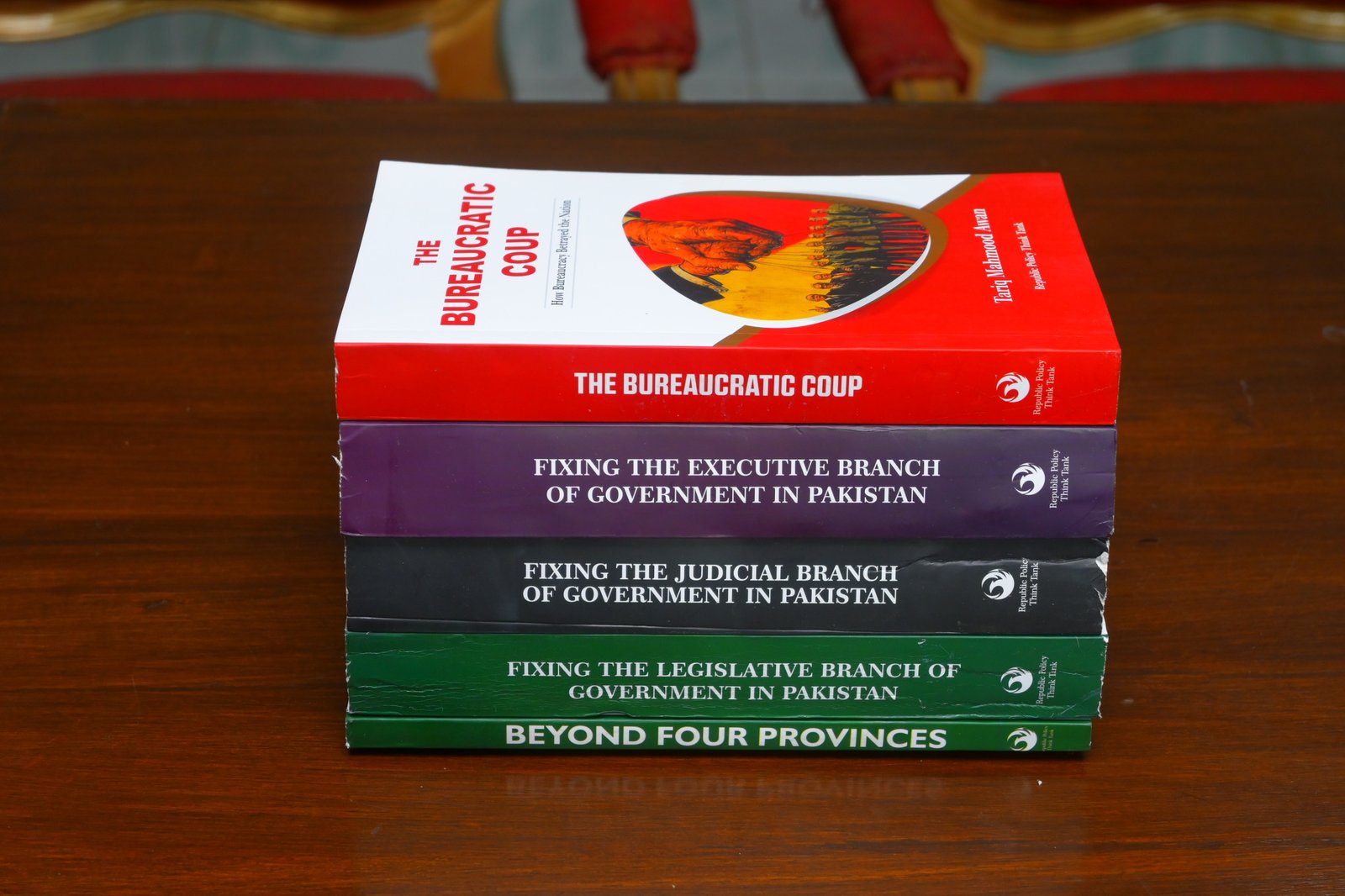
The best-selling books of Republic Policy Think Tank, including the landmark book The Bureaucratic Coup, are available at Vanguard Books, Liberty Books, Readings, Kitab Sarai, Sang-e-Meel, Saeed Book Bank Islamabad, National Book Foundation, and others across Pakistan. Contact for home delivery: 0300 9552542.