
Desk
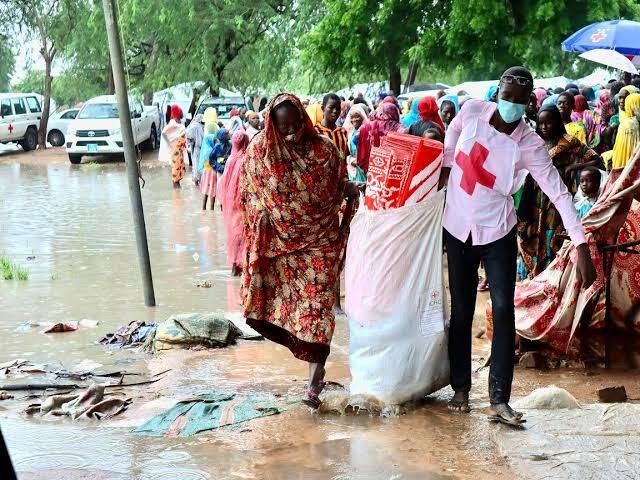
There is a particular kind of grief that comes from being caught off guard by something the sky was always going to do anyway. West Africa’s coasts know that grief now. Last month, rains that should have been an ordinary feature of the region’s wet season instead tore through Ghana, Togo, and Côte d’Ivoire, drowning dozens, displacing thousands, and forcing hundreds from their homes. Markets vanished. ads dissolved. Lagos and Monrovia watched their neighborhoods go under.
Scientists have now confirmed what residents already sensed in their bones: this was not nature behaving normally. Researchers from World Weather Attribution, led by Imperial College London’s Friederike Otto, found that global heating made the downpours roughly five times more likely and intensified the heaviest three-day stretches of rain by about 23 percent since records began. In Otto’s words, the climate is “changing faster than most nations can adapt.”
That sentence deserves to be sat with. It is not a forecast. It is a description of the present.
The Gulf of Guinea’s rainy season runs from May through July, and some heavy rain is expected every year. But scientists say that with global temperatures already 1.4°C above preindustrial levels, disasters of this scale should now be expected every two to four years, not once in a generation. The death tolls, at least 34 in Ghana, five in Togo, and 59 in Côte d’Ivoire since May, are not simply casualties of a storm. They are a preview.
The researchers reached their conclusions by comparing decades of historical weather data against climate model simulations, isolating the three most extreme days of rainfall to measure exactly how much heavier the sky had become. Their message is not despair, but urgency: adaptation is now unavoidable, and emissions reductions are the only way to keep the ground from continuing to shift beneath everyone’s feet.
What makes this disaster different from past floods is not just its scale but its predictability going forward. Scientists no longer speak of such events as freak occurrences; they speak of them as recurring features of a landscape reshaped by heat. That shift in language matters. It moves the conversation from disaster response to disaster planning, from grief to preparation.
For coastal cities like Lagos and Monrovia, this means drainage systems, housing policy, and early-warning networks can no longer be designed around the rainfall patterns of the past. The past is no longer a reliable guide. Infrastructure built for a cooler world is now being tested by a hotter one, and it is failing.
The World Weather Attribution team’s findings arrive as a quiet ultimatum to policymakers across the region: build for the climate that exists now, not the one remembered from a generation ago, because the next flood is already on its way.