Hafeez Ahmad Khan
A recent appeal, endorsed jointly by civil society members from Pakistan and India, has called upon the prime ministers of both states to take what its signatories describe as meaningful and sustained steps toward peace. The intention behind this appeal is beyond reproach. No rational mind, on either side of the border, can seriously argue against the need for peace in the subcontinent, against an end to the toxicity that has poisoned bilateral relations for nearly eight decades now. And yet, intentions alone do not make peace. Dialogue requires two willing partners, and while Pakistan has, on numerous occasions in recent years, attempted to restart the process of engagement, India has shown little appetite for talks. This asymmetry lies at the very heart of why the region remains trapped in hostility, and why dialogue, however difficult, remains the only door left open.
More than a hundred individuals have now signed this appeal, coordinated by a New Delhi-based think tank. Former diplomats, academics, politicians, and peace activists from both countries lend their names to it. Their call is specific: the resumption of confidence-building measures, and the restoration of full diplomatic relations between Islamabad and New Delhi. It is worth remembering how these ties unravelled in the first place. Pakistan downgraded relations after India’s 2019 revocation of the special constitutional status of occupied Kashmir, a unilateral move that shattered whatever fragile understanding had existed. Relations deteriorated further still after India blamed Pakistan for last year’s Pahalgam episode, an accusation levelled without any evidence being presented to the world. Then came the brief armed conflict last May, initiated by India, which pushed an already frozen relationship into deeper winter.
Herein lies the paradox that any honest assessment must confront. Sections of Indian civil society appear genuinely committed to peace, and their voices deserve to be heard, not dismissed. But the government presently in power in New Delhi seems determined to reject every avenue of dialogue that might lead toward normalisation with Pakistan. And when the state itself withholds engagement, peace becomes not merely difficult but structurally impossible, no matter how sincere the peaceniks on either side may be. Consider India’s conduct regarding the Indus Waters Treaty, a six-decade-old arrangement that survived three wars and endless friction, now unilaterally suspended by India in an act with no precedent in the treaty’s history. Pakistan’s Indus commissioner told a seminar in Islamabad recently that his repeated communications with Indian officials have simply gone unanswered. Silence, in matters of shared rivers and shared survival, is itself a form of aggression. At that same seminar, Pakistan’s deputy prime minister remarked that India was sowing the seeds of war, a statement grave enough on its own, but one made graver still by the fact that Indian ministers have themselves gone on record declaring their intention to halt all water flows to Pakistan. And only yesterday, Pakistan’s Foreign Office stated that India is actively aiding terrorist groups operating from Afghan soil against Pakistan. Taken together, these are not the words or actions of a state preparing the ground for peace. They are the postures of a state comfortable with confrontation, perhaps even reliant upon it.
Beyond the conduct of the Indian state itself lies a deeper and more troubling reality: significant sections of Indian society have themselves been radicalised, not merely against Pakistan as a state, but against Muslims as a people. Indian television, whose loudest anchors manufacture nightly outrage for ratings, bears no small share of responsibility for this transformation. And so a difficult question presents itself, one that cannot be avoided if any honest reckoning is to be made: is the Indian body politic, as it exists today, actually prepared for peace with Pakistan? There was a time when Pakistan’s own hard right stood firmly opposed to any normalisation with India, viewing every overture with suspicion and hostility. Today, the mirror has turned. Radical elements within the Indian system, nourished for years on Hindutva ideology, now occupy that same position of implacable opposition to friendship with Pakistan. Until this ideological current within India recedes, or is at least contained, the prospects for durable peace will remain dim, however many appeals civil society issues.
None of this, however, is reason to abandon dialogue. It is, in fact, precisely the reason dialogue becomes indispensable. Wars between nuclear-armed neighbours are not merely costly, they are unthinkable, and the absence of communication channels only raises the odds of miscalculation spiralling into catastrophe. Every crisis the subcontinent has weathered in the past three decades has been, in some measure, contained not by silence but by whatever thin threads of contact remained open between the two capitals. To sever those threads entirely is to gamble with consequences neither state can control once set in motion. Engagement at every level, diplomatic, military, parliamentary, and civil society, must therefore continue, not because trust currently exists, but because the absence of any channel is what allows misunderstanding to harden into war. The single most consequential confidence-building measure available to India remains the restoration of the Indus Waters Treaty, along with a credible assurance that it will honour its treaty commitments going forward. Water, after all, is not a bargaining chip; it is the difference between life and desolation for tens of millions of people downstream. Without decisive diplomatic and political movement from both governments, and especially from New Delhi, the calls for peace voiced by idealists on both sides of the border, however noble, will remain little more than words spoken into an empty room. Dialogue is not a reward to be granted for good behaviour; it is the very mechanism through which good behaviour becomes possible. Pakistan and India owe their people nothing less than the attempt.
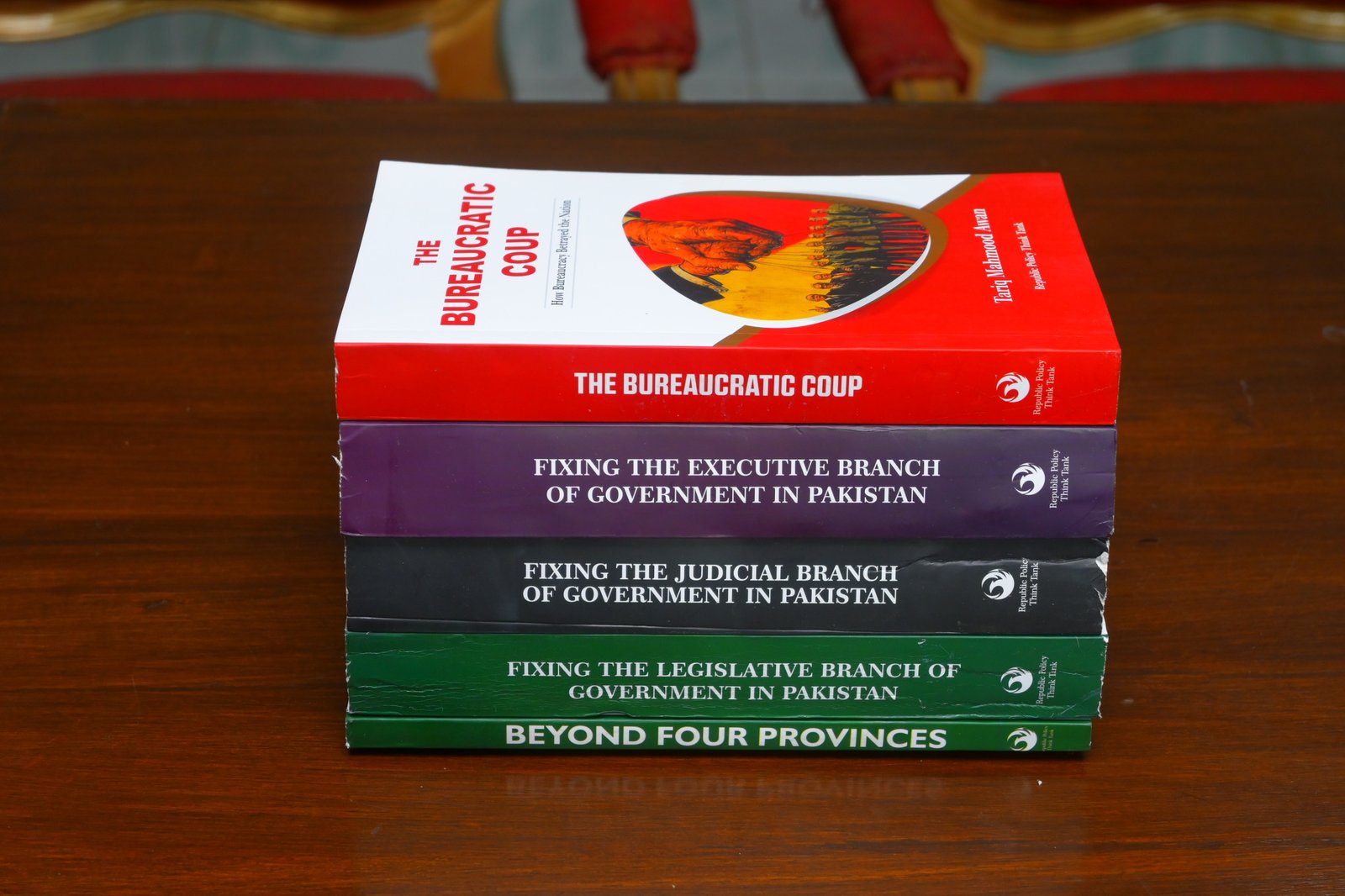
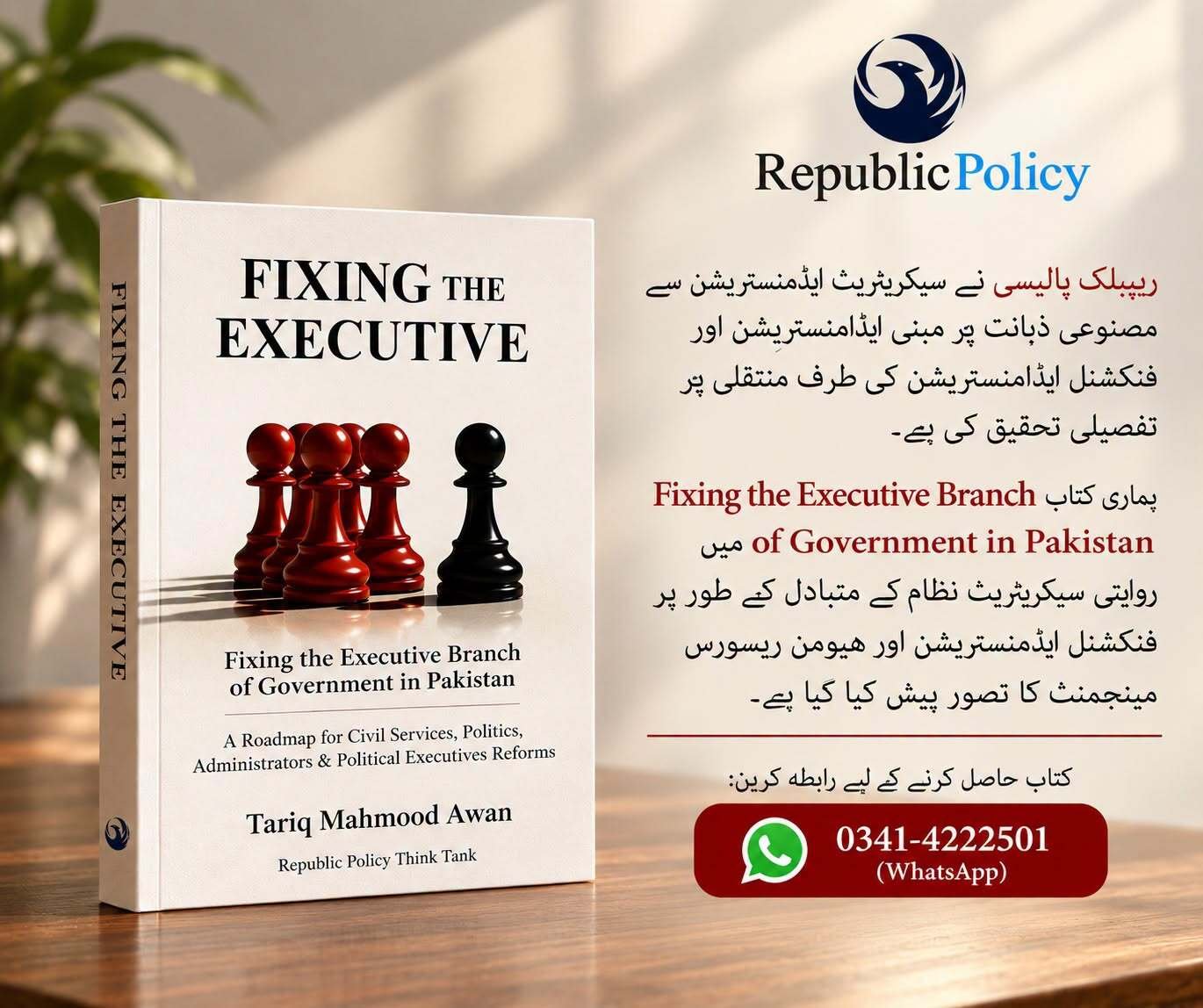
The best-selling books of Republic Policy Think Tank, including the landmark book The Bureaucratic Coup, are available at Vanguard Books, Liberty Books, Readings, Kitab Sarai, Sang-e-Meel, Saeed Book Bank Islamabad, National Book Foundation, and others across Pakistan. Contact for home delivery: 0300 9552542.