
Tariq Mahmood Awan
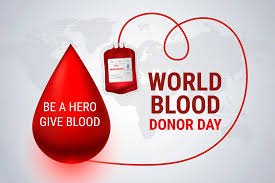
World Blood Donor Day carries a particular meaning depending on where you stand. In most parts of the world it is a moment of gratitude, a recognition of quiet human generosity, and a recommitment to the idea that one person’s voluntary act can save another person’s life. In Pakistan it arrives as something closer to an indictment. It does not celebrate a system working well. It exposes one that is failing the most vulnerable people in the country with a consistency that can no longer be called accidental.
For the average Pakistani, obtaining safe blood is already a gamble. For those who cannot survive without regular transfusions, for patients with thalassaemia, for those living with Hepatitis B or C, the gamble is permanent and the stakes are their lives. These are people who do not approach blood banks once in an emergency. They return again and again, month after month, year after year. Every transfusion is another exposure. Every visit to an unregulated facility is another roll of a dice loaded against them.
The voluntary blood donation system, which should be the foundation of any safe supply, has been weakening for years. Fewer campaigns, diminishing public awareness, and no sustained institutional effort to build a culture of donation have together produced a steady decline in willing donors. That decline does not simply mean less blood. It means the space vacated by voluntary donors is filled by professional ones, people who sell their blood for money, whose health histories are either unknown or deliberately ignored, and whose blood enters the supply chain with no reliable guarantee of safety.
This is where the criminal element enters. Corrupt medical practitioners and illegal blood banks have built a quiet commercial economy around blood scarcity. They source from paid donors, skip the screening steps that exist precisely to protect recipients, and supply what is essentially biological poison wrapped in clinical packaging. The results have been visible and devastating. Infected babies in Balochistan, Sindh, and Punjab have tested positive for HIV. These are not statistical abstractions. They are children who received what their families believed was medical care and instead received a life sentence.
Two structural failures make this possible. The first is the absence of any rigorous regulatory process for donors. A responsible system requires more than a willing arm. It requires a documented lifestyle history, a health appraisal, and a screening protocol that actually works. Pakistan has the paperwork for some of this. What it lacks is the enforcement culture that makes the paperwork mean something. The second failure is the continued use of contaminated hospital equipment and screening kits that cannot reliably detect pathogens. When the instrument meant to identify danger is itself unreliable, the entire safeguard collapses. Blood that should save a life becomes the mechanism of its destruction.
The World Health Organisation’s current campaign carries the message that each donation is more than a medical act, that it is an expression of human solidarity. That sentiment is correct and worth repeating. But in Pakistan, solidarity between donor and recipient is being poisoned by the indifference of those responsible for the system connecting them. Authorities have known about the nexus between illegal blood banks and unethical practitioners for years. The knowledge has not produced action proportionate to the danger. It has produced announcements, occasional raids, and then silence until the next scandal.
What is actually needed is structural and sustained. Monitoring mechanisms for blood banks must be expanded, properly staffed, and given real authority to seal facilities that operate outside safe practice. Manual screening, which is demonstrably inadequate, must be replaced with modern laboratory-based methods across every registered facility. Any blood bank still using manual processes after a reasonable transition period should be closed. Any doctor or practitioner found treating blood as a commercial commodity rather than a medical resource should be removed from practice. These are not radical propositions. They are the minimum requirements of a system that takes human life seriously.
The decline in voluntary donors also demands a direct response. Awareness campaigns cannot be seasonal events staged around a single annual date. They must be embedded in schools, universities, workplaces, and public spaces throughout the year. Citizens who are willing and medically able to donate need to be told clearly, repeatedly, and convincingly that their act is both simple and meaningful. The cultural association between blood donation and misfortune, which still exists in parts of Pakistani society, can only be dissolved through persistent and intelligent public communication.
For every patient whose health has been damaged by a negligent transfusion, free medical care is not charity. It is the state acknowledging its failure to protect someone it was obligated to protect. That obligation does not disappear because the failure occurred inside a clinic rather than on a street.
In a civilised society, contracting a fatal disease through a blood transfusion is unimaginable. It is unimaginable because the systems designed to prevent it are taken seriously, funded properly, and enforced without exception. Pakistan is not there yet. World Blood Donor Day is an opportunity to say so plainly and then to act accordingly, not next year, not after another inquiry, but now.
The best-selling books of Republic Policy Think Tank, including the landmark book The Bureaucratic Coup, are available at Vanguard Books, Liberty Books, Readings, Kitab Sarai, Sang-e-Meel, Saeed Book Stores, and others across Pakistan. Contact for home delivery: 0300 9552542.