
Bilawal Kamran
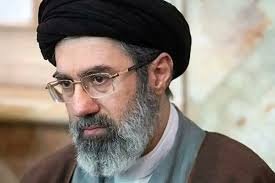
Iran has a new supreme leader. In the aftermath of the brutal assassination of Ayatollah Ali Khamenei, the Assembly of Experts moved with deliberate speed to fill the vacuum at the apex of the Islamic Republic, selecting Seyyed Mojtaba Khamenei, the late leader’s son, to assume the most powerful office in Iran. He becomes only the third person to hold that position since the Islamic Revolution of 1979, following Ruhollah Khomeini, the revolution’s founding father, and his own father, who shaped Iran’s ideological and political direction for more than three decades. History has placed an extraordinary burden on a man who has never held public office and whose rise to supreme authority would have seemed, not long ago, deeply improbable.
The Islamic Republic was born, after all, in explicit rejection of dynastic rule. The revolution that overthrew Mohammad Reza Shah Pahlavi carried within it a fierce hostility to the idea that power should pass through bloodlines. That the Assembly of Experts has now chosen a son to succeed his father is not lost on anyone watching closely. It represents either a pragmatic concession to the extraordinary circumstances Iran finds itself in, or a quiet admission that the ideological principles of the revolution are, under sufficient pressure, negotiable. Most likely it is both. What is clear is that every major centre of power within the Iranian establishment has declared allegiance to Mojtaba Khamenei. In a moment of existential peril, the calculus of unity has overridden the discomfort of dynastic succession.
The new supreme leader is not without credentials. He saw action in the Iran-Iraq war, that long and devastating conflict that forged an entire generation of Iranian military and political consciousness. He has studied at the Qom seminary, embedding himself within the clerical tradition that forms one of the two great pillars of Iranian state power. These two formative experiences give him something rare and strategically valuable: genuine ties to both the Islamic Revolutionary Guard Corps, the Sepah-i-Pasdaran, whose loyalty is indispensable to any Iranian leader, and to the clerical establishment in Qom, whose religious authority underpins the entire ideological framework of the republic. A man who commands respect in both institutions begins his leadership with a foundation that neither purely military nor purely clerical figures could claim alone.
Politically, Mojtaba Khamenei is understood to be close to the conservative camp. There is little reason to expect dramatic departures from his father’s strategic worldview. The broad architecture of Iranian foreign policy: resistance to American hegemony, support for allied non-state actors across the region, and an assertive posture toward Israel, is likely to continue. But continuity of ideology is one thing. Continuity of capacity is another. The Iran that Mojtaba Khamenei now leads is an Iran under sustained, relentless assault. The US-Israeli military campaign against his country has been ongoing for over a week with no ceasefire in sight. The war has spread across the wider region. Its economic shockwaves are being felt from Karachi to London. The new supreme leader does not inherit a stable republic requiring careful stewardship. He inherits a nation fighting for its survival.
That is the defining reality of his leadership. Every institutional tie, every political calculation, every theological argument must be subordinated to the immediate question: how does Iran survive this onslaught and emerge from it with its state and sovereignty intact? The military dimension is only part of the answer. Wars of this complexity are also won and lost in the court of international opinion, in the architecture of diplomatic alliances, and in the capacity of neutral powers to create the conditions for negotiated outcomes.
Here the picture is bleak, and not only for Iran. The international order’s response to this conflict has been a study in institutional paralysis. The United Nations Security Council convened as the aggression began and has achieved nothing of substance since. The secretary-general has called for a halt to hostilities and been ignored. The European Union has issued statements combining sanctimonious criticism of Iran with appeals for restraint directed at all parties, as though the party being bombed and the parties doing the bombing occupy some morally equivalent position. The Organisation of Islamic Cooperation has defended Iran’s right to self-defence while simultaneously criticising Tehran for strikes on Gulf Cooperation Council states, a contradiction that reflects the fractured loyalties of the Muslim world more honestly than any formal communiqué could.
What we are witnessing, stripped of diplomatic language, is two states conducting what amounts to an imperial war in open contempt of international law, while the community of nations watches. The United States and Israel have made clear, through their actions, that the norms governing the use of force, the prohibitions on targeting sovereign states, the entire framework built painstakingly after the Second World War, are instruments to be invoked selectively and discarded when inconvenient. This is not a new observation about American and Israeli foreign policy. But the scale and openness of the current transgression is of a different order, and the silence of institutions that were designed precisely to prevent such conduct is devastating.
Into this void, Mojtaba Khamenei has an opportunity as well as an obligation. The states that matter most now are not the ones already aligned with Washington or Tehran. They are the ones that have remained genuinely neutral: the large democracies of the Global South, the regional powers of Asia and Africa that have refused to bind themselves to either camp, the states that retain credibility with multiple parties precisely because they have not surrendered their independence to any of them. Iran’s new supreme leader must reach out to this world, not to recruit allies in a military sense, but to build the diplomatic coalition without which no lasting ceasefire can be forged.
The path toward peace runs through the uncommitted. Mojtaba Khamenei should know that history will not judge him by the ferocity of resistance alone. It will judge him by whether he had the vision to pursue every avenue that could end the killing, protect his people, and restore Iran’s place among nations. That work begins now.