
Arshad Mahmood Awan
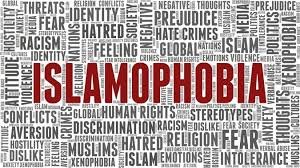
There are two billion Muslims in the world today. They live on every continent, speak every language, and belong to every economic condition that human society contains. What unites them beyond faith is an increasingly shared experience of hostility, suspicion, and dehumanisation in countries where they are minorities, and sometimes even where they are not. Islamophobia is not a theoretical construct debated in academic seminars. It is a lived reality, encountered in streets and schools, on social media timelines and in legislative chambers, in the language of generals and the speeches of elected officials. On the International Day to Combat Islamophobia, the world is called to look this reality in the face and respond with the seriousness it demands.
The sources of contemporary Islamophobia are multiple and interlocking. Geopolitical conflict feeds it. Racial prejudice sustains it. Religious bigotry gives it ideological cover. And the global rise of the far right has given it political respectability it does not deserve. In country after country across the non-Muslim world, right-wing movements have identified immigrants and Muslims as the source of every social ill, from unemployment to crime to cultural anxiety. This narrative is false. But repetition has made it familiar, and familiarity has made it dangerous. When a lie is told often enough and loudly enough, it stops sounding like a lie. It begins to sound like common sense. That is the mechanism by which bigotry becomes normalised, and that normalisation is precisely what the world is witnessing today.
The war in Iran and the ongoing genocide in Gaza have acted as accelerants. Every military escalation in the Middle East produces a corresponding spike in anti-Muslim sentiment in Western societies, as though the actions of states and militaries can be charged to the account of ordinary Muslim civilians living thousands of miles away. The American Muslim Civil Rights organisation CAIR has documented what it describes as a broad attack on Muslim life in the United States in the past year. Beyond individual incidents, there were organised efforts to have CAIR itself falsely designated as a foreign terrorist organisation, a move that would have criminalised Muslim civic advocacy at the federal level. Other monitoring organisations have confirmed that anti-Muslim speech has accelerated sharply since the outbreak of the Iran conflict, spreading across platforms and penetrating mainstream political discourse.
What makes the American situation particularly alarming is not only the volume of anti-Muslim hostility but its source. Republican lawmakers have publicly used vile and dehumanising language to target the American Muslim community as a whole. This is not the fringe behaviour of obscure commentators. These are elected representatives, legislators, individuals entrusted with the governance of a democratic republic. When people in positions of that authority speak of an entire religious community in language that strips them of their humanity, the message sent to the public is unambiguous. It says that Muslims are legitimate targets. It says that contempt for them is not merely permitted but is politically rewarded. That signal travels far and fast, and its consequences are not abstract.
Within the military sphere, reports have emerged of American military personnel using divisive religious language to frame the conflict with Iran in civilisational terms, casting the confrontation as something more than a geopolitical dispute. Israel has done the same in Gaza, deploying religious and racial language to justify what the world increasingly recognises as a genocide of the Palestinian people. Language matters in war. It shapes the moral universe within which soldiers act and within which civilian populations understand the violence being done in their name. When that language is saturated with religious hatred, it does not stay contained within military briefings. It leaks into society and poisons it.
Europe is not exempt from this reckoning. Far-right political parties have been gaining electoral ground across the continent, and their rise has been built substantially on the demonisation of Muslims and immigrants. In country after country, the formula is the same: present Muslims as incompatible with European values, portray immigration as cultural invasion, and offer the far right as the defender of a civilisation it claims is under siege. This is dishonest politics. But it is effective politics, and its consequences are visible in the erosion of Muslim rights, the rise in hate crimes, and the mainstreaming of rhetoric that would have been considered unacceptable a generation ago.
In South Asia, the situation for Muslim minorities is no less grave. Under the governance of the Bharatiya Janata Party in India, Muslim citizens have watched their rights systematically eroded. The ideology of Hindutva, which envisions India as an explicitly Hindu nation, has no genuine accommodation for the country’s two hundred million Muslims. In occupied Kashmir, the situation is more acute still, combining military occupation with religious discrimination in ways that the international community has been too slow and too timid to address. The world’s largest democracy, as India presents itself, must be held to democratic standards, and those standards require the equal protection of all citizens regardless of their faith.
The United Nations Secretary-General António Guterres has marked the day with a call to action, urging governments to take concrete steps against hate speech and demanding that online platforms remove hateful content and harassment from their systems. These are necessary demands, and they must be heard. Social media platforms have a great deal to account for. Beneath the rhetoric of free speech, their algorithms actively amplify hatred, pushing anti-Muslim content to wider audiences because outrage and hostility generate engagement and engagement generates profit. The values of these platforms are expressed not in their stated policies but in the content their systems reward. Under the stewardship of billionaire owners whose own worldviews skew toward contempt for minorities, these platforms have become accelerants of the very hatred the UN is calling to extinguish.
The path forward requires honest acknowledgment. Islamophobia kills. It kills through violent attacks on mosques and individuals. It kills through policies that deny Muslims equal protection under the law. It kills through the slow erosion of dignity that comes from existing in a society that has decided you are a threat. No framework of justice, no credible commitment to human rights, can coexist with that reality. The world must choose, clearly and without equivocation, to stand against it.