
Dr Naveed Elahi
A nation’s press is supposed to be its conscience. It is supposed to hold power to account, report facts with integrity, and reflect the full complexity of the society it serves. When it fails at this, the consequences extend far beyond newsprint and broadcast schedules. They reach into the daily lives of ordinary people, shaping how they are perceived, how they are treated, and whether they feel safe in the country they call home. A major new report on British media has revealed a failure of precisely this kind, one that is not incidental or occasional but structural, persistent, and deeply damaging to the nearly four million Muslims who live in the United Kingdom.
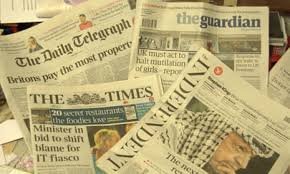
The Centre for Media Monitoring’s report, titled The State of British Media 2025: Reporting on Muslims and Islam, is not a polemic. It is a systematic, evidence-based examination of how Britain’s most widely read and watched news organisations cover stories involving Muslims and Islam. The scale of the research alone commands respect. Over forty thousand articles from thirty major outlets were reviewed and analysed. The findings are not comfortable reading for anyone who believes in the foundational principles of honest journalism.
Nearly half of all reporting by British news outlets on Muslim-related stories contained measurable bias. That figure alone should prompt urgent reflection across every editorial board in the country. But it is the accompanying detail that transforms a troubling statistic into a damning indictment. Seventy percent of stories that featured Muslims associated them with negative behaviour or conflict. This means that in the overwhelming majority of coverage, the British reading and viewing public encountered Muslims not as neighbours, citizens, professionals, parents, or contributors to national life, but as a source of danger, disorder, or grievance. Repeated exposure to this framing does not leave the public mind unchanged. It leaves a residue, a subconscious association between a religious community and threat, which poisons the social atmosphere in ways that are difficult to measure but impossible to ignore.
The report makes a crucial distinction that deserves emphasis. This is not the work of a handful of rogue journalists or the product of a few poorly edited pieces. The evidence points to systemic failure, a failure embedded in editorial cultures, commissioning decisions, framing choices, and the institutional priorities of organisations that reach millions of people every day. That distinction matters enormously. Systemic failure cannot be addressed by firing individuals or issuing apologies. It requires structural change, deliberate policy, and a genuine commitment to accountability that currently appears absent from much of the British media landscape.
The right-wing press in Britain has long been the most egregious offender. Outlets that have built their commercial identity on cultural anxiety and political grievance have made anti-Muslim sentiment a reliable ingredient in their editorial formula. The targeting is not always crude or explicit. It operates through selective framing, the choice of which stories to amplify and which to ignore, the language used to describe Muslim individuals and communities, and the consistent association of Islam with violence, extremism, and incompatibility with British values. This is propaganda dressed in the language of journalism, and it has been normalised to a degree that ought to alarm any serious observer of democratic culture.
But the report does not spare outlets that regard themselves as balanced and responsible. The BBC, which remains the most trusted broadcast news organisation in Britain and carries global reach and influence, is identified as capable of its own distortions, whether through genuine bias or through a misapplication of the principle of balance. Balance is not the same as equivalence. It does not mean presenting two sides of every story as though they carry equal weight when the factual reality clearly does not support that conclusion. Nowhere is this confusion more consequential than in the coverage of Gaza.
Since the terrorist attack of 7 October 2023 that triggered the current conflict, at least eighty-one thousand Gazan civilians have been killed. Eight hundred Israeli civilians and approximately twelve hundred soldiers and security personnel have also died. These numbers are not comparable in scale, and no honest reporting framework can present them as though they were. Thousands of Palestinians have been forcibly displaced from their homes by illegal Israeli settlement activity. No Israelis have been similarly displaced. The suffering on both sides is real, and it deserves acknowledgment. But journalism that presents asymmetric realities as symmetric, that strips away context in the name of balance, does not achieve fairness. It achieves distortion. And when that distortion systematically diminishes the suffering of a Muslim population, it becomes another iteration of the bias the report documents.
The consequences of this pattern of coverage do not remain confined to the media environment. They move outward into society and take concrete, human form. Public opinion is shaped by what people read and watch. Political debate is influenced by the assumptions journalists embed in their coverage. And there is a direct, documented correlation between the volume and tone of negative media coverage of Muslims and the incidence of hate crimes against Muslim individuals and communities in Britain. British Muslims are afraid in their own country, in the country many of them were born in and have contributed to across generations. That fear has a cause, and the British media must reckon honestly with its role in producing it.
The solutions the report points toward are neither complicated nor expensive. They require will, not resources. More Muslim voices must be included in coverage, not as token representatives of a community under scrutiny, but as journalists, editors, commentators, and decision-makers whose perspectives inform the full range of reporting. More context must be provided when Muslim individuals or communities are discussed, particularly in relation to crime or conflict, so that individual actions are not implicitly charged to an entire religious group. Crimes committed by Muslims must be reported as the actions of individuals, exactly as crimes committed by white British Christians are routinely reported, without the weight of collective religious responsibility being imposed.
These are not radical demands. They are the basic requirements of fair and responsible journalism. The obstacle is not capacity. It is the calculated choice, made by powerful media organisations, to prioritise profit, political alignment, and audience provocation over the public good. That choice has consequences. The report names them. Britain’s media must now decide whether it is willing to change.
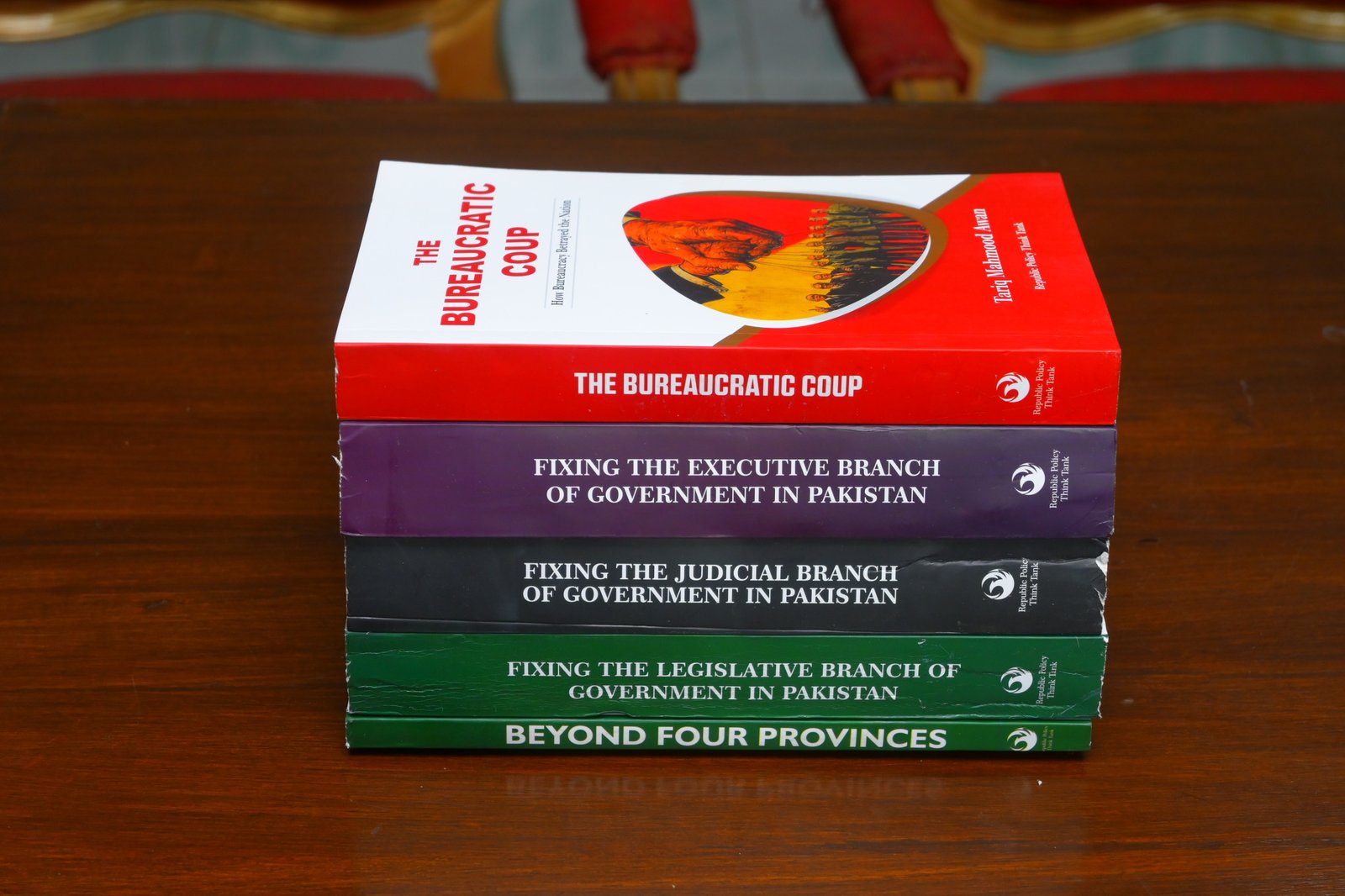
The Republic Policy book The Bureaucratic Coup is available at vanguard books LHR, ISB and across Pakistan. PL contact at +92 300 9552542