
Tahir Masood
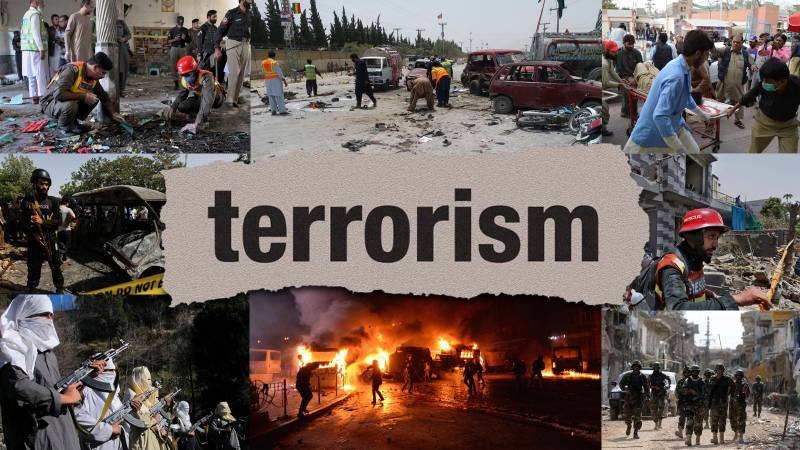
There are rankings that a country aspires to lead, and there are rankings that carry the weight of national shame and grief. Pakistan now sits at the top of the Global Terrorism Index 2026, published by the Australia-based Institute for Economics and Peace, as the country most severely affected by terrorist violence in the world. Last year, Pakistan ranked second. The movement up that list is not a bureaucratic reclassification. It is a reflection of blood spilled, lives destroyed, communities shattered, and a security situation that has deteriorated with painful consistency over six consecutive years.
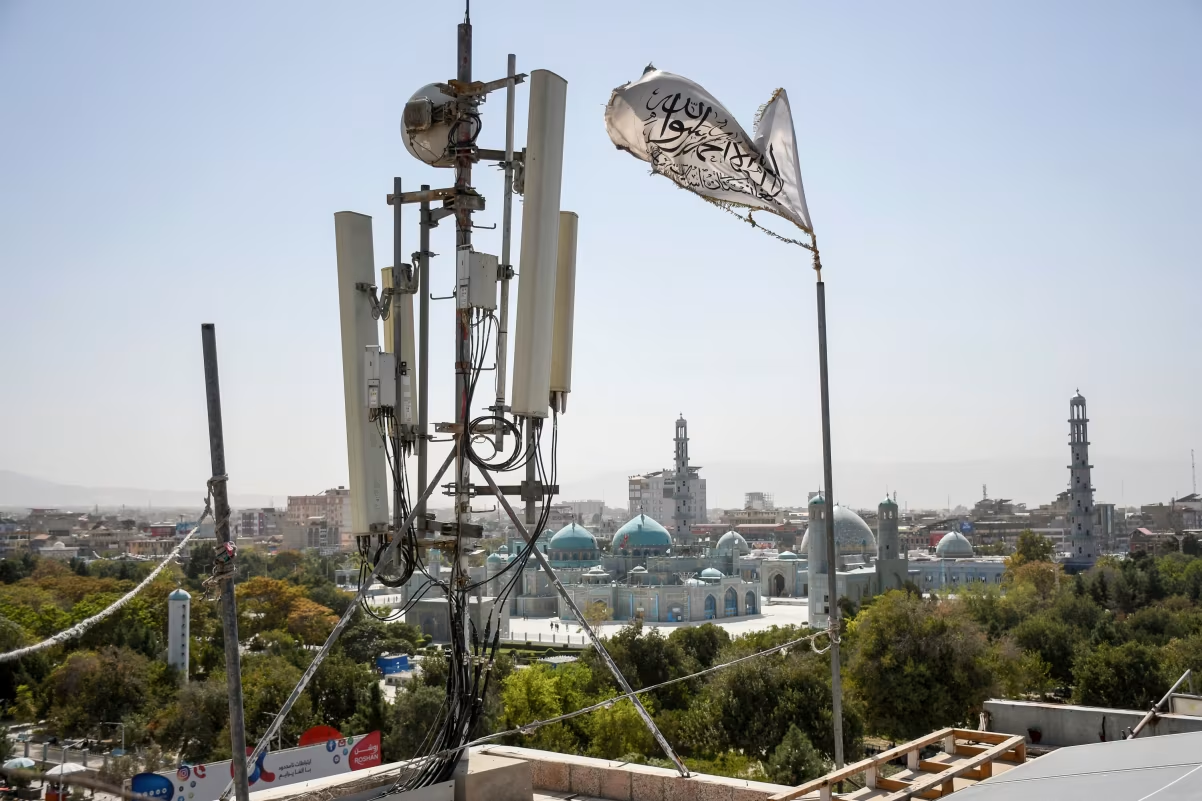
The findings of the index will surprise very few people who have followed Pakistan’s security landscape with honest eyes. Since the Afghan Taliban swept back into Kabul in August 2021, the Tehreek-e-Taliban Pakistan has experienced a dramatic revival. It has expanded its geographic footprint, increased the frequency and lethality of its attacks, and rebuilt organizational structures that years of Pakistani counterterrorism operations had worked to dismantle. The index confirms what Pakistani security officials, United Nations monitors, and independent analysts have been documenting with growing alarm: the TTP is not a degraded and retreating force. It is a resurgent one, and the conditions that sustain it have not been addressed at their root.
The TTP is ranked as the third deadliest terrorist organization in the world, sitting behind only the self-styled Islamic State and the West African group Jamaat Nusrat Al-Islam wal Muslimeen. That Pakistan hosts the operational base, recruitment pool, and primary targeting ground of the world’s third deadliest terror group is a fact that demands more than press statements and episodic military operations. It demands a rethinking of strategy at every level, from diplomatic engagement with Kabul to the internal political and developmental frameworks that have allowed extremist violence to find fertile soil across affected regions for decades.
One of the most pointed observations in the index concerns the relationship between the Afghan Taliban and the TTP. The report states plainly that the Afghan Taliban have provided the TTP with the means and motivation to significantly expand their reach and operational efficiency. Pakistan has been making precisely this argument in its diplomatic communications for years, often to an international audience that has been reluctant to hold the Kabul administration accountable for its facilitation of cross-border terrorism. The index, produced by an independent international institution, lends the kind of credible external weight to that argument that bilateral Pakistani complaints have struggled to generate. The Afghan Taliban cannot simultaneously claim international legitimacy and continue to offer sanctuary, resources, and ideological encouragement to a group that is systematically killing Pakistani civilians and security personnel.
This is the sixth consecutive year in which terrorism-related deaths in Pakistan have increased. That number is worth sitting with. Six years of rising casualties. Thousands of security personnel and civilians martyred. A geography of violence that has spread from the tribal belt into settled districts of Khyber Pakhtunkhwa, into Balochistan, and periodically into the country’s urban centres. Despite sustained military operations, intelligence efforts, and the genuine sacrifice of the men and women in uniform who have fought this war at enormous personal cost, the trend line has not bent downward. That fact alone is an argument for honest self-assessment rather than institutional defensiveness.
Pakistan has conducted kinetic operations across the Afghan border, and those actions reflect the seriousness with which the military establishment views the TTP threat. But cross-border strikes, however tactically significant in specific moments, cannot substitute for a durable strategic framework. What is required is a combination of sustained diplomatic pressure, international guarantees binding the Afghan Taliban against harbouring designated terrorist groups, and a coherent internal counterterrorism doctrine that addresses why terrorism keeps finding recruits, financing, and local support networks.
On the diplomatic front, Pakistan must continue to press the international community to condition its engagement with Kabul on verifiable counterterrorism commitments. The Afghan Taliban’s desire for international recognition and economic assistance is real. That leverage exists. The question is whether Pakistan, working with regional partners and global powers that have their own security interests in a stable Afghanistan, can build a framework that makes the cost of sheltering the TTP prohibitive for the Taliban government. That work requires sustained and sophisticated diplomacy, not merely periodic protests.
Internally, the picture is more complicated and in some ways more uncomfortable. Terrorism in Pakistan is not a monolithic phenomenon driven by a single cause. The TTP draws on a reservoir of grievances, ideological indoctrination, tribal dynamics, state neglect of peripheral regions, and the long shadow of historical policy choices that armed and radicalized non-state actors for strategic purposes. Addressing those drivers requires honest acknowledgment that military operations, however necessary, are not sufficient. Development, political inclusion, functional governance, and credible justice systems in affected regions are as much a part of counterterrorism as any operation in the field.
Baloch separatist terrorism presents a distinct but equally serious challenge. It draws on a different set of historical grievances, operates with a different organizational logic, and requires a different political response. The index’s findings encompass this dimension of Pakistan’s security crisis, and any honest national counterterrorism strategy must grapple with both fronts simultaneously rather than treating them as entirely separate problems with no common analytical threads.
The broader regional environment adds urgency to an already critical situation. With tensions running high across multiple theatres and the internal security architecture under stress, Pakistan cannot afford the luxury of a fragmented or politically paralyzed response. The buy-in of all domestic stakeholders, political parties, security institutions, provincial governments, civil society, and the communities most directly affected by violence, is not optional. Counterterrorism without political consensus is a campaign without a rear base.
Topping the Global Terrorism Index is a moment that should provoke national reflection, not national paralysis. Pakistan has the institutional capacity, the field experience, and the strategic motivation to reverse this trend. What it needs now is the clarity of diagnosis, the courage of honest policy revision, and the collective will to treat the elimination of terrorism not as one priority among many, but as the foundational condition on which everything else depends.