Dr Bilawal Kamran
There is a number that should shame every policymaker in Islamabad, and it is 0.35. That is Pakistan’s score on the World Bank’s Human Capital Index Plus, a composite measure of how productively a child born today can expect to live and work by the time they reach adulthood. On a scale where 1.0 represents a person who has survived childhood in full health, received a complete and quality education, and arrived at working age equipped to contribute meaningfully to the economy, Pakistan scores 0.35. Barely a third of the way there. And on a global ranking of 174 nations, Pakistan sits at 130, trailing not just developed economies but the average for countries at its own income level.
This is not a statistic about misfortune. It is a verdict on choices, priorities and negligence, accumulated across decades of governance that has consistently treated human beings as an afterthought.
The Human Capital Index Plus is an expanded version of the World Bank’s earlier measure. It does not simply count whether children go to school or survive infancy. It looks deeper, at adult health outcomes, nutritional status across the population, and crucially, whether the education children receive actually translates into learning. This last element is where Pakistan’s numbers become genuinely alarming. Millions of children who are formally enrolled in schools are not learning to read, write or reason at even the most basic levels. The school building exists. The teacher may or may not be present. The child sits on a bench. But the education is not happening.
Behind that abstraction of 0.35 are real lives: the child in rural Sindh whose growth has been permanently stunted by malnutrition before she even turned two, the boy in southern Punjab who can recite the alphabet but cannot read a sentence at age ten, the young man in Karachi who learned a single trade in his teens and now finds that trade shrinking around him with no path forward. The index captures all of these lives and reduces them to a number. That number tells us Pakistan is failing its people at every stage.
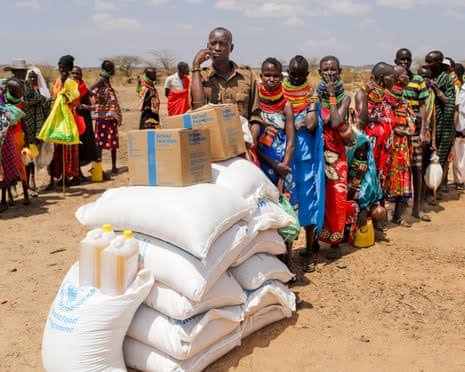
The crisis of stunting deserves particular attention because it is both catastrophic and almost entirely preventable. Stunting, the condition in which chronic malnutrition arrests a child’s physical and cognitive development in the first years of life, is not a natural disaster. It does not arrive without warning. It is the predictable consequence of poverty meeting an absent state. Pakistan’s stunting rate remains among the highest in the world, affecting roughly four in ten children under five. A stunted child does not simply grow up shorter. The damage is neurological. Stunted children learn more slowly, retain less, earn less as adults and are more likely to raise stunted children of their own. The cycle is not metaphorical. It is biological, economic and generational, and it continues because governments have not made the investments required to break it.
Those investments are not mysterious. Free and accessible maternal healthcare, quality neonatal services, community health workers reaching households where malnutrition is first taking root: these are known interventions with documented results. So are school meal programmes, which serve the double purpose of improving child nutrition and keeping children in school. Countries that have introduced well-managed, nutritious school feeding have seen enrolment rise, dropout rates fall and healthcare costs decline over time. Pakistan has experimented with versions of these programmes without ever fully committing to them. The commitment requires money, political will and administrative competence. All three have been in short supply.
Education is where Pakistan’s relative performance is weakest when measured against global averages. It is not merely that too many children are out of school, though that remains a serious problem. It is that the children inside school are often receiving something that resembles education in form but not in substance. Learning outcomes in government schools across most provinces are deeply inadequate. Teachers are frequently undertrained, underpaid and unsupported. Curricula are outdated. Infrastructure is crumbling. The result is a generation of children who have technically attended school but who cannot compete in any labour market that requires thinking, problem-solving or adaptability.
This leads directly to what must be called Pakistan’s skill trap, and it is a trap with no easy exit. Roughly ninety-five percent of self-employed workers in Pakistan are concentrated in low-skill occupations: small traders, day labourers, informal service workers, basic artisans. These are not launching pads. They are endpoints. The worker who enters this category at twenty is unlikely to leave it at forty, and increasingly likely to find even that precarious foothold threatened as younger workers arrive and technology changes the nature of available work.
The private sector carries its own share of responsibility here. Formal employer investment in worker training is almost nonexistent across most industries. Workers are expected to absorb skills through exposure, learning by watching and doing until they are competent in a narrow set of tasks. This produces workers who are adequate at precisely what they do today and helpless in the face of any change. They cannot adapt their skills, cannot take on more complex work, cannot grow within their organisations and cannot shift to new sectors when their current one contracts. They become, through no fault of their own, obstacles to the productivity growth that Pakistan desperately needs rather than contributors to it.
Pakistan cannot grow its way out of poverty on the backs of people it has not educated, fed or trained. The economy will not diversify, exports will not move up the value chain, and incomes will not rise in any sustained way as long as the majority of the workforce lacks the health, knowledge and skills to drive that transformation. Human capital is not a soft metric. It is the foundation on which every economic ambition rests.
A score of 0.35 is not a result. It is a warning. The question is whether anyone in authority is listening.