
Abdullah Kamran
A few days ago, Interior Minister Mohsin Naqvi stood before the business community in Karachi and delivered an appeal that carried more weight than its words alone suggested. He urged Pakistanis to bring back the money they had moved abroad over the past several years. The tone was not casual. There was urgency behind it, and that urgency reflects a real and growing problem.
Pakistan’s foreign exchange position is under pressure from multiple directions at once. War-related uncertainty in the Middle East is drying up certain inflows. Energy import payments are poised to increase as global volatility continues. And there is a genuine concern that home remittances, which have been a critical buffer for the external account, could weaken in the period ahead. Against this backdrop, the government is casting around for options, and one of those options is capital repatriation.
The approach being signalled is a blend of incentive and implied threat. On the incentive side, officials have hinted that the next budget may include concessions for those who bring money back, possibly in the form of reduced taxes or other relief. But nothing concrete has been put on the table yet. Given how constrained the federal government’s fiscal position is, the room to offer meaningful financial inducements is genuinely limited. Until there is specific, credible policy on paper, investors will understandably wait and watch rather than act.
On the other side, officials have also hinted at action against those who moved money abroad through informal channels. This part of the message is largely hollow. Once capital has left the country, no government ruling or official statement can compel its return. Money moves when people believe it is in their interest to move it. Threats from a government struggling with its own credibility will not override that calculation. If anything, coercive language could have the opposite effect, deepening the reluctance of wealthy Pakistanis to engage with domestic financial institutions at all.
There is, however, one genuine factor working in the government’s favour, and it has nothing to do with policy. A large portion of affluent Pakistani wealth is believed to be concentrated in the UAE. That region is now carrying a substantially higher risk premium than it did even a year ago. The war in the Middle East has introduced uncertainty that was previously absent, and those who parked their savings in Gulf real estate or financial instruments are beginning to reassess their exposure. Some of that reassessment is already producing early signals in Pakistan’s own markets.
Hawala rates are currently negative, trading below the interbank level. There has been a noticeable, if modest, pickup in Karachi’s property sector. These are not dramatic shifts, but they suggest that the pace of outflows to the UAE may have slowed, and that some capital is quietly finding its way back. This is the opening the government and the State Bank of Pakistan should recognise and act on deliberately rather than allow it to pass by default.
The right response to this moment is not a campaign of speeches and veiled warnings. It is a credible, well-designed set of incentives that make repatriation genuinely attractive. And the most important such incentive is clarity and protection from the tax authorities.
There is a specific policy lever that deserves immediate attention. In 2017 and 2018, the government allowed up to five million rupees to be repatriated without inquiry, which at the time translated to roughly fifty thousand dollars. That threshold has never been revised. Today, five million rupees is worth less than twenty thousand dollars. The real value of that protection has eroded dramatically over the years, while the fears that originally motivated the policy, specifically the anxiety that bringing savings home would trigger unwanted scrutiny, have only grown stronger. Pakistan’s macroeconomic and political environment continues to generate uncertainty. The tax system inspires little confidence. Asking people to bring substantial savings into that environment while offering a threshold that barely covers a modest transaction is simply not persuasive.
If the government is serious about repatriation, it should update the inquiry-free threshold to a figure that reflects both inflation and the scale of capital it is actually trying to attract. An effective limit should be close to two hundred and fifty thousand dollars. Even a floor of one hundred thousand dollars would represent a meaningful improvement over the current position. Without this kind of structural adjustment, appeals to patriotism and hints of budget concessions will achieve very little. The people the government is trying to reach are sophisticated enough to calculate the risk-adjusted return of bringing money home, and right now that calculation does not work in Pakistan’s favour.
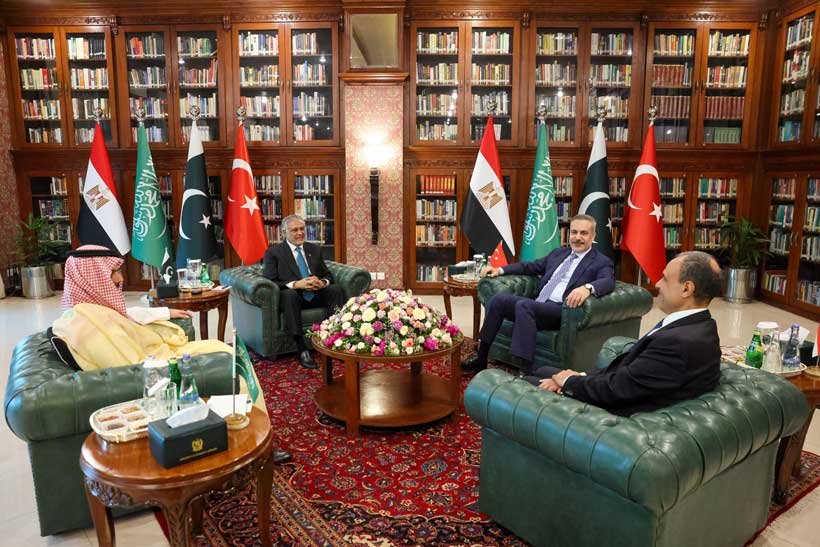
Beyond the immediate question of capital repatriation, there is a broader strategic opportunity that Pakistan is not fully exploiting. The country is emerging, somewhat unexpectedly, as a relevant player in the diplomatic effort to manage tensions between Iran and the United States. That geopolitical relevance is an asset, and it should be used. Pakistan can and should leverage its position to seek greater flexibility from the International Monetary Fund, expand the space for investment-friendly policy adjustments, and signal to both domestic and foreign capital that the country is open for business on reasonable terms.
Reform has stalled long enough. Pakistan needs investment, domestic and foreign alike, to restart the engine of sustained economic growth. That investment will not arrive simply because officials give speeches in Karachi. It will arrive when the policy environment is clear, the rules are predictable, and the incentives are real.
The money is out there. Some of it may even be looking for a reason to come back. The government’s task is to give it one.