
Dr Bilawal Kamran
There are failures of governance that embarrass a nation. Then there are failures that condemn it. Pakistan’s HIV crisis belongs to the second category. Quietly, without headlines or public outrage, this country has earned one of the most damning distinctions in regional public health: it now hosts one of the fastest-growing HIV epidemics in the entire WHO Eastern Mediterranean Region — a zone spanning 22 countries across West Asia, North Africa, the Horn of Africa, and Central Asia. In a competition no country wants to win, Pakistan is leading.
The numbers are not just alarming. They are an indictment. In 2010, approximately 16,000 new HIV infections were recorded in Pakistan. By 2024, that figure had climbed to 48,000. A 200 per cent surge in fifteen years. This is not a crisis that crept up undetected. It grew in plain sight, nourished by institutional indifference, political neglect, and a public health machinery that has responded with the urgency of a bureaucrat processing routine paperwork.
What makes this worse is the specific nature of the failure. Pakistan has not simply lacked resources. It has deployed the resources it possessed with stunning ineffectiveness. Public awareness campaigns have made little discernible impact. Harm reduction strategies — the internationally proven tools for interrupting transmission among high-risk populations — have been implemented so poorly that they might as well not exist. The state has gone through the motions of a response while the epidemic has continued its relentless expansion.
The depth of the crisis was laid bare before the National Assembly’s Standing Committee on Health just this week. Of the 84,000 patients registered under antiretroviral therapy programmes, nearly 20,000 have simply disappeared. They began treatment, then vanished from the system. These are not administrative anomalies. These are human beings walking through Pakistani streets, markets, and homes carrying potentially contagious viral loads in their blood, unmonitored and untreated. The state registered them, handed them medication, and then lost them. There was no follow-up. No tracking. No accountability.
And that registered figure of 84,000 is itself a grave underestimate of the true scale. Pakistan’s estimated population living with HIV stands at approximately 369,000 people nationwide. The overwhelming majority are unregistered, undiagnosed, and unreached. This vast, mostly untreated population does not sit passively. It interacts. It transmits. It blurs the boundaries of what public health professionals classify as high-risk groups, making targeted intervention progressively more difficult. When the majority of infected people are invisible to the health system, the epidemic becomes, in practical terms, uncontrollable.
The transmission routes compound the horror. While unsafe sexual practices and shared intravenous drug needles remain the primary vectors, a second, deeply troubling pathway has emerged through the medical system itself. Unsafe injection practices by unqualified practitioners, unsterile blood transfusions, weak infection control in healthcare facilities, and entirely unchecked quackery are driving transmission to the most innocent and defenceless populations: children and spouses. These are not people who made choices that placed them at risk. They went to a clinic, or trusted a healer, or were born to a mother the state failed to treat. They were infected by the system’s failure, not by their own actions.
The scale of child infections is particularly devastating. In 2010, 530 children in the zero-to-fourteen age group contracted HIV. By 2023, that number had risen to 1,800. In outbreak hotspots — Larkana, Taunsa, Hyderabad — children accounted for more than 80 per cent of newly detected cases. Read that again. In these towns, the dominant face of new HIV infection is a child. The state’s response to these localised outbreaks has been investigated, debated, and largely forgotten. Banned reusable syringes, the primary culprit in several outbreaks, remain available in these markets. Blood bank regulation remains inconsistent, patchy, and poorly enforced. The lessons of each outbreak have not translated into systemic reform.
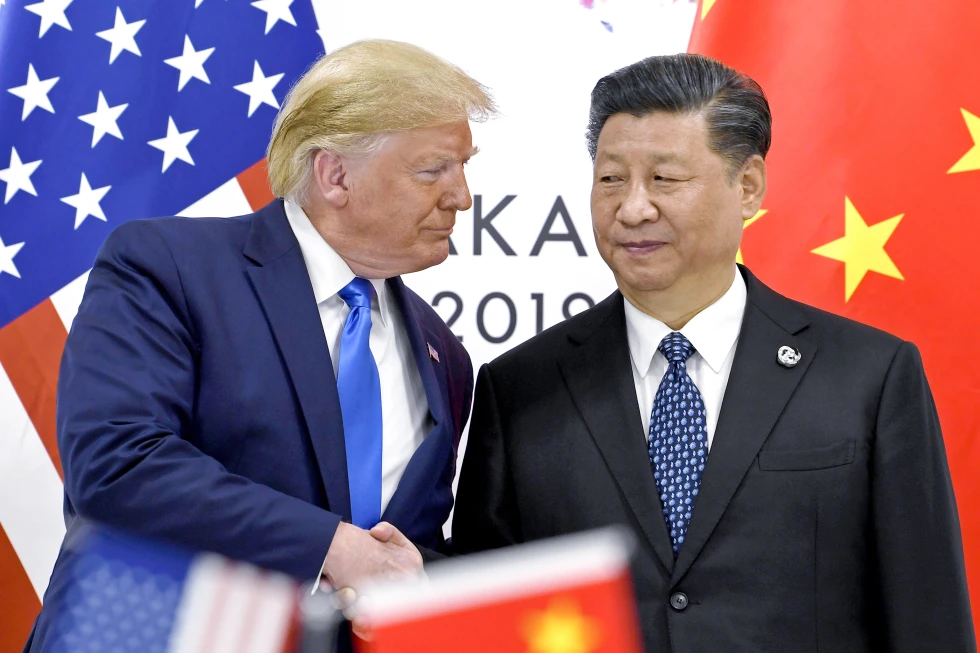
External pressures have made a deteriorating situation worse. Pakistan’s National AIDS Control Programme has long depended on international donor funding to sustain its operations. That dependency always carried risk. The risk has now materialised. United States President Donald Trump’s decision to drastically reduce American foreign aid has cut deeply into health programme funding across the developing world, and Pakistan has not been spared. The AIDS Control Programme is now severely underfunded and critically understaffed. The human capacity to deliver testing, treatment, and outreach has contracted precisely when it needed to expand.
Into this crisis, add corruption. While international donors were funding medicine and equipment for Pakistani HIV patients, local elements within the system were stealing from them. Some 800,000 dollars worth of donated medical supplies were stolen from the programme. This is not a footnote. It is a diagnosis of institutional character. A country cannot claim to be fighting a public health crisis while its own administrators are looting the weapons of that fight.
What Pakistan confronts today is not simply a disease. It is the accumulated consequence of decades of underinvestment in public health, the systematic failure to build institutions that function independently of donor money, the political reluctance to address stigmatised conditions with the openness they require, and a bureaucratic culture that confuses registration with treatment and presence with accountability.
The path forward demands honesty before it demands policy. Pakistan must acknowledge the full scale of this crisis without the customary hedging and institutional defensiveness. It must pursue the 369,000 — not merely manage the 84,000. It must treat the 20,000 who disappeared as a system failure requiring systemic correction, not as patients who chose to leave. It must regulate blood banks and eliminate unqualified practitioners with the force of law, not the gentleness of recommendation. And it must build a public health programme that can survive the withdrawal of foreign donors, because dependence on external generosity is not a health strategy. It is a postponement of one.
Pakistan’s children are being infected in clinics meant to heal them. That fact alone should end every other conversation and begin this one.