
Fajar Rehman Khan
Water is not merely a resource. It is the foundation of civilisation, the lifeblood of agriculture, and the quiet guarantor of national survival. When a neighbour begins to weaponise that lifeblood, the consequences are not limited to farmers watching their fields crack and dry. They extend to food security, industrial output, export earnings, and the very stability of the state. That is precisely where Pakistan finds itself today, facing a calculated and systematic manipulation of shared river flows by India following the suspension of the Indus Waters Treaty.
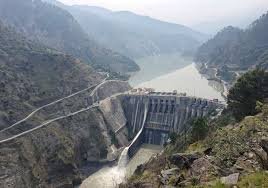
The latest evidence arrived on May 2, when flows at Marala Headworks on the Chenab River dropped sharply to 9,037 cusecs from approximately 20,930 cusecs. India had reportedly restricted releases to impound water at the Baglihar Dam. This is not a technical adjustment or seasonal fluctuation. It is a deliberate act of upstream regulation that violates the spirit and letter of the Indus Waters Treaty. Consider the historical baseline: Chenab flows at Marala in early May normally range between 30,000 and 35,000 cusecs. This year, the average has collapsed to 14,214 cusecs. The numbers do not lie. India is reshaping downstream water availability with a precision that cannot be explained by natural variance alone.
This is also not an isolated incident. In December last year, erratic and unexplained swings in flows along the Chenab and Jhelum rivers threw agricultural planning across Punjab into disarray. The preceding summer had brought similar disruptions, as upstream control over releases deepened the growing perception that these rivers were being managed with increasing discretion and decreasing accountability. The Indus Waters Treaty was designed precisely to prevent this. Its suspension has removed the only enforceable guarantee of predictability that Pakistan ever had over rivers whose headwaters lie entirely within Indian territory.
The danger is not limited to short-term water shortages. India is simultaneously pursuing an aggressive expansion of hydropower infrastructure on the western rivers that were allocated to Pakistan under the Treaty. This is the more insidious long-term threat. Dams and reservoirs confer a durable and structural capacity to control the timing and volume of downstream flows. Unlike intermittent release adjustments, which can be reversed or explained away, permanent infrastructure creates permanent leverage. Every dam completed is another instrument of coercion added to India’s arsenal. Pakistan must understand that what is being constructed upstream is not merely electricity generation capacity. It is hydraulic power over Pakistan’s most critical agricultural and economic lifeline.
Against this backdrop, Planning Minister Ahsan Iqbal’s recent call for a cohesive national water security policy is not just timely. It is urgent in the most literal sense of the word. Pakistan cannot afford the luxury of policy deliberation at the leisurely pace that has characterised its governance of water resources for decades. The crisis is already here. What remains to be determined is whether the damage will be contained or allowed to compound into a catastrophe.
The first and most glaring gap is Pakistan’s water storage capacity. At present, the country can store approximately 90 days’ worth of water supply. This figure is not merely below global benchmarks. It is an embarrassment for a country whose entire agricultural economy, and by extension its food security and export performance, depends overwhelmingly on the Indus River System. That single system accounts for roughly 96 percent of national water supply. More alarmingly, approximately 78 percent of those flows originate beyond Pakistan’s own borders. No serious nation accepts such a degree of external dependence without building substantial buffer capacity. Pakistan must urgently expand its storage infrastructure, including dedicated floodwater reservoirs, hill-torrent management systems, urban rainwater harvesting networks, and wastewater recycling facilities. These are not aspirational investments. They are survival imperatives.
The second critical failure lies in how Pakistan uses the water it does receive. Flood irrigation continues to dominate agricultural practice across the country despite decades of expert warnings about its devastating inefficiency. It wastes enormous volumes of water, promotes waterlogging and salinity, degrades soil quality over time, and ultimately reduces both crop yields and export-grade produce. The alternatives are well understood. Drip irrigation and sprinkler systems have demonstrated clear gains in efficiency, water conservation, and soil health across comparable agricultural economies. The obstruction to their adoption is not technological or financial. It is political. Entrenched interests that benefit from the perpetuation of outdated practices have consistently blocked meaningful reform. If Pakistan is serious about confronting its water crisis, this resistance must be broken. A decisive national shift away from flood irrigation alone would dramatically reduce overall agricultural water demand, easing pressure on an already overstretched system.
The third dimension of the crisis is underground. Unchecked groundwater extraction has driven a sustained and accelerating fall in water tables across Pakistan. The consequences are visible and multiplying: land subsidence, damaged infrastructure, deteriorating soil quality, and the gradual destruction of natural ecosystems that depend on stable groundwater levels. The tragedy is that groundwater should function as a strategic reserve, a buffer against surface water shortages and external manipulation. Instead, it is being depleted faster than it can be recharged, leaving Pakistan with neither an adequate surface water reserve nor a viable underground alternative.
What Pakistan needs is not a collection of disconnected sectoral initiatives. It needs a far-reaching, integrated national water policy that brings storage expansion, conservation, agricultural modernisation, and groundwater regulation under a single coherent framework. The objective must be to reduce dependence on uncontrolled transboundary flows, build resilience against external shocks, and create the institutional capacity to manage water as the strategic national asset it truly is.
India’s suspension of the Indus Waters Treaty was not an administrative decision. It was a strategic signal. Pakistan would be making a grave error if it responded with anything less than a full-scale national mobilisation around water security. Rivers do not wait for policy consensus. And adversaries do not pause their strategies while you deliberate yours.