
Barrister Naveed Qazi
Pakistani politics has always been a theatre of endurance. Parties rise, get crushed, and either find a way back or fade into irrelevance. The question now hanging over two of Pakistan’s oldest and most powerful political formations — the Pakistan People’s Party and the Pakistan Muslim League (N) — is whether they retain the spine, the street power, and the strategic coherence to mount genuine political resistance if the moment demands it. The honest answer, uncomfortable as it may be, is that neither party looks ready. And the reasons run deeper than most of their supporters are willing to admit.
To understand where PPP and PML-N stand today, it is worth reflecting on what made Pakistan Tehreek-e-Insaf so difficult to eliminate. PTI was not merely a party. It was a movement held together by two rare qualities working in tandem. The first was Imran Khan himself — a leader who refused to bargain, refused to go quietly, and refused to reframe his imprisonment as anything other than political persecution. His consistency in the face of pressure was not just personal stubbornness. It was a political strategy that gave his supporters something to rally around when the party’s formal structures were systematically dismantled. The second quality was PTI’s public popularity, which proved resilient enough to survive arrests, media blackouts, constitutional manipulation, and organizational destruction. When a party’s support base is genuinely organic rather than patronage-driven, it does not dissolve under pressure. PTI demonstrated that with remarkable clarity.
Neither PPP nor PML-N can claim either of these assets in their current condition.
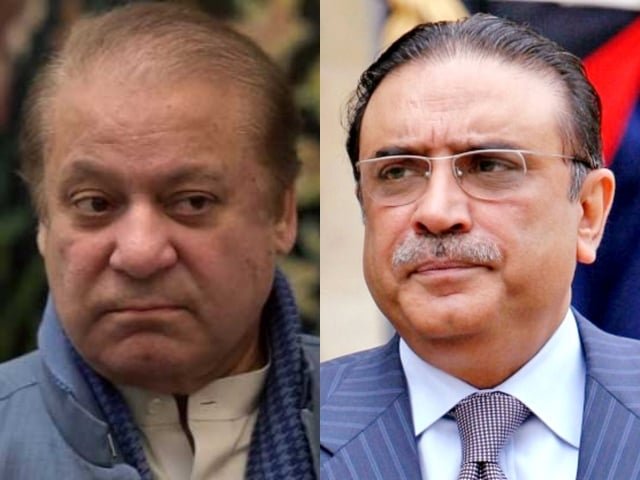
The People’s Party has governed itself into a corner of its own making. Its political identity — once built on Bhutto’s blood, on the romance of sacrifice, on a working-class populism that genuinely frightened Pakistan’s establishment — has been replaced by something far more cautious and transactional. PPP today is a party of governance arrangements, of coalition calculations, of a careful balancing act between Sindh’s provincial authority and federal relevance. Bilawal Bhutto Zardari is a competent and articulate politician, but he leads a party whose political energy is administrative rather than confrontational. The PPP has not been in genuine opposition to Pakistan’s power structure for years. It has been a participant in it.
This matters enormously when one considers what resistance politics actually requires. It requires a party willing to absorb costs — legal, reputational, organizational — without cutting a deal to make the pain stop. It requires a leadership that can look its base in the eye and say: we will not compromise on this, no matter what. It requires a public constituency that will come out onto the streets, not because it has been mobilized by a party machine, but because it believes in something. The PPP, as presently constituted, does not have that muscle. Its support, real as it is in Sindh’s interior, is rooted in feudal loyalty and local patronage rather than ideological conviction. That kind of support sustains electoral performance. It does not sustain resistance.
PML-N’s situation is, if anything, more stark. The party that was twice removed from power, that saw its leader convicted and exiled, that watched its government dismantled in slow motion between 2017 and 2018, has spent the years since drawing the clearest possible lesson from that experience — and the lesson it drew was accommodation, not confrontation. Nawaz Sharif’s return to Pakistan, the terms on which he returned, the political rehabilitation that followed, and the posture of his party since coming back to power have all pointed in one direction: avoid another collision with the institutions that removed you. Work within the lines. Stay manageable.
There is a certain political rationality to this calculation. A party that has been broken once has every reason to fear being broken again. But the cost of that rationality is the erosion of something that cannot easily be rebuilt: the credibility to lead resistance when resistance becomes necessary. PML-N has spent years signaling to every relevant power center that it is not a threat, that it can be reasoned with, that it prefers stability and power-sharing to confrontation. That signal is now baked into the party’s political identity. Walking it back would require a transformation of leadership, narrative, and political culture that is not visible on the horizon.
What makes this particularly significant is the structural shift it represents in Pakistani politics. For decades, the informal system of Pakistani power functioned with a certain architecture: the military and intelligence establishment held the decisive cards, but civilian parties retained enough popular legitimacy and street-level energy to complicate the calculations. PPP and PML-N, at their strongest, could not dictate terms to the centers of power. But they could negotiate. They had enough political capital — enough public support, enough symbolic weight, enough organizational depth — to be taken seriously as counterparties. That leverage, built over decades of political struggle and popular mobilization, appears to be significantly diminished today.
The parties have not lost their voters. But they have lost the narrative that once made those voters feel like part of something larger than an electoral preference. Resistance politics requires a story — a story of injustice, of sacrifice, of a cause worth fighting for. PTI had that story, and Imran Khan told it relentlessly even from a prison cell. PPP and PML-N, locked into the logic of institutional accommodation, have stopped telling that story. Some of their leaders may not even believe it anymore.
This is the deeper challenge. Political capital can be rebuilt. Organizational networks can be revived. Public memory of past struggles can be reactivated. But a party’s willingness to absorb punishment rather than negotiate a way out of it is not a tactic. It is a reflection of what the party fundamentally believes about itself and its mission. Until PPP and PML-N rediscover that sense of mission — not as a rhetorical posture but as a governing conviction — their capacity for genuine resistance will remain more aspiration than reality.
Pakistan’s political future may well force the question. The country’s structural crises do not resolve themselves through accommodation alone. At some point, the pressure returns. The only question is whether these parties will be ready to meet it.