
Haseeb Khan
Prime Minister Shehbaz Sharif has directed his government to prepare a roadmap for generating electricity from solid waste. The instinct is sound. The logic has been globally validated for years. Countries across Europe and Asia integrated waste-to-energy technologies into their urban and energy planning long ago, reducing landfill dependence, lowering environmental damage and contributing meaningfully to domestic electricity supply. Denmark, Germany, Japan and South Korea did not stumble upon this solution recently. They built it, refined it and expanded it over decades of deliberate policy investment. Pakistan is now preparing to study what others have already operationalised. That gap tells a story the announcement itself does not address.
The more uncomfortable question is not whether waste-to-energy makes sense. It plainly does. The question is why Pakistan is still assembling task forces and commissioning roadmaps for technologies the rest of the world moved beyond the conceptual stage a generation ago. This is not a criticism of the specific directive. It is an observation about a recurring pattern in Pakistani governance: the correct destination is identified, but the journey begins years after others have already arrived.
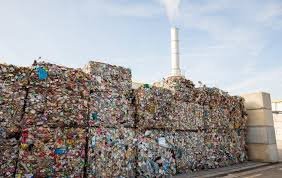
Pakistan’s waste management systems are deeply dysfunctional. Major cities are struggling under the weight of mounting garbage accumulation. Lahore, Karachi and Rawalpindi generate thousands of tonnes of solid waste every day, much of which ends up in poorly managed landfills, open dumping sites or waterways. The environmental damage is visible, the public health consequences are measurable and the economic costs are significant. Municipal systems are underfunded, municipal coordination is fragmented and local governments are routinely bypassed in major infrastructure decisions. Any serious waste-to-energy programme must therefore begin with an honest reckoning with the state of urban governance rather than simply announcing a new technology initiative grafted onto a broken foundation.
The energy dimension adds urgency. Pakistan’s power sector has been trapped for years in an expensive dependence on imported fuels. Every shipment of liquefied natural gas or furnace oil that arrives at Karachi port places pressure on foreign exchange reserves and contributes to the circular debt problem that now weighs heavily across the entire economy. The capacity payment obligations under independent power producer agreements, built largely around imported fuel-based generation models, have created a fiscal burden with no easy exit. In this context, any domestic energy source that reduces import dependency carries genuine strategic value. Solid waste is not an exotic energy option. It is a domestically abundant resource that Pakistan is currently mismanaging rather than monetising.
The prime minister is correct to frame the initiative as both an environmental and economic priority. These two dimensions reinforce each other rather than compete. Reducing landfill pressure reduces environmental contamination of groundwater and soil while simultaneously freeing urban land. Generating electricity from waste reduces fuel import bills while contributing to grid supply at a time when load-shedding remains a daily reality for millions. The compound benefit of addressing both problems through a single infrastructure investment is precisely why waste-to-energy has attracted sustained policy attention internationally. Pakistan’s geography and population size make it a natural candidate for scaling such systems.
Yet the announcement also surfaces a pattern that deserves honest examination. Pakistan has consistently identified correct priorities, but only after years of delay during which costs have compounded and the distance between Pakistan and comparable economies has widened. Urban waste accumulation, energy insecurity and environmental degradation were not invisible problems waiting to be discovered. They were visible, documented and repeatedly flagged in policy discussions for well over a decade. Earlier investment decisions could have incorporated waste-based energy generation as part of a broader strategy for domestic energy diversification. They did not. The energy expansion of the 2010s chose imported fuel-based generation at scale. Renewable alternatives, including solar, wind and waste-to-energy, received marginal attention despite the country’s obvious natural advantages and the international evidence already available at the time.
This history matters because it shapes the credibility problem facing the current announcement. Pakistani policymakers have a track record of launching initiatives with strong rhetoric and weak follow-through. Roadmaps are commissioned, task forces are formed, pilot projects are announced and then institutional momentum dissipates as political cycles shift or competing priorities crowd out sustained attention. Waste-to-energy is not a sector where Pakistan is starting from genuine ignorance. The technical, operational and financial frameworks for these systems are internationally well understood. Project models are available. Implementation partners exist. The challenge has never been the absence of knowledge. It has been the absence of political continuity and institutional delivery capacity.
There are also practical preconditions that cannot be bypassed through executive directives alone. Waste-to-energy plants require consistent and segregated fuel inputs. Mixed municipal waste with poor calorific content produces inefficient outcomes. Segregation at the household and community level requires sustained public engagement, reliable collection infrastructure and municipal coordination. These are the unglamorous foundations without which any technology investment will underperform. Pakistan’s local government systems are currently too weak, too underfunded and too politically marginalised to deliver these foundations without deliberate strengthening. Any roadmap that focuses on power generation technology without simultaneously addressing municipal governance reform will repeat the familiar pattern of investing in hardware while neglecting the institutional software.
None of this negates the value of the directive. Pakistan cannot continue relying exclusively on imported fossil fuels while simultaneously neglecting its domestic renewable potential and mismanaging its urban waste streams. The country needs diversified energy sources, modernised urban infrastructure and policies oriented toward long-term sustainability rather than short-term crisis management. Waste-to-energy belongs in that diversification strategy. The prime minister’s instinct to pursue it is the right one.
But the measure of this initiative will not be the quality of the roadmap. It will be whether the roadmap produces operational plants, functioning waste segregation systems and sustainable municipal infrastructure within a credible timeline. Pakistan has produced enough high-quality documents about the right priorities. What it consistently fails to produce is implementation. That is the real challenge this announcement must answer. Good ideas, held long enough without execution, stop being good ideas and become evidence of the very dysfunction they were meant to address.