Dr Bilawal Kamran
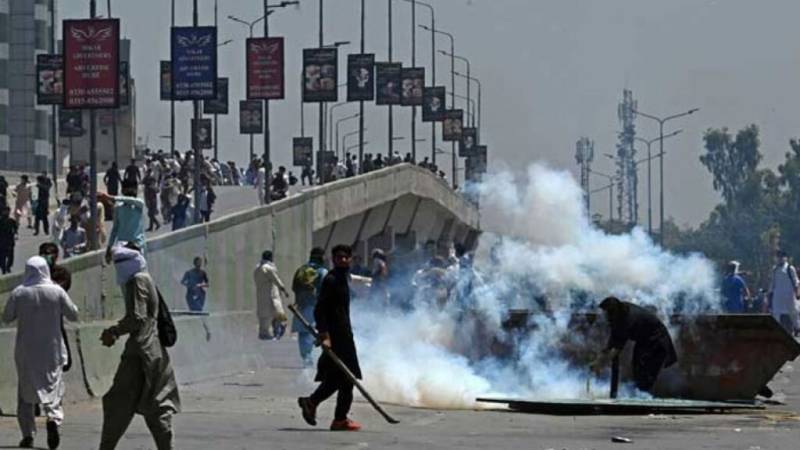
From the very first day of its existence, Pakistan has functioned less like a settled nation and more like an open laboratory. Every government that has come to power, whether it arrived through a ballot box, a military takeover, or some arrangement in between, has treated the foundational structure of the state as something that can be dismantled, rebuilt, and redesigned. The political system has been altered. The judicial structure has been reordered. The economy has been redirected. The administrative framework has been reorganised. Each new hand at the wheel has believed that the previous driver was going the wrong way. The consequence of this unending cycle is that Pakistan, even after more than seventy five years of independence, has still not answered the most basic question any state must answer: on what principles should this country actually be run?
The constitutional history of Pakistan alone tells this story with painful clarity. When the country was born in 1947, it had no constitution of its own and had to borrow the Government of India Act of 1935 as a temporary arrangement. That temporary arrangement stretched on for nearly a decade. It took nine full years for Pakistan to produce its first constitution in 1956, and even then the country could not hold onto it. That constitution was abrogated within two years. Then came the presidential constitution of 1962, introduced as a corrective experiment, but it too collapsed under the weight of its own contradictions. After the tragedy of 1971 and the fall of Dhaka, the country gathered itself and produced the 1973 constitution, which was celebrated as a genuine national consensus, a document that all major political forces had participated in shaping.
Yet even that constitution, which was supposed to represent the final word, has been amended twenty six times. New amendments continue to be debated and challenged, and the question hanging in the air is whether a future government or a changed political arrangement might someday alter or discard even this foundational document. When a constitution can be rewritten this many times, it ceases to function as the bedrock of a nation and becomes instead just another instrument in the hands of whoever holds power at a given moment.
The contrast with the world’s more stable nations is impossible to ignore. In India, the United States, Germany, and Britain, the constitution or the constitutional tradition provides the ground on which the entire state stands. Governments rise and fall, leaders come and go, parties win and lose, but the principles of the state endure. Citizens know what the system is. Institutions know their place within it. Investors know what rules govern the country. Societies know what rights they hold. In Pakistan, none of this certainty exists. Every few years the rules of the game change, and every change requires the entire country to once again figure out where it stands.
This constitutional instability does not stay confined to the document itself. It spreads outward and downward into every institution the state contains. Legislatures, courts, and executive bodies all draw their authority and their direction from the constitutional order. When that order is itself in flux, institutions lose their footing. They become uncertain of their mandates, vulnerable to political interference, and incapable of building the long term cultures of professionalism and accountability that strong institutions require. This is the deeper damage of constitutional experimentation. It is not just that governments change, which is normal, but that the very framework within which all government operates remains permanently contested.
The result is visible in almost every measure by which modern states are judged. In education, Pakistan ranks among the countries with the highest numbers of out of school children. In health indicators, the picture is similarly troubling. In governance quality, economic stability, tourism, scientific output, cultural development, and human development broadly measured, Pakistan consistently finds itself near the bottom of global rankings. State capacity is weak. Policies that are announced with great fanfare rarely survive long enough to show results. Institutions are frequently pulled into political and administrative disputes that drain their energy and compromise their independence.
There is, however, one area where Pakistan has achieved something genuinely significant. The country’s defence capability and its nuclear program represent a real accomplishment. Pakistan became a nuclear power, and in doing so secured a form of strategic deterrence that has shaped regional politics for decades. But the problem is not the achievement itself. The problem is that this single success has come to occupy almost the entire space of national identity and state policy. A country cannot build a prosperous and just society on defence alone. It needs a functioning economy, continuous and coherent policies, quality public education, scientific and technological progress, constitutional stability, and a system of social justice that gives every citizen a genuine stake in the country’s future. None of these things can be built through experiments. All of them require time, consistency, and the willingness to honour agreements made by previous governments rather than tearing them up.
What Pakistan needs today is not another experiment. It needs the courage to arrive at a real national consensus and the discipline to honour that consensus over time. That consensus must rest on several clear principles. Federalism must be accepted not as a temporary concession but as a permanent feature of how this diverse country governs itself. Democracy must be understood not as a system to be tolerated when convenient but as the only legitimate basis for political authority. Parliamentary supremacy must be restored and respected. Provincial autonomy must be treated as a constitutional right rather than a favour granted and withdrawn by the centre. Public representation must be genuine rather than managed.
Until the basic principles of the Pakistani state are fixed and accepted by all major forces, every incoming government will feel free to begin another experiment. And the country will continue moving in the circle it has been moving in for more than seven decades. The path forward exists. It runs through constitutional permanence, institutional respect, and the kind of principled consensus that does not collapse when the political winds change. The successful nations of the world were not built by constant reinvention. They were built by people who decided, at some point, to stop experimenting and start building.