
Fajar Rehman
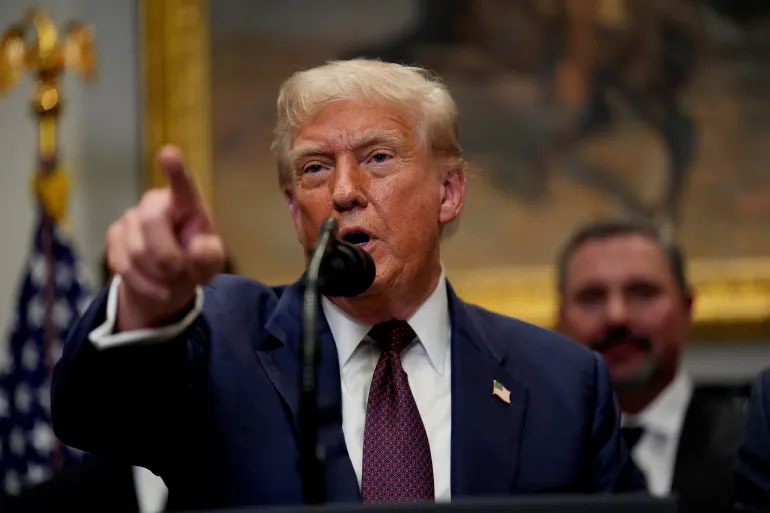
The Middle East does not need another war. It needs an agreement. And yet, President Donald Trump’s dismissal of Iran’s counter-proposals as “totally unacceptable” has brought the region precisely to the edge it feared most, threatening a fragile ceasefire that has held only since April 8. What was already a precarious equilibrium now looks increasingly difficult to sustain.
The sequence of events matters. Washington had presented Tehran with a fourteen-point memorandum of understanding, framed as a pathway toward reopening the Strait of Hormuz and establishing a broader framework for nuclear negotiations. The American terms were sweeping. They demanded a twenty-year moratorium on Iranian uranium enrichment, the transfer of Iran’s highly enriched uranium stockpile abroad, possibly to the United States itself, and the complete dismantling of Iran’s nuclear facilities. These are not negotiating positions designed to reach an agreement. They read more like terms of surrender.
Tehran responded with a counter-proposal that was firm but not irrational. Iran called for a shorter moratorium on enrichment rather than two decades of prohibition. It offered to export part of its highly enriched uranium stockpile while diluting the remainder domestically. It rejected, categorically, any dismantling of its nuclear infrastructure. Beyond the nuclear question, Iran demanded the lifting of American sanctions, the release of frozen Iranian assets, an immediate end to hostilities accompanied by verifiable guarantees against future attacks, the removal of the US naval blockade of the Strait of Hormuz, and formal recognition of Iranian sovereignty over that strategic waterway.
To any dispassionate observer, this is a negotiating document. It is not capitulation, but it is not maximalism either. Iran was willing to move on enrichment timelines. It was willing to move on its uranium stockpile. What it refused to do was dismantle the core architecture of its nuclear programme and hand Washington a blank cheque on future security guarantees while the bombs were still falling. That refusal, under the circumstances, requires very little explanation.
The deeper problem here is historical, and it carries a name. In 2015, the world witnessed a rare diplomatic achievement when Iran and the Western powers concluded the nuclear accord that brought international inspectors into Iranian facilities and rolled back Tehran’s enrichment programme in exchange for sanctions relief. It was imperfect, as all diplomatic agreements are. But it worked. Then Donald Trump walked away from it. He did so not because Iran had violated the deal, but because Israeli Prime Minister Benjamin Netanyahu and a constellation of hardline American interests had spent years lobbying for its destruction. That withdrawal was not strategy. It was a blunder of historic proportions, and the present crisis is its direct consequence.
The influence of Israeli interests over American foreign policy is not a conspiracy theory. It is a documented reality that has shaped Washington’s approach to Iran for decades. What changed under Trump’s first term, and has now reasserted itself in the current conflict, is that this influence found a president willing to translate Israeli preferences directly into American military action without apparent concern for consequences. Netanyahu had long sought to draw the United States into direct confrontation with Iran. He finally succeeded. The results are now visible to the entire region.
What makes this particularly damaging is that there were grounds for agreement before the war began. Oman’s foreign minister has indicated that US-Iran talks preceding the conflict had already produced Iranian concessions on key American demands regarding uranium enrichment. Washington chose war anyway. That choice will not be forgotten in Tehran, and it explains why Iranian distrust of American intentions runs so deep. A country that made concessions and still found itself at war has every reason to be reluctant about making further concessions now.
The United States is not negotiating from strength. This is the reality that Washington appears unwilling to confront openly. The war did not produce the outcomes that American planners anticipated. Iran’s military capabilities were not decisively eliminated. The Iranian regime did not collapse under the pressure of military strikes. Instead, the conflict has dragged on, consuming resources, accelerating economic disruption, and generating costs that have now begun to register on American soil. Public opinion in the United States is turning against the war. The Republican Party is staring at difficult midterm elections. The economic consequences of sustained conflict in a region that controls global energy flows are not abstract. They are being felt in American markets and American households.
Under these conditions, the imperative for a peace deal should be self-evident to any pragmatic political leader. Trump has presented himself throughout his political career as a dealmaker. Here is a deal that matters. Here is a deal that would reopen the Strait of Hormuz, stabilise global energy markets, reduce the risk of catastrophic escalation, and deliver him a foreign policy achievement that no American president has managed in decades. A durable settlement with Iran, one that addresses nuclear concerns through verifiable limits rather than impossible demands, would be a genuine diplomatic legacy.
But achieving it requires something that has been absent throughout this crisis: the willingness to resist Israeli pressure and engage Tehran as an adversary capable of rational calculation rather than a regime simply waiting to be destroyed. It requires acknowledging that broken agreements have consequences, and that trust, once shattered, must be rebuilt through consistent and verifiable commitments rather than fresh ultimatums.
The ceasefire of April 8 was not peace. It was an interruption. Whether it becomes something more durable depends on whether Washington can move beyond the posture of maximum pressure and toward the serious, sustained diplomacy that the moment demands. Trump has the opportunity. The question is whether the political will exists to seize it, or whether the region will be pushed once again toward a catastrophe that serves no one’s genuine interests, least of all America’s.