Abdul Rehman Khan
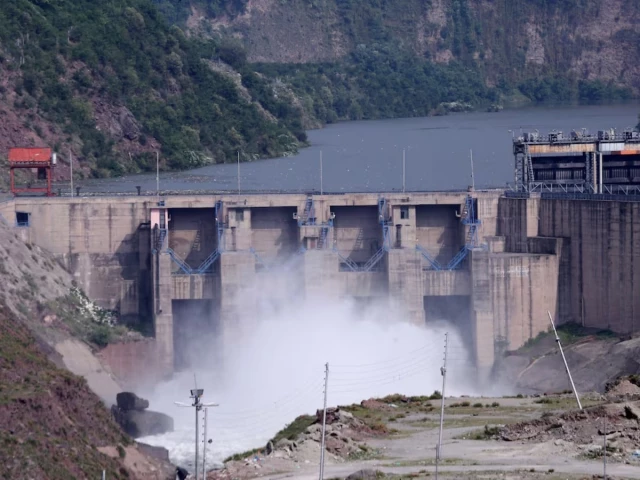
Pakistan’s mega dam projects have once again exposed the institutional rot that has long plagued public infrastructure development in this country. The concerns now surfacing over the Diamer-Basha Dam and the Tarbela 5th Extension are not isolated administrative hiccups. They are the latest chapters in a story Pakistan has told itself too many times: grand ambitions, weak oversight, vanishing accountability, and costs that spiral quietly until the damage becomes impossible to ignore.
Planning Minister Ahsan Iqbal’s open frustration over escalating costs and stalled PC-I revisions captures a problem that has grown deeply familiar. Diamer-Basha’s approved cost has ballooned dramatically since 2018, while revised project documents reportedly remained pending for years. Tarbela’s 5th Extension tells a similar story: massive cost escalation, troubling questions about project management standards, opaque consultant selection, and a decision-making process that has resisted scrutiny. These are not technical footnotes buried in committee reports. They are warning signs of a system that repeatedly fails to impose financial and operational discipline on projects that carry the weight of national strategic interest.
The shadow of Neelum-Jhelum hangs over every one of these conversations. That project became one of Pakistan’s most painful demonstrations of what happens when poor planning, technical negligence, delayed maintenance and inadequate oversight are allowed to compound over years. A flagship national asset was converted into a prolonged financial burden. Pakistan watched it happen, commissioned inquiries, expressed concern, and then proceeded to repeat comparable patterns elsewhere. The question is no longer why individual projects fail. The question is why the system that produces these failures remains structurally unchanged.
The honest answer lies in institutional memory, or rather its deliberate absence. Every few years, another inquiry surfaces the same weaknesses: poor due diligence at inception, inadequate field supervision, flawed procurement practices, weak contract management, and technical oversight that exists on paper more than in practice. Reports are written. Committees make recommendations. And then the cycle resumes on the next project, as though the previous one had never happened. This is not incompetence in isolation. This is a culture of diffused accountability, where responsibility is spread so thinly across overlapping bureaucracies and successive administrations that no one is ever meaningfully answerable when things go wrong.
Transparency is not a luxury in this environment. It is a basic governance requirement. Projects of this scale, involving hundreds of billions of rupees of public money, should be subjected to mandatory structured progress reporting released publicly at least twice a year. Every significant cost revision, every timeline change, every procurement decision of material consequence should be documented and independently reviewed before problems quietly accumulate into national liabilities. This is not about creating bureaucratic theatre. It is about building a system where delays and overruns cannot thrive in the darkness of opaque procedures and rotating administrations that inherit problems they did not create and are rarely held responsible for resolving.
Transparency also disciplines the projects themselves. When project managers and contractors know that timelines and expenditures will be publicly scrutinized on a regular basis, the internal culture of an ongoing project changes. Accountability becomes harder to avoid. Delays become harder to normalise. Cost revisions become harder to slip through without examination. The absence of such mechanisms is not an oversight in Pakistan’s infrastructure governance. It is, at this point, an institutional choice, whether made deliberately or simply allowed to persist through habit and convenience.
The Mangla compensation crisis reflects this same culture from a different angle. Thousands of people displaced by a national infrastructure project are reportedly still waiting for compensation years after formal agreements were reached. The defence ministry’s warning that unresolved grievances could generate protests serious enough to threaten internal security should never have been necessary. This situation should have been resolved long before it approached that threshold. Displaced communities are not a secondary concern attached to mega projects. They are not administrative inconveniences to be managed after the engineering work is complete. Compensation and resettlement are integral obligations of the project itself, and treating them otherwise is both a moral failure and a governance failure that eventually produces exactly the social instability now being warned about.
None of this diminishes the genuine strategic importance of what these projects are meant to deliver. Pakistan faces serious energy shortfalls, increasing water stress, and growing climate vulnerability. Expanding reservoir capacity and hydropower generation are not optional priorities. They are essential for long-term national stability and economic resilience. The country genuinely needs Diamer-Basha and Tarbela to succeed. But strategic importance is precisely the reason these projects demand stricter scrutiny, not looser governance. When the stakes are this high, the standards must be higher too. Strategic necessity has too often been used in Pakistan as a reason to rush past accountability rather than to enforce it more rigorously.
There is also a fiscal reality that deserves plain acknowledgment. Every major cost overrun does not simply disappear into state abstractions. It feeds into the national debt burden, adds pressure to an already strained development budget, and ultimately manifests in higher electricity costs passed on to consumers and future generations. Public sector inefficiency at this scale is not a problem confined to ministries and project offices. It is a burden transferred to ordinary households, to taxpayers, and to a country that can ill afford to keep absorbing self-inflicted financial damage on top of everything else it is managing.
The recurring nature of these failures has long passed the point where technical explanations are sufficient. The problem is institutional and cultural. Mega projects continue to operate in an environment where delays rarely produce real consequences, where inquiries fade before their recommendations are implemented, and where lessons from one disaster are simply not carried forward to the next project. Until that changes, Pakistan’s infrastructure ambitions will remain caught in the same exhausting cycle: announcement, enthusiasm, drift, escalation, inquiry, and quiet continuation of the very practices the inquiry criticised.
Real accountability, routine transparency, and project governance treated with the seriousness these investments demand are not aspirational improvements. They are the minimum standard this country owes to the public money being spent and to the future these projects are supposed to secure.