
Arshad Mahmood Awan
The government’s decision to introduce daily petroleum price adjustments marks one of the most significant changes in Pakistan’s fuel pricing policy in recent years. On the surface, the reform promises greater transparency, quicker responses to global oil market movements and reduced political interference in pricing decisions. If implemented properly, it could modernise the country’s petroleum pricing framework and align it with international best practices. However, while the objectives of the policy are commendable, its success will ultimately depend on institutional credibility, regulatory capacity and the government’s willingness to protect consumers rather than merely shifting market volatility onto them.
For years, petroleum pricing in Pakistan has been influenced by political considerations as much as economic realities. Governments have often delayed price increases to avoid public criticism, particularly before elections or during periods of political instability. Likewise, reductions in international oil prices have not always been passed on immediately to consumers, allowing authorities to retain higher tax revenues or adjust fiscal priorities. Such practices undermined transparency and weakened public confidence in the pricing mechanism.
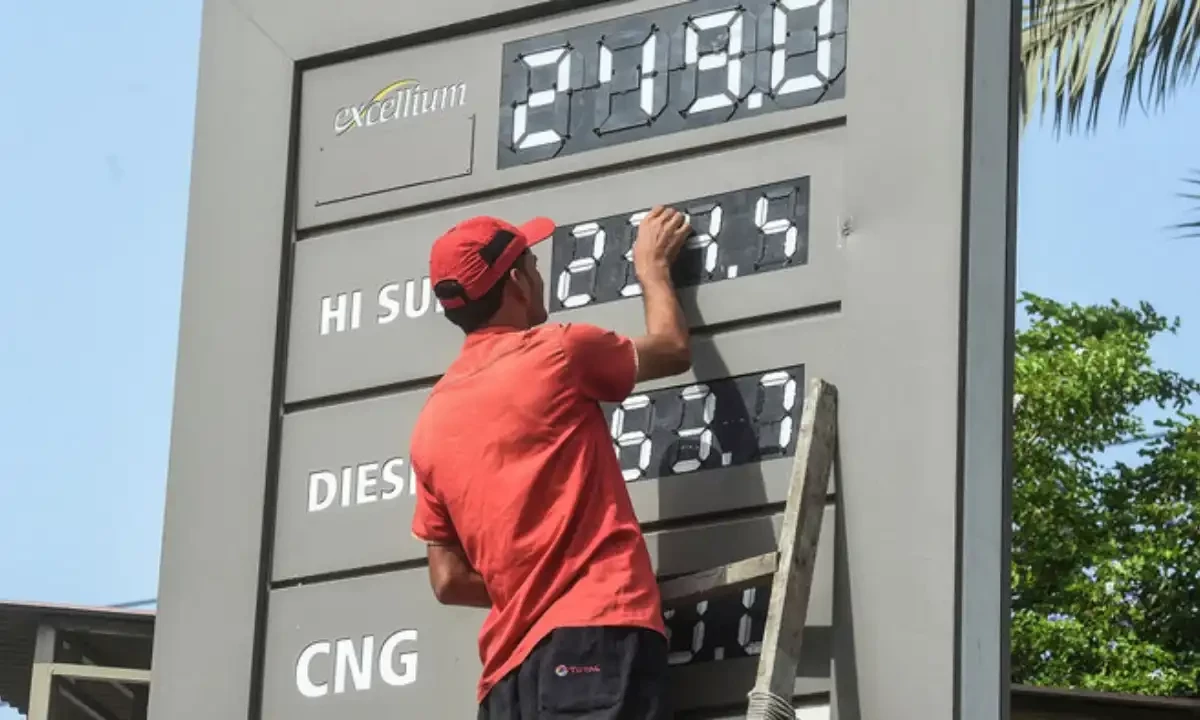
The new system seeks to change this approach. Under the revised mechanism, the Oil and Gas Regulatory Authority will determine petroleum prices every day based on internationally recognised Platts benchmark prices while incorporating exchange rate movements and other relevant cost components. More importantly, the regulator will disclose the composition of retail prices, enabling consumers to understand how the final price is calculated. Greater transparency should reduce speculation about hidden taxes or arbitrary government decisions.
Daily pricing also reflects the realities of today’s volatile energy markets. Geopolitical conflicts, supply chain disruptions and currency fluctuations can alter crude oil prices within hours. Waiting a week or two before adjusting domestic prices creates distortions between local and international markets. Frequent adjustments ensure that consumers experience smaller, gradual changes instead of sudden and politically sensitive price shocks.
One of the strongest arguments in favour of daily revisions is the reduction of speculative behaviour. Under the previous weekly or fortnightly system, petrol pump owners often anticipated impending price increases. Dealers could purchase additional fuel at lower prices before the official revision and later sell those inventories at higher retail prices, generating substantial windfall profits. These gains did not arise from improved efficiency or better customer service but simply from exploiting delays in the pricing system. Consumers ultimately paid higher prices while dealers benefited from inventory appreciation.
Daily adjustments significantly reduce these opportunities. Since prices closely follow international market movements, there is little incentive to accumulate excessive inventories for speculative purposes. This creates a more competitive market where retailers earn income through operational efficiency and regulated margins rather than exploiting information gaps. Similarly, daily pricing protects dealers from sudden inventory losses when international prices decline unexpectedly.
The reform also promises to reduce political discretion. Fuel prices should reflect objective economic conditions rather than electoral calculations or short-term fiscal objectives. Removing political influence strengthens policy credibility and signals that Pakistan is committed to market-based economic management. Investors generally view predictable regulatory systems more favourably than discretionary government interventions.
India’s experience demonstrates that such reforms can succeed. Since June 2017, India has adjusted petrol and diesel prices daily. Consumers gradually adapted to smaller, more frequent price movements, while the market became more responsive to global developments. Although daily pricing did not eliminate public dissatisfaction with rising fuel costs, it created a more transparent and predictable pricing environment.
Nevertheless, Pakistan should not assume that adopting a similar mechanism will automatically produce similar outcomes. The country’s institutional environment differs significantly. Public confidence in regulatory authorities remains relatively weak, and concerns persist regarding taxation, exchange rate management and the overall transparency of energy pricing. Publishing daily prices alone will not convince consumers unless every component—including taxes, levies, dealer commissions and transportation costs—is disclosed in a clear and verifiable manner.
Another concern is consumer vulnerability. While daily pricing distributes increases more gradually, it also exposes households and businesses to continuous fluctuations. Transport operators, farmers and small businesses may struggle to plan operating costs when fuel prices change every day. The government should therefore complement the reform with improved public information systems, digital notifications and regular explanations of major market developments. Transparency requires communication as much as publication.
The opposition expressed by petroleum dealers deserves careful but limited consideration. Legitimate concerns regarding operating costs, dealer commissions and business sustainability should certainly be examined through evidence-based reviews. If existing margins no longer cover actual expenses because of inflation or regulatory changes, adjustments may be justified. However, no commercial interest should be allowed to preserve a pricing structure that enables speculative profits at the expense of millions of consumers.
The broader challenge lies beyond the pricing mechanism itself. Pakistan’s heavy dependence on imported petroleum leaves the economy highly vulnerable to external shocks. Daily pricing improves price transmission but does not reduce import dependence, strengthen energy security or address structural weaknesses in the transport sector. Long-term policy must therefore accelerate investment in renewable energy, electric mobility, public transportation and domestic energy resources.
Ultimately, daily petroleum pricing represents a positive reform, but it is not a complete solution. Its credibility will depend on transparent implementation, independent regulation and consistent public accountability. Without these safeguards, daily price revisions risk becoming another administrative exercise that changes the frequency of price announcements without addressing the deeper problems of Pakistan’s energy economy.