
Naeem Afzal
I have statistics that prove that cities in Pakistan are no longer the drivers of growth. In the 1980s, the urban population growth rate was 5.3%, which has reduced to 2.4% in 2024, indicating a ‘slowdown’ in migration flow from rural to urban areas.
It doesn’t mean that people aren’t moving. They are moving, but this time not to Lahore or Karachi but to London or Beijing. In the 1980s, there was a fifty-fifty ratio between domestic and international passengers. Today traffic for international departures has soared to seventy-five percent.
In Pakistan, from both the public and private universities, nearly two million students finish graduation. Obviously, they seek jobs immediately after coming out of campuses. The current economic growth of nearly three percent is not creating enough workspace for the two million young workers.
Cities are the engines of growth worldwide. Because of all the instruments of the modern economy, such as corporations, firms, and entrepreneurial spirits, all are situated in the modern economies. The private sector has strong footprints in cities; people move from rural areas and get employed there.
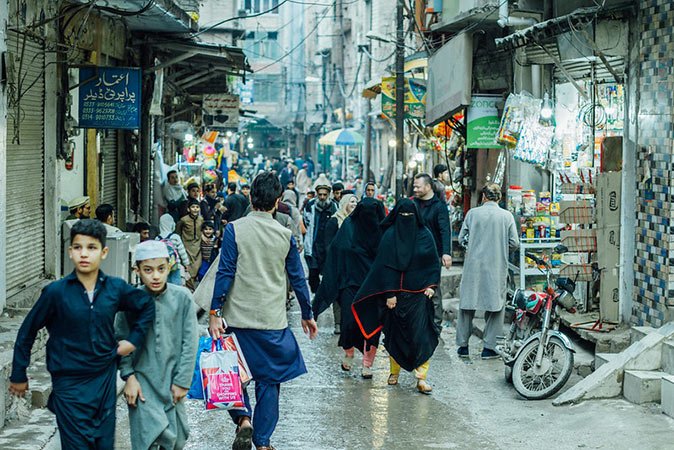
Similarly, it had been the case with Pakistani cities, though they were relatively less successful than the world cities. But now it’s under a tremendous evolutionary process. Cities do not attract rural people as they did in the past: poor air quality, lack of affordable housing, and other governance-related problems are diminishing the cities’ value in the eyes of citizens.
Two sectors in cities produce jobs that draw people in. In Pakistan, both sectors have been jammed with unproductive political economy and low investments. Firstly, the service sector, which is the hub of job creation in cities, has been suffering with stagnant growth and low productivity challenges; a study by Pakistan & Accounting shows that Pakistan’s service sector has grown at the rate of less than 3%—far slower than it should be, almost at a stagnant level.
Secondly, the large-scale manufacturing sector. The LSMI Index indicates that in Pakistan, out of 83 products, 46 have seen ‘declining’ trends. Our industrial sector has been mired in challenges due to low investment rates, which have been stagnant at 9% in the private sector for decades. It’s always scared of global market competition and seeks out state protection and amenities in the form of cheap credit and cheap gas or power.
In short, our cities have failed in making positive contributions to the economy. Whether in the provision of affordable housing, clean drinking water, quality air, and better living conditions, failures are everywhere in every sector. Take it with little surprise when you hear why people are preferring Riyadh and Beijing over Lahore and Karachi, because people can’t breathe poisonous air, eat unhealthy food, drink unclean water, and live in smelly, overcrowded, shitty apartments. They anticipate that cities will be growth engines. However, they’re not!
The writer is a researcher at the Republic Policy.