
Tahir Maqsood Cheena
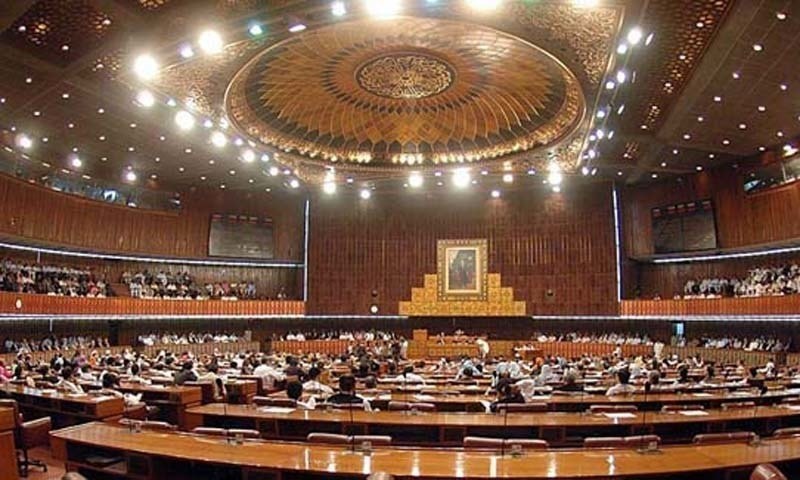
Twenty percent. That is the share of National Assembly members whose attendance record reflects any meaningful commitment to the job they were elected to do. According to records compiled by the Free and Fair Election Network, only 66 out of 333 Members of the National Assembly attended all nine sittings of the 27th session. Thirty-three lawmakers did not appear for a single one. The Prime Minister himself was among the persistent absentees. These numbers do not require elaborate interpretation. They speak plainly to a parliament in serious dysfunction.
The current government has never been shy about invoking the supremacy of parliament. The phrase has been repeated with great conviction whenever other institutions needed to be reminded of their place. Parliament is supreme, we were told. It embodies the will of the people. It is the highest expression of democratic authority in the land. The irony of those declarations is now impossible to ignore. The very people who championed parliamentary supremacy most loudly are among those who cannot be bothered to show up to its sessions. An institution cannot be supreme and abandoned at the same time. When its own custodians stop pretending it functions, the rest of the country is left wondering what exactly remains supreme about it.
The attendance crisis does not exist in isolation. It is the visible symptom of a deeper institutional rot. For years, one of the most persistent criticisms of the National Assembly has been that legislation passes without adequate debate, without scrutiny of its consequences, and without genuine deliberation among elected representatives. For a long time, observers attributed this to external pressures and the well-documented habit of pushing bills through in haste. That explanation, while still valid, no longer tells the full story. Lawmakers have now settled into a complacency so complete that many do not feel any obligation to contribute even a physical presence.
The reasons for this are not difficult to identify. In a political system where electoral reward flows more reliably from loyalty to powerful interests than from service to constituents, the incentive to attend parliamentary sessions is simply not strong enough. Consistent attendance, serious engagement with legislation, and genuine advocacy for voters carry little guaranteed return in a system built on patronage and managed outcomes. The cost of absence, in political terms, appears negligible to those who have learned how elections in Pakistan actually work.
This calculation has consequences that extend well beyond poor attendance statistics. Lawmakers across party lines have complained, both publicly and privately, that legislation and constitutional amendments routinely land on their desks without prior notice or explanation, and they are expected to vote on them without any serious discussion of what they contain or what they will do. That is not parliamentary democracy. That is rubber-stamping dressed in democratic clothing. The assembly becomes a procedural formality rather than a deliberative body, and the people it was elected to represent receive nothing of substance from the exercise.
The timing of this crisis makes it particularly worrying. The same legislature that cannot manage consistent attendance across nine sessions will soon be expected to debate and pass the federal budget. The budget is not a routine administrative document. It determines how public money is collected and spent, which sectors receive investment, what relief ordinary citizens receive from taxation, and how the state intends to manage an economy still recovering from years of instability and inflation. A parliament that treats attendance as optional is poorly positioned to perform that function with any seriousness. The public would be right to expect very little genuine advocacy on their behalf when the process begins.
There is also a broader signal being sent to society. When those entrusted with keeping democracy alive and functioning abandon even the basic requirement of showing up, they communicate something damaging about the value of the entire enterprise. Citizens who sacrifice time and effort to vote, who invest hope in electoral outcomes, and who look to parliament as the institution most directly accountable to them, deserve representatives who at least occupy their seats. The gap between democratic rhetoric and democratic practice in Pakistan has always been wide. An attendance rate of twenty percent is a particularly stark measurement of that distance.
Reform in this area is not technically complicated. Attendance records are public. Accountability mechanisms exist in principle. Party leadership retains the authority to discipline members and impose consequences for chronic absence. What is missing is the will to enforce any of it. Until political parties treat parliamentary attendance as a genuine obligation rather than a personal choice, and until the public begins demanding accountability from lawmakers who treat elected office as an occasional convenience, the National Assembly will continue to fall short of the institution it is supposed to be. A parliament that nobody attends is not supreme. It is simply empty.