
Zafar Iqbal
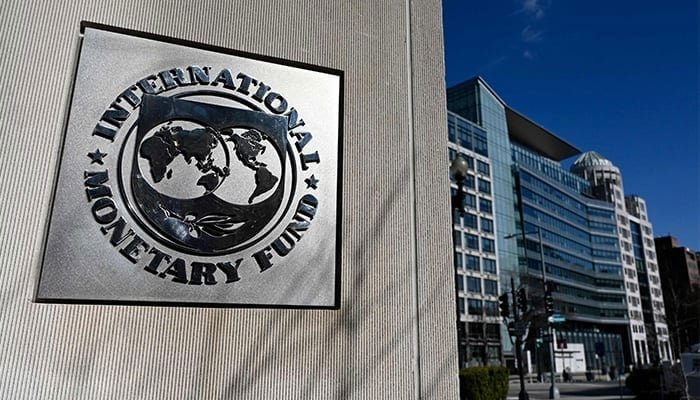
The International Monetary Fund expects Pakistan’s economy to grow by 3.5 percent in FY27, a full half point below the government’s own target of 4 percent. On the surface this looks like the usual mild disagreement between a cautious lender and an optimistic government. It may in fact be something more serious: the Fund could be wrong not because growth will disappoint, but because it will exceed expectations in a way that quietly rebuilds the very pressures Pakistan has faced before.
The IMF’s projection assumes that higher commodity prices, tighter financial conditions and weaker external demand, all linked to the recent Middle East conflict, will hold back domestic activity. Its staff report attributes a full 0.6 percentage point reduction to that conflict alone, bringing the earlier forecast of 4.1 percent down to 3.5 percent. The logic is consistent on its own terms, but it may be reading Pakistan’s domestic cycle in the wrong direction.
The data collected before the shock tell a different story. Pakistan Bureau of Statistics figures show the economy expanding by close to 4 percent in each of the first three quarters of FY26. The government’s own provisional estimate of 3.7 percent for the full year sits below that pace, and recent history suggests such estimates tend to be revised upward rather than down. The State Bank’s February assessment pointed the same way, projecting growth of up to 4.75 percent for FY26 and expecting further acceleration in FY27. Even after revising its short-term view downward following the regional conflict, the Bank’s underlying read on industrial output, construction and credit remained one of continuing strength.
The production numbers support that reading. Large-scale manufacturing grew by more than 6 percent during July to April of FY26, and private-sector credit expanded well above its five-year average, later settling near 13 percent growth by June. This is the familiar shape of an economy moving into an upswing: manufacturing rising, working capital needs increasing, consumer financing returning, construction picking up, and services following behind. The more than 1,100 basis points of monetary easing delivered since mid-2024 is still working its way through the system, and that effect does not switch off simply because an external forecast has changed.
Inflation, rather than choking this cycle early, may be helping to sustain it. Headline inflation stood above 11 percent in June, and with the policy rate close to that level, the real cost of borrowing has narrowed to almost nothing. For businesses enjoying higher sales and rising inventory values, financial conditions are considerably looser than the official rate suggests.
Put together, this makes a real case for FY27 growth landing above both the IMF’s figure and the government’s target, potentially past 4.5 percent once the FY26 numbers are revised upward. Ordinarily that would be celebrated. In Pakistan’s case, it should instead be read as a warning sign.
The external accounts are already showing the strain beneath the surface. The current account surplus for July to May of FY26 fell to just 255 million dollars, down sharply from 1.6 billion dollars a year earlier, while the trade deficit widened by more than five billion dollars. The details matter here: the growth is concentrated in automobiles, steel, machinery and other intermediate goods, precisely the imports that rise when domestic production and construction recover. A surge in remittances, above 41 billion dollars for the year, has so far masked the size of this deterioration.
Meanwhile the exchange rate has barely moved, holding near 278 rupees to the dollar even as inflation stays in double digits and the real effective exchange rate climbs well above its year-earlier level. None of this alone proves the currency is overvalued, but the combination of rising prices, a static nominal rate and a widening trade gap is a pattern Pakistan has seen several times before, ahead of the balance-of-payments adjustments of 2008, 2018 and 2022. In each case growth and credit accelerated, imports outpaced exports, the currency was held steady for too long, and reserves were spent defending an illusion of stability until the adjustment could no longer be delayed.
Pakistan does begin FY27 in a stronger reserve position than during some of those earlier episodes, with the State Bank holding around 18.5 billion dollars. That cushion is real, but it is a buffer against shocks, not a substitute for timely adjustment, and a comfortable buffer has its own risk of breeding complacency.
If current trends in credit, imports and the exchange rate continue, external pressure is likely to become visible sometime between March and September of 2027. Avoiding that outcome will require letting the exchange rate move earlier rather than later, keeping the real policy rate meaningfully positive as inflation shifts, and delivering the promised fiscal surplus without resorting to deferred spending or accounting adjustments. Pakistan’s real risk going into FY27 may not be growth falling short of expectations. It may be growth succeeding, through the same channels that have repeatedly ended in crisis.
The best-selling books of Republic Policy Think Tank, including the landmark book The Bureaucratic Coup, are available at Vanguard Books, Liberty Books, Readings, Kitab Sarai, Sang-e-Meel, Saeed Book Bank Islamabad, National Book Foundation, and others across Pakistan. Contact for home delivery: 0300 9552542.