
Mubashar Nadeem
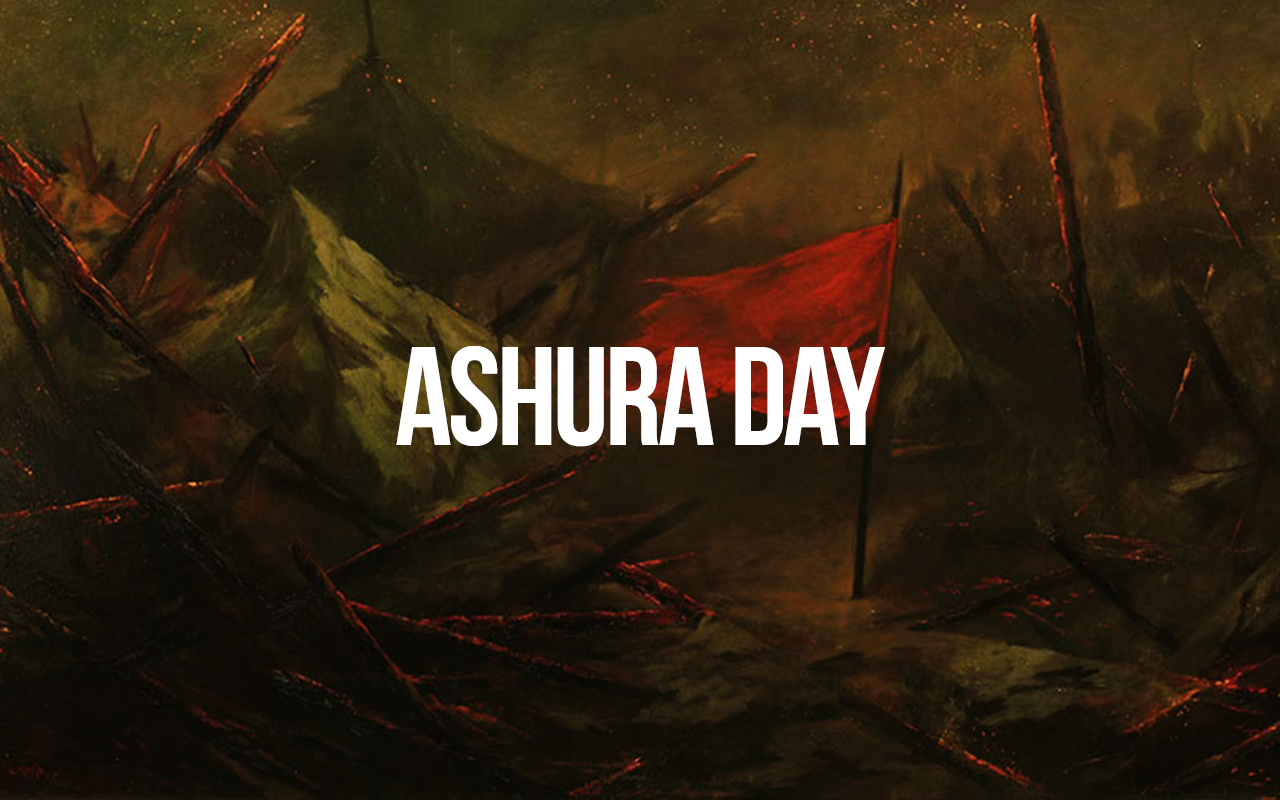
The battle of Karbala was not simply a military confrontation between rival political forces. It was something far more enduring: a collision between two visions of what human beings are capable of being. On one side stood Imam Hussain, embodying courage without calculation, compassion without condition, and a firmness before oppression that neither threats nor impossible odds could break. On the other stood forces that represented the worst impulses of power: cruelty toward the weak, indifference to suffering, and the willingness to commit any outrage in the service of domination. Fourteen centuries have passed. The two sides of that confrontation remain as recognisable today as they were in the desert of Karbala.
This is why the message of Hussain refuses to age. History is full of battles. Most are forgotten. Karbala is remembered not because it was militarily significant but because it was morally absolute. Imam Hussain did not calculate his chances. He did not negotiate his principles downward in exchange for survival. He stood, with a small band of companions and family, against an army of thousands, and he chose martyrdom over submission to tyranny. That choice resonates across every century because every century produces its own version of the same choice. The question Karbala poses to every human being in every era is identical: when confronted with injustice, do you stand or do you submit?
The values Imam Hussain embodied are described in the Islamic tradition as those of ashraf al-makhluqat, the crown of creation. But these values are not the exclusive property of any sect, faith, or civilisation. They are the values that every decent human instinct, in every culture that has ever existed, has recognised as noble. Courage in the face of danger. Mercy toward the powerless. Refusal to bend before the corrupt. These are not sectarian virtues. They are human ones. This is precisely why figures from beyond the Islamic world have honoured Hussain’s memory, recognising in his stand something that speaks directly to the human conscience regardless of religious affiliation.
Ashura, the annual remembrance of Karbala, functions as an invitation. Not an invitation addressed only to Muslims, and not one addressed only to those who share a particular theological tradition. It is an invitation extended to every person who wishes to examine themselves honestly, who wants to distinguish between the Hussaini impulse within them and the opposing impulse toward self-interest, cowardice, and moral compromise. The nafs-i-ammara, the base self that every spiritual tradition across the world has identified as the enemy of human dignity, is what Imam Hussain’s example teaches us to resist. The lesson is available to anyone willing to receive it.
Consider the world as it stands today. In Muslim societies, there is abundant religious vocabulary and severely diminished religious practice. Justice remains a luxury of the powerful. The weak are managed rather than served. The language of faith is everywhere; its substance is rare. In non-Muslim societies, material prosperity has reached levels unimaginable to previous generations, yet depression, isolation, and spiritual emptiness have become defining features of modern life. Wealth without meaning produces suffering. Comfort without purpose produces despair. The diagnosis Karbala offers is the same for all of these conditions: a civilisation that has placed the self at the centre of everything will hollow itself out, regardless of its wealth or its prayers.
Imam Hussain did not preach from a position of safety. He gave everything. His brothers, his sons, his nephews, his companions, all fell in the sands of Karbala. The women of his household, granddaughters of the Prophet himself, were taken captive and marched through the streets of Kufa and Damascus as trophies of power. His sole surviving son was taken in chains. Hussain sacrificed all of this not for political advantage, not for territorial ambition, but for a principle: that justice must be spoken, that oppression must be named, and that truth has value even when its defence costs everything.
It is this totality of sacrifice that keeps the memory of Karbala alive and burning in human hearts. The Prophet is reported to have said that the martyrdom of Hussain has ignited a flame in the hearts of believers that will never be extinguished. That flame is visible in every generation that has refused to be silenced by power, in every individual who has chosen dignity over convenience, and in every society that has found in Hussain’s example the strength to resist the tyrants of its own time.
The names of those who oppressed Hussain are remembered today only with contempt. His name is spoken with love across continents, across faiths, and across centuries. That alone is the verdict of history. Injustice wins battles. It does not win time. Truth, even when it is defeated in the moment, outlasts every empire that tried to crush it. Karbala proved this once. Every age since has confirmed it again.
The best-selling books of Republic Policy Think Tank, including the landmark book The Bureaucratic Coup, are available at Vanguard Books, Liberty Books, Readings, Kitab Sarai, Sang-e-Meel, Saeed Book Bank Islamabad, National Book Foundation, and others across Pakistan. Contact for home delivery: 0300 9552542.