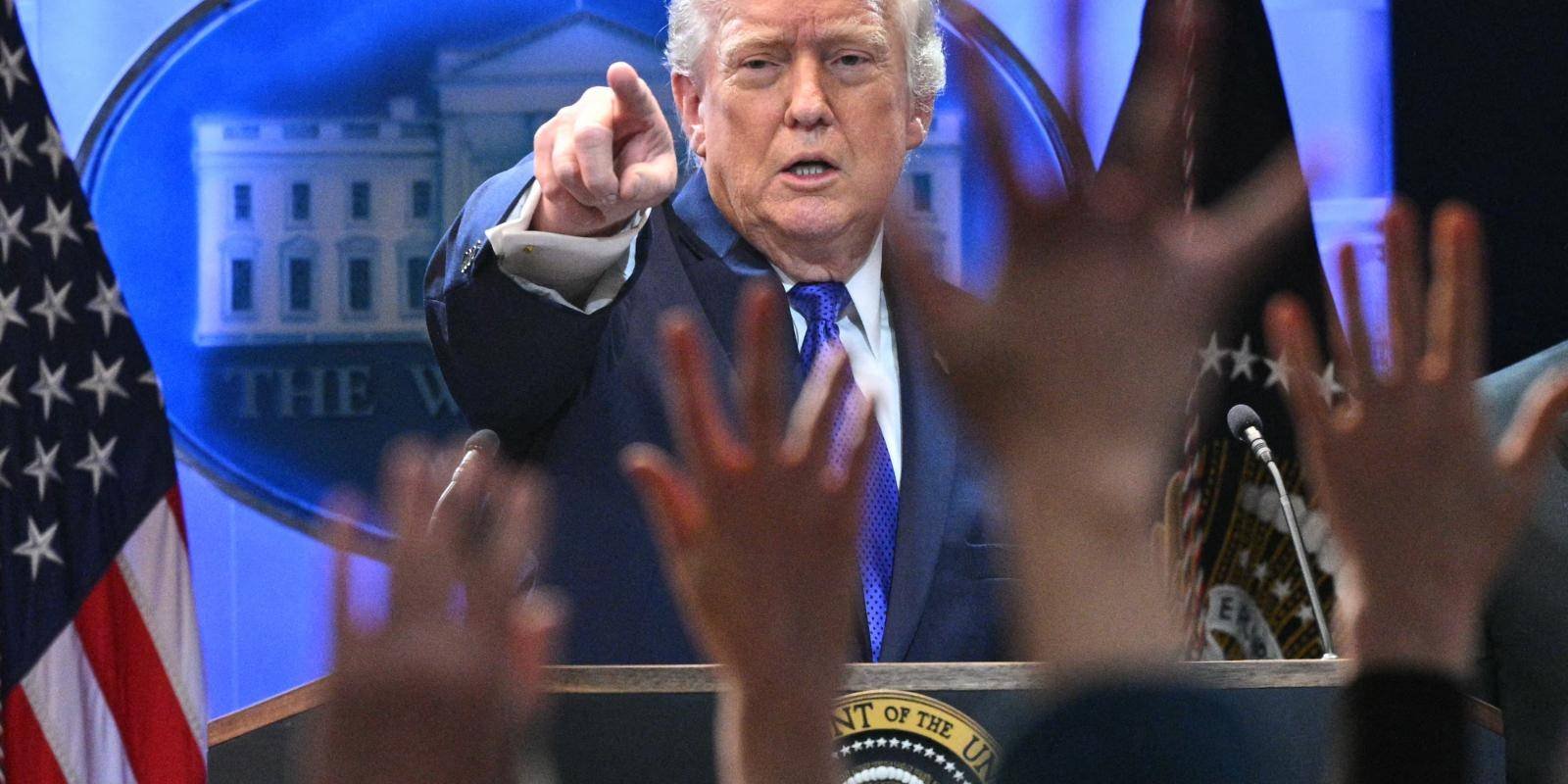

The 2026 World Cup final in New Jersey may stand as a high-water mark of American soft power and a moment of personal prestige for President Donald Trump on the world stage. But at home, a quieter unease is growing over just how far his vision of presidential authority has expanded.
Is the United States now governed by something closer to an “imperial presidency”? Has the Supreme Court, through its recent rulings, handed the office powers that future presidents and future generations may find nearly impossible to claw back? And how might Trump’s increasingly autocratic governing style shape the political mood heading into November’s midterm elections?
These are the questions at the center of a new discussion hosted by Bronwen Maddox on Chatham House’s Independent Thinking podcast, joined by Heather Hurlburt and Max Yoeli of the institute’s US and North America Programme. Their conversation ranges from presidential overreach and the legal architecture behind it to something more unexpected: Trump’s persistent instinct to align himself with the theater of sport.
At the heart of the discussion is the “unitary executive theory,” the constitutional idea that the president holds sole and largely unchecked authority over the executive branch, free from interference by Congress or independent agencies. Once a fringe legal argument favored mostly by conservative scholars, the theory has moved steadily toward the mainstream of American governance, with the Supreme Court’s recent decisions widely seen as lending it new legitimacy. Hurlburt and Yoeli explore what that shift means in practice: an executive branch less constrained by institutional checks and a presidency structurally emboldened in ways that may long outlast any single occupant of the office.
The panel also turns to the symbolism of spectacle. Trump’s eagerness to attach himself to marquee sporting events, from World Cup finals to other global stages, is treated not as incidental showmanship but as a calculated extension of his political style, using the language of victory, dominance, and national pride to reinforce his image at home and abroad.
Underlying the conversation is a broader unease about the durability of American institutional restraint. Presidential power has expanded before in moments of crisis, only to recede once the crisis passed. What makes this moment different, the panel suggests, is the possibility that the expansion is no longer incidental but structural, embedded in legal doctrine and judicial precedent rather than simply in the personality of one president.
Whether voters register any of this as a warning sign or as strength may become clearer in November. But the panel’s underlying argument is that the question is no longer simply about Trump himself. It is about whether the office he currently holds has been permanently reshaped for whoever comes next.