
Tariq Mahmood Awan
Since Pakistan came into being, the same game has kept repeating itself. The system of government in Pakistan has never truly worked. Sometimes parliamentary democracy is tried, sometimes a presidential system is imposed, sometimes martial law arrives, sometimes democracy is restored, and sometimes a hybrid arrangement takes shape instead. Through all of this churning, the position of the establishment keeps shifting, the standing of politicians keeps shifting, the role of the judiciary keeps shifting, and the status of parliament keeps shifting from one era to the next. Yet among the three constitutional pillars of the state, the legislature, the judiciary, and the executive, there is one player whose position has never shifted at all, and that player is the civil bureaucracy. From this single fact alone, one can measure just how skillfully the civil bureaucracy has managed every other player on this board of power. Pakistan’s bureaucracy has remained, since 1947, almost entirely unchanged in its structure.
Have we ever paused to seriously reflect on this reality?
If this entire system is examined closely, it becomes clear that every player in this game, whether political, military, or judicial, ultimately depends on the civil bureaucracy to run the government. Whether it is a hybrid setup, a political government, a democratic government, or martial law, the actual delivery of governance, performance, and public service rests on the civil bureaucracy, because it is the implementing machine of the state. It is the hand that turns the wheel, regardless of who sits in the driver’s seat.
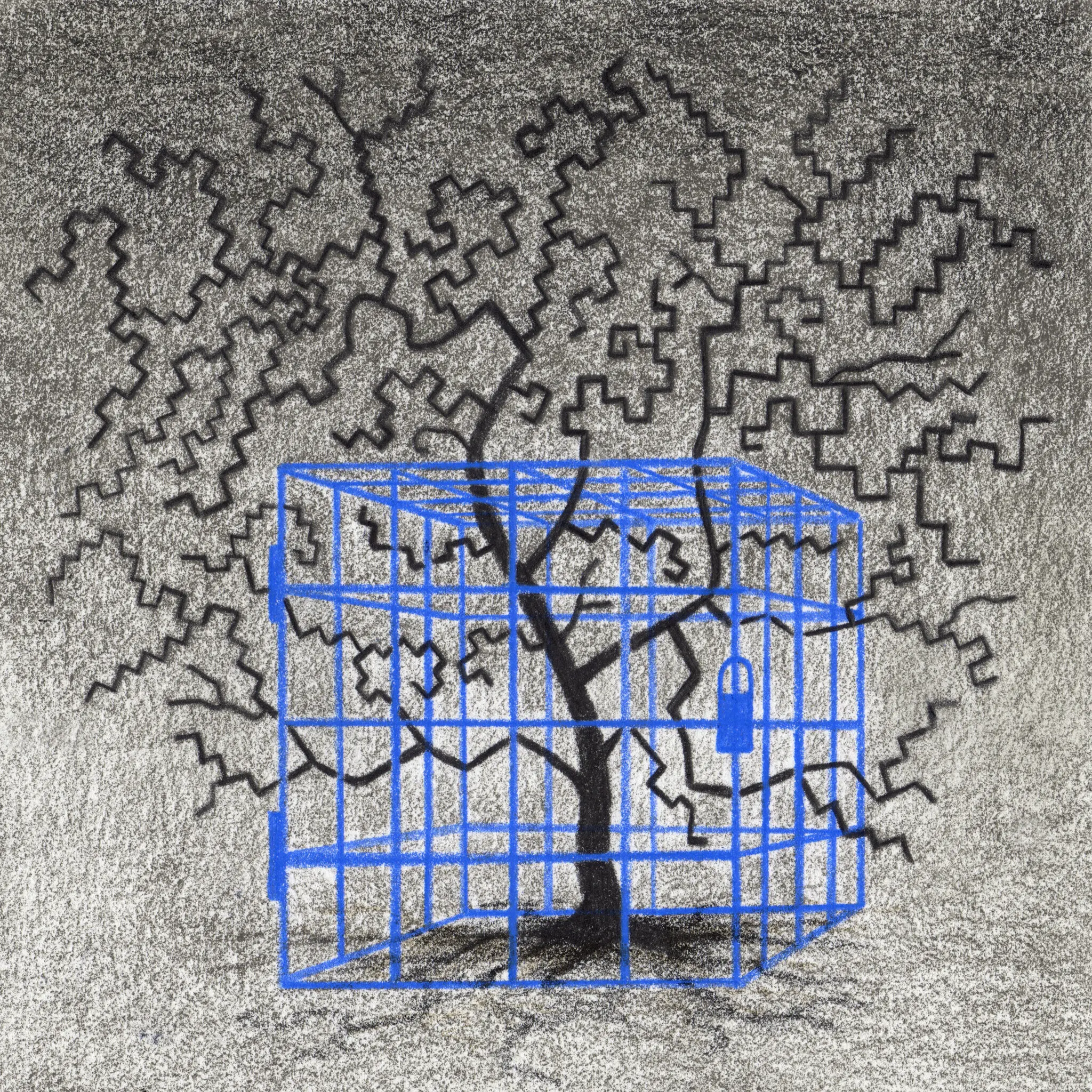
And this is precisely where the real management of the civil bureaucracy reveals itself. In truth, it is the bureaucracy that causes the system to fail, yet the blame lands on politicians and on the establishment, because they are the visible face of government while the bureaucracy works quietly behind the curtain. Astonishingly, Pakistan still carries a colonial generalist bureaucracy today, a structure that finds almost no parallel anywhere in the modern world. It is this very generalist bureaucracy that, in practice, turns a federal state into a unitary one. Through its generalist cadre, it holds control over every tier of governance and every state institution by means of a scheme of reserved posts. The clearest evidence of this lies in the fact that the heads of the country’s most important institutions are handpicked from these very cadres, regardless of whether the institution has anything to do with their training or their field.
Because of this same colonial generalist bureaucracy, local government institutions, provincial governments, the Council of Common Interests, and the federal government all find themselves compromised in performing their true constitutional roles. Each of these tiers was meant to stand on its own footing, answerable to its own people and its own legislature. Instead, each one finds a generalist officer sitting at its helm, an officer trained for everything in general and for nothing in particular, an officer who owes his loyalty not to the institution he heads but to the cadre that sent him there and will one day call him back.
On Pakistan’s political chessboard, every player keeps changing. Governments fall, alliances shift, faces come and go. But there is one player who has laid out this entire chessboard from the very beginning, and that player is the civil bureaucracy, a player who has never once been changed. From the district level up to the federal government, it continues to perform the de facto role of the legislature, the executive, and the judiciary all at once, quietly, persistently, without ever being asked to answer for it.
Pakistan, therefore, owes itself at least one honest attempt to reform this colonial generalist bureaucracy, to reform it in line with the constitution, in line with genuine governance, in line with federalism, and in line with the modern age. This is not a small ask, and it should not be treated as one. A country that has tried every form of government except a properly functioning one owes itself the courage to finally address the one institution that has outlasted them all.
Such reform must be shaped so that the federal government has its own distinct bureaucracy, so that the Council of Common Interests has its own all-Pakistan service, so that the all-Pakistan common civil services carry a clearly defined constitutional standing, so that every province has its own bureaucracy, and above all, so that local governments have their own permanent and autonomous bureaucracy, one that answers to its own elected government and to its own relevant legislature, and to no one else.
Even more important than this is what becomes possible once every tier of government has its own bureaucracy: specialization becomes easy to achieve. Every sector, every department, every institution will then be run by experts, by specialist administrators, by professionals who have spent their careers mastering that particular field, not by generalist officers who are moved from irrigation to health to finance to foreign affairs within the span of a single career, never mastering any of it. Pakistan’s institutions can only truly be run by specialized administrators, people who combine deep expertise in their relevant field with genuine administrative skill, because administration itself is a specialization, not a birthright that comes attached to a cadre.
And so a fundamental question presents itself. Why should Pakistan not, for once, try transforming its bureaucracy into something modern, something federal, something that meets the standards of the world around it? Perhaps only then would the system finally become capable of delivering. Perhaps this is the one reform that Pakistan has never truly attempted, the one reform that could finally make the entire system work as it was always meant to.
In the end, the real question is this: do Pakistan’s politicians, its establishment, its judiciary, and its people possess the commitment and the capacity needed to reform the colonial generalist bureaucracy of the British Raj on the basis of law, federalism, and modern principles? Until that question is answered honestly, the game on the chessboard will keep changing its players while the board itself remains exactly as it was.
I have written on these very issues in detail in my books, Fixing the Executive, Fixing the Legislature, Fixing the Judiciary, and The Bureaucratic Coup. Anyone interested in governance owes it to themselves to read these books.
The best-selling books of Republic Policy Think Tank, including the landmark book The Bureaucratic Coup, are available at Vanguard Books, Liberty Books, Readings, Kitab Sarai, Sang-e-Meel, Saeed Book Bank Islamabad, National Book Foundation, and others across Pakistan. Contact for home delivery: +92 341 4222501