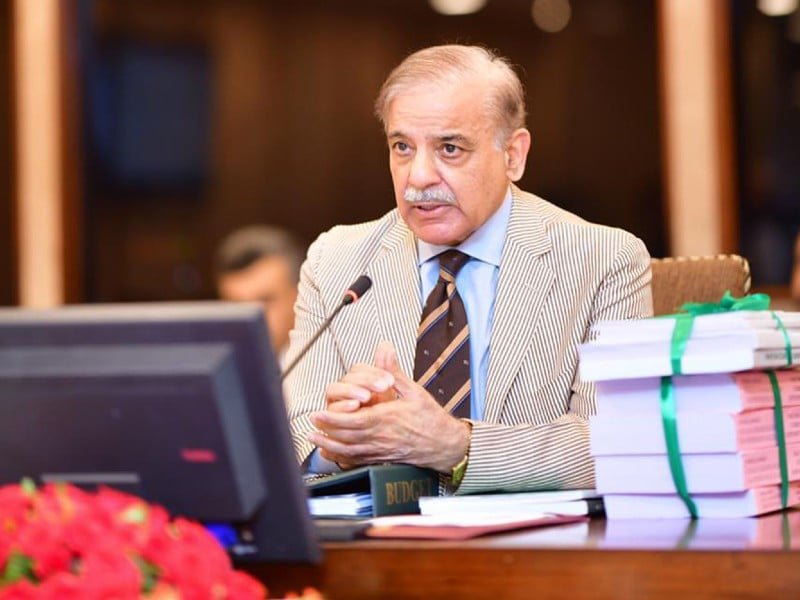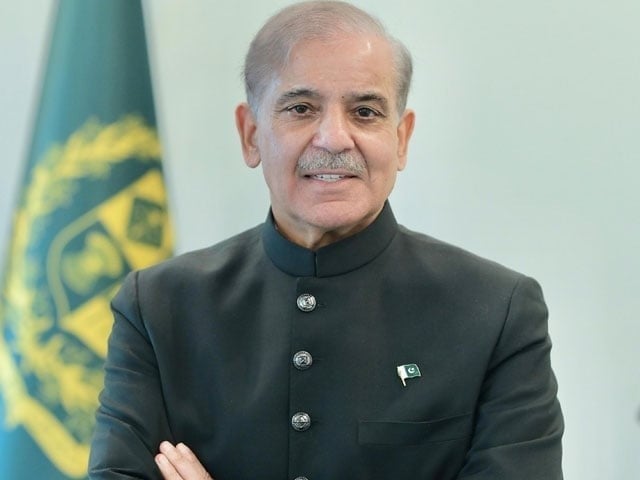

Prime Minister Shehbaz Sharif said Monday that the recently signed Makkah Joint Defence Agreement is “entirely for defensive purposes” and not intended for any form of aggression.
The pact, signed on August 7 between Pakistan, Saudi Arabia, and Turkiye, aims to strengthen collective deterrence and empowers its signatories to treat an attack against one member as an attack against all. Addressing the federal cabinet, Sharif recalled that he, Saudi Crown Prince Mohammed bin Salman, and Turkish President Recep Tayyip Erdogan had signed the agreement in Makkah on Friday. He stressed that its objective is to “promote peace, progress, and prosperity in the region.” “Its purpose is definitely not that any aggression occurs. It is entirely for defensive purposes, for peace, tranquillity and progress in the region,” he said, adding, “I believe this agreement is a source of strength not just among these three countries, but for the entire Muslim ummah.”
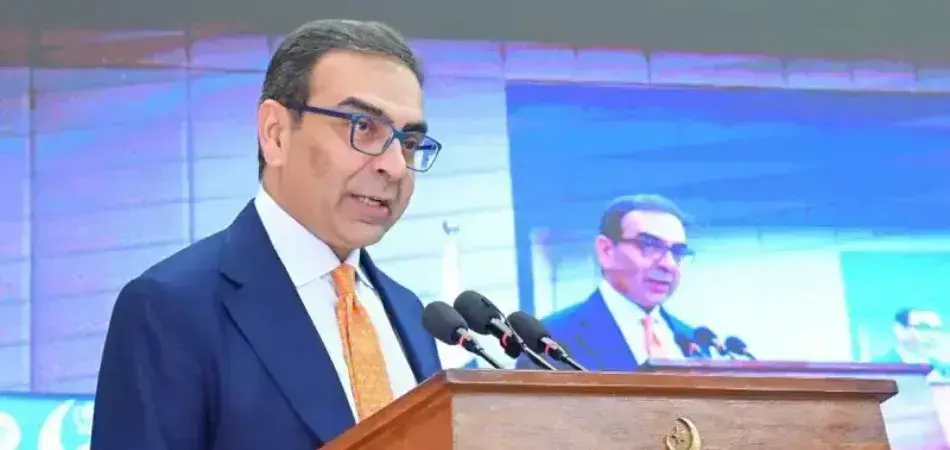
The prime minister particularly commended Deputy PM and Foreign Minister Ishaq Dar, along with Chief of Defence Forces Field Marshal Asim Munir, for their role in the agreement, noting that efforts toward the pact had been underway for “many years” before materialising on Friday. He pointed out that Pakistan and Saudi Arabia had already entered a Strategic Mutual Defence Agreement in September 2025, while Islamabad and Ankara have maintained defence arrangements “for decades.” He also recalled that Pakistani forces have long stood alongside Saudi forces in defending the holy cities of Makkah and Madina, saying that arrangement was formally recognised last year, with Friday’s trilateral pact representing a further extension of it.
In a separate statement issued by the Foreign Office earlier in the day, Dar congratulated the nation on the agreement, reiterating his Sunday remarks that the pact is defensive in nature and not directed against any country, and noting that its mutual-defence clause is consistent with the right of individual and collective self-defence under Article 51 of the UN Charter.
The Organisation of Islamic Cooperation has hailed the agreement as an “important strategic step,” with Kuwait, Bahrain, and Somalia among the countries welcoming it. Iran’s response has also carried a broadly positive tone, emphasising its own preference for “security mechanisms based on cooperation between regional countries.”
‘Once in Power, AJK Govt Will Offer Dialogue to Those Willing’
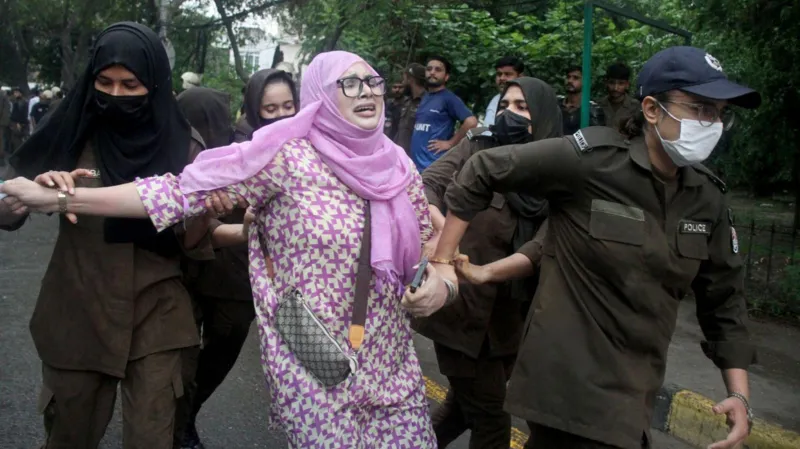
Turning to Azad Jammu and Kashmir, Sharif expressed support for dialogue with protesters who have clashed with authorities over the 12 seats reserved for refugees and related issues, tensions that have simmered in the region for the past two months. He said that once the new AJK government takes office, with PML-N already claiming a two-thirds majority, progress on talks with protesters would follow. “Those who only want to cause anarchy will not be allowed to do so, but those who want to peacefully and patiently discuss the situation, the new government will provide a chance for that,” he said, adding that no lawlessness could be tolerated in any respected society, and that grievances should instead be resolved through dialogue.
Sharif said the government had “clear evidence” that some of those who worsened the situation were acting on the directives of hostile actors. He recalled that a multi-party conference had been held in Muzaffarabad ahead of the elections, attended by all parties except one, an apparent reference to PTI, which boycotted the polls. He said all relevant issues, including proposals to change or reduce refugee seats, were discussed at the conference, with participants advised to let the elections proceed and raise their concerns in the new assembly instead. “All matters were settled, but they remained adamant on this and needlessly insisted, which unfortunately worsened the situation,” he said.
On the ongoing AJK elections, Sharif said Kashmiris had “overwhelmingly voted” for PML-N, which has so far won 24 of 45 seats, nine from the July 27 Mirpur polls and 15 in the second phase covering Muzaffarabad Division and the 12 refugee seats, with the third phase in Poonch Division beginning the same day as his remarks. He said the results from Mirpur and Muzaffarabad, combined with the refugee seats, had brought PML-N close to an outright majority. “This vote is a vote of trust in Mian Nawaz Sharif and for his leadership. I am hopeful that once we set up a government there, under his leadership, AJK will once again set out on the journey to progress and prosperity,” he said, thanking voters for their support.
‘Terrorists Being Annihilated Day and Night’
Sharif also addressed the recent surge in terrorist activity, noting that violence had escalated in parts of the country over the past few days. He recalled the August 2 Swat suicide bombing that killed 17 people, and the martyrdom of Deputy Superintendent of Police Diyar Khan in an attack on a Hangu police checkpost. He paid tribute to Captain Hamza Akram and Major Hafiz Ihsan Elahi, martyred during operations in Hangu and North Waziristan respectively, affirming that “Fitna Al Khawarij are being annihilated day and night,” referring to militants affiliated with the banned Tehreek-i-Taliban Pakistan. “These sacrifices will not go in vain and will bear fruition. One day will come when Pakistan will once again be free from terrorism and will move rapidly towards peace and progress,” he said.
The prime minister also offered condolences over the death of PML-N MNA Malik Muhammad Iqbal Channar, calling him a longtime friend and someone who had stood by him and party president Nawaz Sharif through difficult times since 1985. The cabinet offered prayers for the elevated ranks of the martyrs and for Channar.