
At the ECO ministerial meeting in Islamabad, Ishaq Dar reaffirmed Pakistan’s commitment to facilitating a peaceful settlement between Washington and Tehran, while linking improved ties with Kabul to action against militant groups operating from Afghan territory.
ISLAMABAD: Pakistan has pledged to continue diplomatic efforts to ease tensions between the United States and Iran, with support from regional partners, while urging Afghanistan’s Taliban government to address security concerns linked to militant activity.
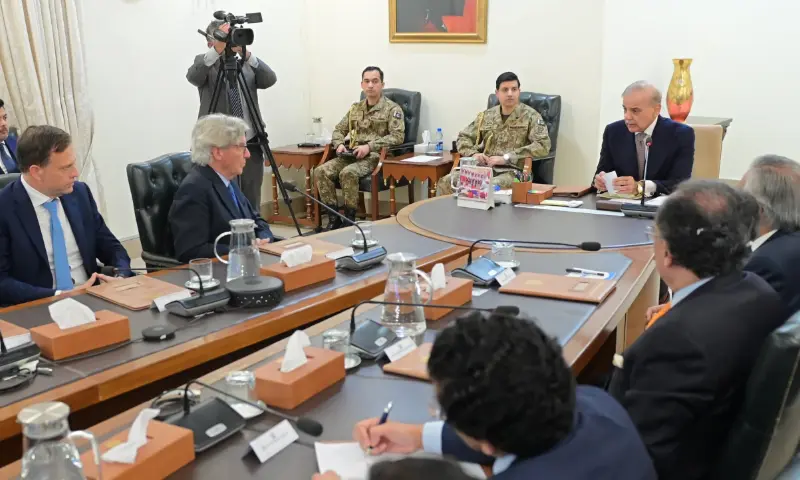
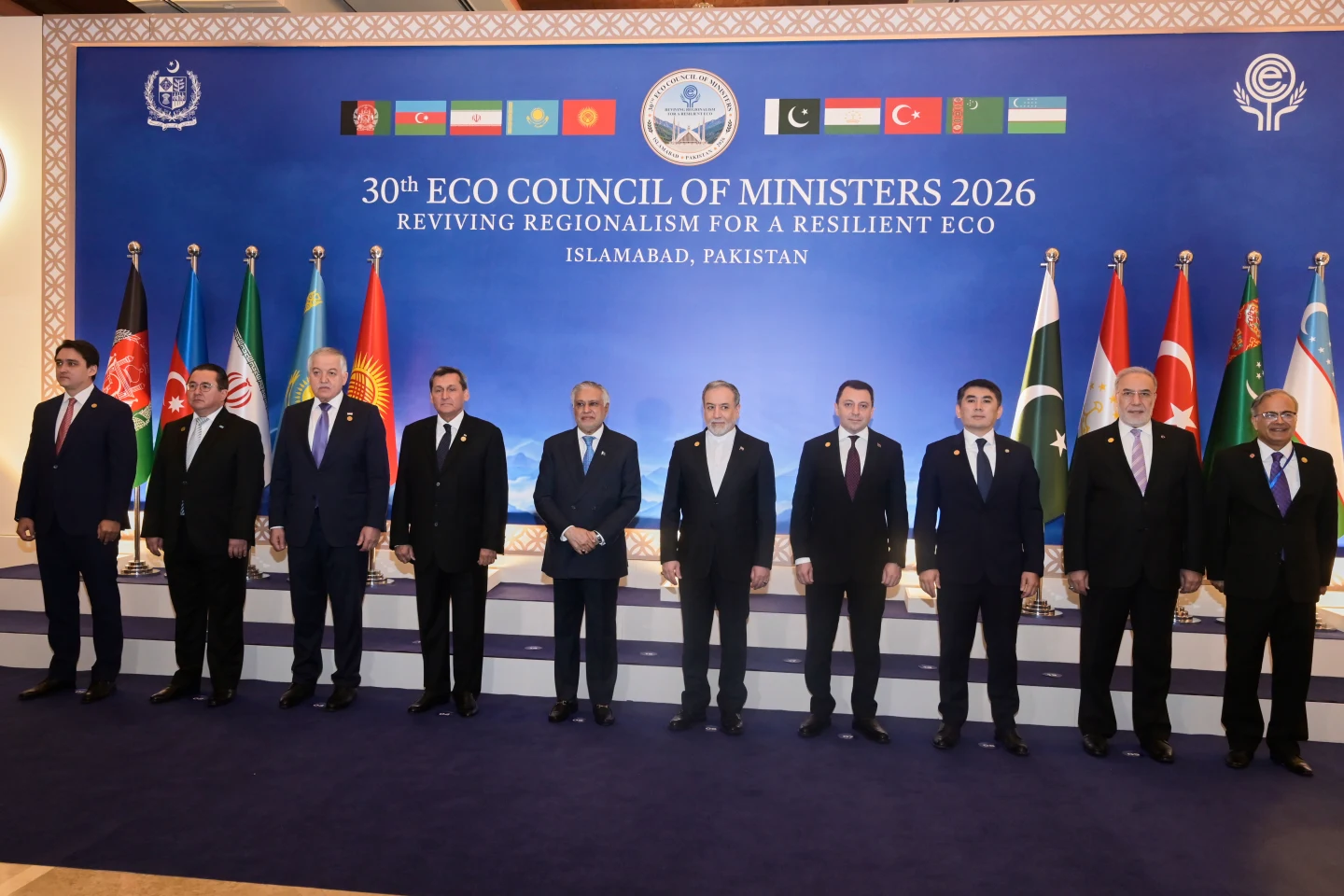
Speaking at the conclusion of a meeting of the 10-member Economic Cooperation Organization (ECO) in Islamabad on Monday, Foreign Minister Ishaq Dar said Pakistan remained committed to the peace process and had not abandoned efforts to secure a diplomatic settlement.
The meeting brought together foreign ministers and senior diplomats from several Asian countries, including Iranian Foreign Minister Abbas Araghchi. Discussions focused on regional cooperation, particularly trade, transport connectivity and commercial links among member states.
In its joint communiqué, the ECO expressed support for mediation efforts by Pakistan and Qatar, as well as an Iranian initiative aimed at ending the conflict. The statement emphasised restraint, dialogue and diplomatic engagement amid escalating regional tensions.
Pakistan Awaits US Response to Iranian Proposals
Dar said Pakistan was awaiting Washington’s response to Tehran’s latest proposals, which he described as being based on the interim peace agreement reached in June.
“We have not given up hope or efforts. We are still doing our best,” he said, reaffirming Islamabad’s commitment to facilitating negotiations.
He attributed the delay in the diplomatic process partly to US officials being occupied with the midterm elections.
Pakistan hosted the first round of direct talks between Washington and Tehran in April. The two sides subsequently signed an interim agreement in June to end the conflict but have continued to accuse each other of prolonging the standoff, particularly over the Strait of Hormuz.
The closure of the strategic waterway has disrupted energy supplies and contributed to rising international oil prices, placing additional pressure on Pakistan’s already fragile economy. Islamabad has repeatedly called for its reopening.
Dar said Prime Minister Shehbaz Sharif and Chief of Army Staff Field Marshal Asim Munir remained actively engaged with regional governments and international partners to help achieve a peaceful resolution.
Iranian Foreign Minister Abbas Araghchi urged ECO members to strengthen regional cooperation. According to Iran’s state-run IRNA news agency, he maintained that Tehran supported international law and the peaceful settlement of disputes, while accusing Washington of aggression, threats, targeted assassinations, economic coercion and blockades.
Dar Links Improved Ties with Afghanistan to Action Against Militancy
Alongside the diplomatic discussions on Iran, Dar addressed Pakistan’s strained relations with neighbouring Afghanistan, saying meaningful improvement depended on the Taliban authorities taking action against terrorism.
Afghanistan was not represented at Monday’s ECO meeting because its membership remained suspended, Dar said.
He described Pakistan’s desired outcome as a peaceful, stable and prosperous Afghanistan that could be fully integrated into regional economic cooperation and maintain constructive relations with its neighbours.
Such stability, he said, would benefit the Afghan people and create opportunities for regional trade, transit and economic connectivity. However, he stressed that progress required the Afghan authorities to address the legitimate security concerns of neighbouring countries, particularly the threat posed by militant groups.
Pakistan has repeatedly accused the Afghan Taliban government of allowing the Tehrik-i-Taliban Pakistan (TTP), the Balochistan Liberation Army (BLA) and Al-Qaeda in the Indian Subcontinent to operate from Afghan territory.
Islamabad maintains that militant violence inside Pakistan has increased since the Taliban returned to power in 2021, arguing that the TTP has been emboldened by the changed security environment in Afghanistan.
Kabul denies supporting militant groups operating against Pakistan. The disagreement has contributed to repeated border clashes and Pakistani airstrikes, further deepening tensions between the two neighbours.
Regional Connectivity Depends on Political Stability
The ECO meeting also highlighted the relationship between regional security and economic integration. Its members include Pakistan, Afghanistan, Iran, Türkiye and several Central Asian republics.
Pakistan has sought to position itself as a regional trade and transit hub by strengthening transport corridors and commercial links connecting South Asia, Central Asia and the Middle East.
However, persistent security tensions, particularly along the Pakistan-Afghanistan border and around the Strait of Hormuz, continue to threaten these ambitions.
The discussions in Islamabad therefore reflected two interconnected diplomatic priorities: preventing further escalation between Washington and Tehran and securing a more stable relationship with Kabul. Pakistan’s ability to advance regional connectivity will depend, in significant measure, on whether these security challenges can be addressed through sustained diplomacy and effective cooperation.