Prime Minister Shehbaz Sharif on Sunday announced a targeted fuel relief programme for motorcycle, rickshaw and small-car users as soaring international oil prices continue to put pressure on households across Pakistan.
The initiative comes amid renewed conflict in the Middle East, where disruptions to major energy routes have pushed global oil prices higher over the past two months. The US-Iran conflict has affected movement through the Strait of Hormuz, while increasing Houthi activity around Bab al-Mandab has created additional risks for oil shipments, including Saudi exports.
According to a statement issued by the Prime Minister’s Office, Shehbaz took notice of the financial pressure created by the latest increase in international oil prices and said the government would support citizens facing higher fuel costs.
Under the new scheme, owners of motorcycles, rickshaws, Qingqis and cars with engines of up to 800cc will receive Rs100 per litre in fuel relief within specified monthly limits.
Owners of two- and three-wheeled vehicles will be eligible for the subsidy on up to 20 litres of fuel each month. Owners of cars with engines of up to 800cc will receive the same Rs100-per-litre relief on a monthly limit of 30 litres.
The programme will begin in Islamabad at midnight on September 15. It will subsequently be extended to the rest of Pakistan, including Azad Jammu and Kashmir and Gilgit-Baltistan, from midnight on September 17.
Registration for the programme began on Sunday. The government said details of the registration process would be communicated through a public awareness campaign. Prime Minister Shehbaz also thanked the provincial governments for providing information about motorcycles, rickshaws and small vehicles required for implementing the scheme.
Further information, including the registration procedure, has also been made available through the government’s dedicated fuel-relief portal.
Petroleum Minister Ali Pervaiz Malik said the programme was designed specifically for sections of society most affected by rising fuel costs. He argued that the assistance being provided was greater than the relief consumers would have received through the removal of the petroleum levy.
Explaining the mechanism, Malik said eligible consumers would register themselves and receive a token number without having to visit an office. Devices required to verify the tokens have been sent to filling stations. Registered consumers will present their token at participating fuel stations to purchase fuel at the subsidised rate within their monthly quota.
Middle East Conflict Drives Fuel Prices Higher
Pakistan has been facing intense pressure from rising international energy prices since the United States and Israel launched military action against Iran on February 28.
Iran responded to US attacks by striking targets in neighbouring Gulf countries, temporarily disrupting operations at some oil facilities. The conflict also effectively closed the Strait of Hormuz, a crucial energy passage through which roughly one-fifth of global oil supplies previously moved.
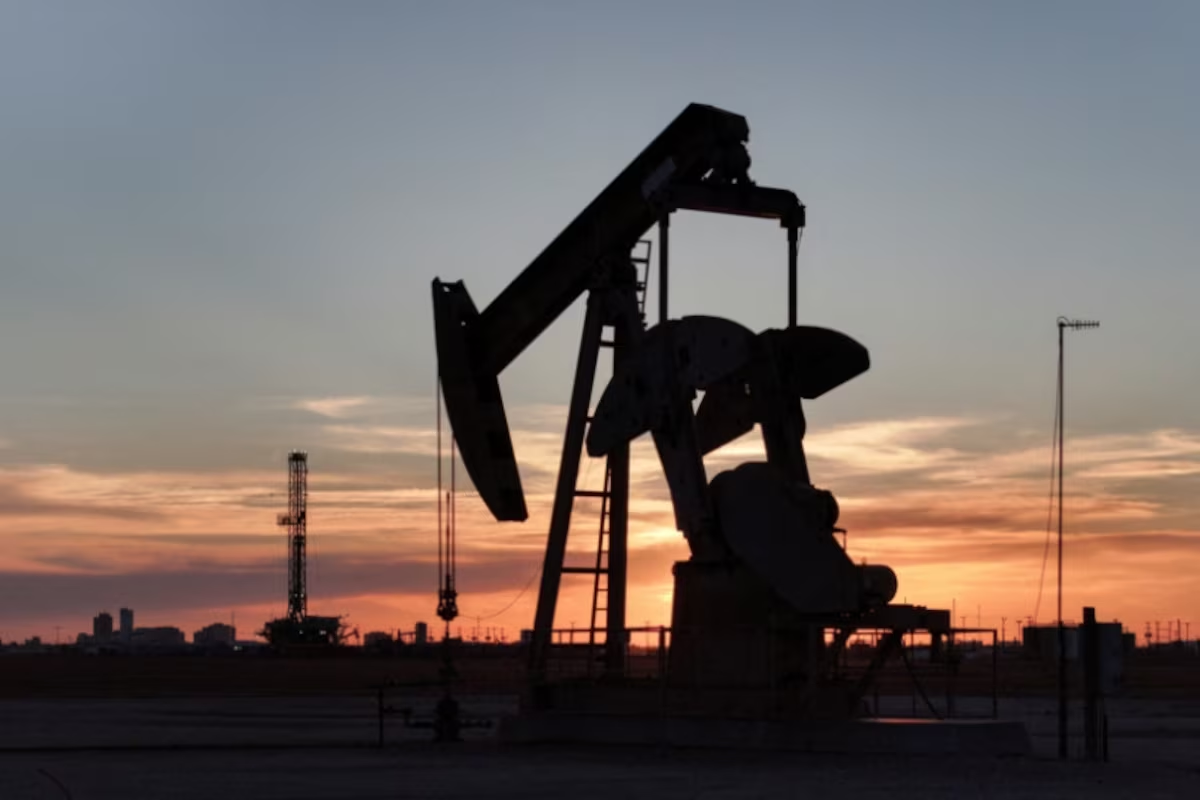
Following the latest price increase announced on Friday, petrol reached Rs375.82 per litre, while high-speed diesel rose to Rs403.32 per litre. The government continues to impose taxes and duties amounting to Rs114 per litre on petrol and Rs100 per litre on diesel.
Pressure on international energy markets has increased further after Saudi Arabia recently shut its East-West oil pipeline following an aerial attack. Oil buyers and traders have warned that the disruption could remove as much as 4 per cent of global oil supply if the pipeline is not restored within days.
The International Energy Agency has also warned that the imbalance between global oil supply and demand could worsen beyond earlier expectations this year. Continued fighting involving Iran has delayed the restoration of normal Middle Eastern oil flows, potentially extending disruption into 2027 and keeping fuel prices elevated.
Pakistan has repeatedly changed its domestic fuel-pricing mechanism in response to the volatility. In July, following renewed Iran-US hostilities, the government moved to daily fuel-price adjustments to reflect rapid changes in international markets.
Before that decision, fuel prices had been revised weekly since early March, alongside measures aimed at conserving fuel. The federal government also introduced targeted subsidised-fuel measures in April.
High-speed diesel has since fallen from its April 3 peak of Rs520.35 per litre, after having climbed from around Rs281 when the US-Iran conflict began on February 28. Petrol similarly reached a high of Rs458.41 per litre on April 3 after rising from around Rs266 per litre in the first week of March.
The latest relief programme represents another attempt to shield lower-income and small-vehicle users from the impact of international oil-market disruptions while limiting the subsidy to specified categories and monthly fuel quotas.