
The Trump administration, unable to achieve a decisive political outcome through military force, has shifted towards an intensified campaign of economic pressure against Iran. Its purpose is not simply to weaken Tehran economically but to isolate it by targeting the countries, banks, shipping companies, and commercial networks that continue doing business with Iran.
This strategy raises a wider question for America’s partners in West Asia: how much must they sacrifice for Washington’s confrontation with Tehran, and what do they receive in return?
The UAE’s decision last month to suspend trade, commercial exchanges, and financial transactions with Iran brings this dilemma into focus. The decision followed Abu Dhabi’s claim that two ballistic missiles aimed at maritime navigation had fallen into the sea, an allegation Tehran denied.
For decades, Dubai has been one of Iran’s most important commercial gateways to the outside world. Iranian traders, banks, shipping companies, and businesses became deeply connected with Dubai’s economy, while before the war the UAE ranked among Iran’s largest trading partners after China.
Restricting these commercial links will certainly impose costs on Iran. But the economic damage will not be confined to Tehran. UAE businesses will lose customers, shipping companies will lose cargo, banks and warehouses will lose transactions, and traders and individuals dependent on bilateral commerce will also bear financial losses.
The obvious question is, who will compensate them?
There is little indication that Washington intends to reimburse Gulf countries for the commercial opportunities they surrender in support of American sanctions. The United States appears to assume that access to its financial system and the advantages of strategic partnership provide sufficient compensation. The recent war, however, may force Gulf states to reconsider that calculation.
For decades, the United States has maintained major military bases across the region and portrayed itself as the principal guarantor of Gulf security. Yet the latest conflict revealed the limits of that guarantee. American bases did not prevent Gulf countries from facing attacks, nor could American military power shield regional economies from disrupted shipping, threats to energy infrastructure, and the wider economic consequences of war.
If an external power cannot completely protect regional states from the consequences of conflict and cannot compensate them for the economic costs they bear, then excessive dependence on that external power becomes increasingly difficult to justify.
Security cannot be permanently outsourced. That may be one of the most important lessons of this war.
This does not mean that Gulf countries should abandon their relationship with the United States. Washington will remain an important military, political, and economic actor in West Asia for the foreseeable future. Nor would it make sense to replace dependence on the United States with dependence on another outside power.
The better approach is to increase regional responsibility for regional security.
In this context, the emerging tripartite defense arrangement involving Saudi Arabia, Türkiye, and Pakistan—the Makkah Pact—deserves attention. Although its complete text and operational arrangements have not yet been made public, its broader political significance could be substantial.
The three countries possess different but complementary capabilities. Saudi Arabia has immense financial resources and considerable influence in the Arab and Muslim worlds. Türkiye combines significant military strength with an expanding defense industry. Pakistan possesses one of the Muslim world’s largest and most experienced armed forces, together with strategic and technological capabilities that could contribute to regional deterrence.
Most importantly, unlike distant powers, all three have a direct interest in the stability of the wider region.
Such an arrangement, however, should not develop into another anti-Iran alliance. If it does, it will merely reproduce the rivalries that have already turned West Asia into one of the world’s most militarized regions.
Iran cannot simply be removed from the strategic geography of its own neighborhood. It is a major regional power, possesses an extensive Gulf coastline, and controls one side of the Strait of Hormuz. Any long-term security architecture that attempts permanently to exclude Iran will therefore remain incomplete.
The Strait of Hormuz demonstrates this reality more clearly than anything else. Almost one-fifth of the world’s seaborne oil trade passes through this narrow waterway. Its stability matters both to Iran and to the Arab Gulf states. The recent conflict has demonstrated Tehran’s capacity to disrupt this vital route and impose economic costs far beyond its own territory.
The more sustainable approach is therefore to give Iran both a responsibility for regional stability and a stake in maintaining it.
A new regional security architecture could develop gradually.
The immediate priority should be stronger regional deterrence. Intelligence sharing, military coordination, integrated air and missile defense, maritime security, and cooperation between defense industries could reduce dependence on external security guarantees. Arrangements such as the Makkah Pact could contribute to this process.
The next step should be structured regional dialogue. Saudi Arabia, Türkiye, Pakistan, Iran, Iraq, and the Gulf states need permanent mechanisms through which they can discuss maritime security, missile threats, terrorism, economic cooperation, and crisis management.
Ultimately, the region should work towards a broader and more inclusive security framework in which Iran participates as a regional stakeholder rather than remaining permanently isolated as an adversary.
But inclusion cannot be unconditional.
Iran would need to provide credible assurances to Gulf monarchies that it will respect their sovereignty and refrain from interfering in their domestic affairs. Tehran should also reconsider its reliance on armed regional partners such as Hezbollah, Hamas, and the Houthis, a strategy that has contributed significantly to regional confrontation. The Palestinian cause can be pursued politically and diplomatically alongside Arab and other Muslim countries rather than primarily through armed groups aligned with Tehran.
As Asif Durrani argues:
“Iran is part of the region and cannot be excluded from the geography of its own neighborhood.”
None of this suggests that decades of mistrust can suddenly disappear. The destruction caused by war and the accumulated grievances between Iran and its neighbors will require time to overcome. Nor can dialogue replace credible deterrence.
But deterrence and diplomacy need not contradict each other. A region capable of defending itself is in a stronger position to negotiate. Conversely, a regional order that permanently excludes one of its largest powers will remain vulnerable to repeated crises.
There is also an economic dimension to this argument.
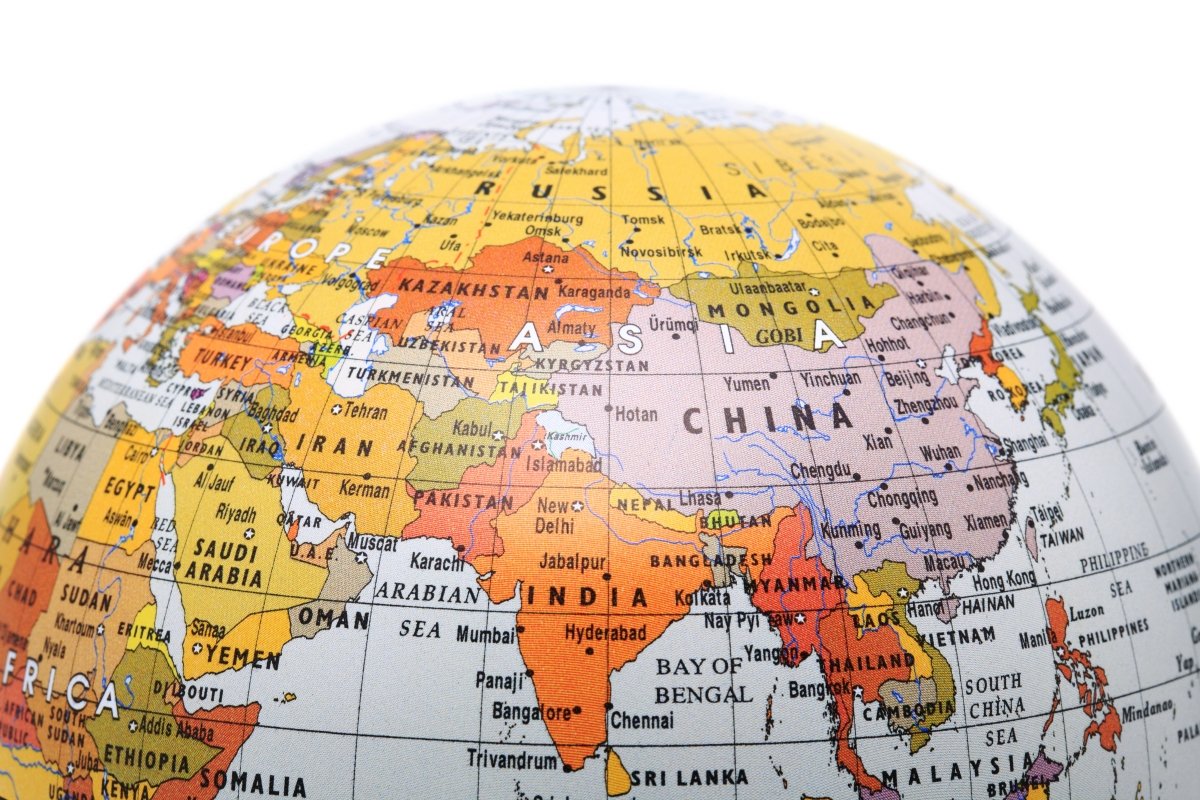
Washington may succeed in closing important commercial gateways available to Iran, but trade networks rarely remain static. Businesses adapt. Commercial routes could increasingly shift through Türkiye, Iraq, Oman, Pakistan, Russia, and the Caspian region, while Central Asian states linked to Eurasian transport networks could become part of alternative corridors.
Such alternatives may make Iranian trade more expensive, complicated, and difficult to finance. Yet economic hardship does not necessarily produce political submission. The greater danger is that sustained economic warfare could convince Tehran that continued escalation carries fewer costs than compromise.
West Asia therefore does not have to choose between complete American withdrawal and permanent dependence on American protection. A more durable path lies between these extremes: regional ownership, credible deterrence, and inclusive diplomacy.
The ultimate challenge is to recognize two interconnected realities. There can be no durable security architecture in West Asia that permanently excludes Iran. But neither can Iran expect a legitimate place within that architecture without providing reciprocal guarantees of sovereignty and non-interference.
The future of regional security must ultimately be built by the countries that live in the region—not permanently outsourced to powers outside it.