
Op-Ed / Nadeem-ul-Haque
A city should not be judged merely by the width of its roads or the number of its flyovers. It should also be judged by the opportunities it offers its children to develop their minds.
In 2010, I wrote an article asking a simple question: where are Pakistan’s public libraries? I pointed out that Lahore had found enormous amounts of land for golf courses and polo grounds, often with government support, but could barely find space for public libraries. Our colonial rulers had left us some libraries, but our successive governments had shown little interest in expanding them. At international conferences, when I raised this issue, some Pakistani intellectuals indignantly protested that Pakistan had plenty of libraries. They produced lists of university libraries, institutional collections, and private clubs. They missed the point entirely.
Sixteen years later, the question remains. Indeed, it has become more urgent. We have continued expanding cities, constructing roads and flyovers, allocating land for official residences and elite recreation, and building increasingly elaborate government offices. But where are the neighborhood libraries, community learning centers, and public spaces where an ordinary citizen can sit, read, study, use a computer, or simply explore ideas?
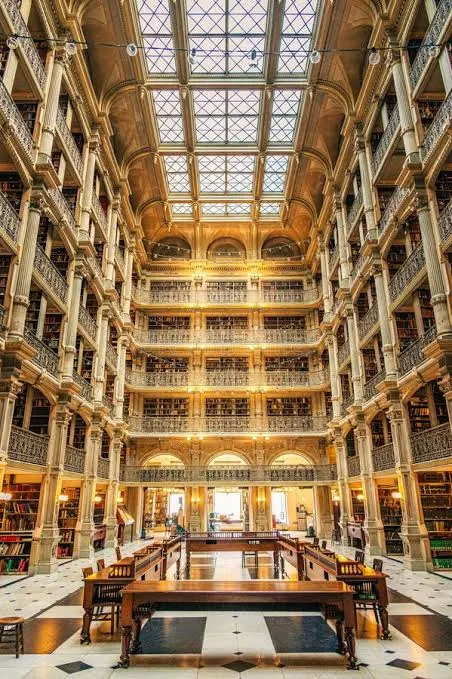
We have misunderstood what a library is. A library is not merely a warehouse of books or an institution for lending them. It is a public space for learning. It is a community center, a place for intellectual exchange, a refuge for students, and increasingly a gateway to the digital world. In modern societies, libraries are among the most democratic of public institutions. Rich and poor can enter the same building, use the same facilities, and access the same knowledge.
The scarcity of such spaces in Pakistan is particularly damaging because of how most Pakistanis live. The 2023 Population and Housing Census reports that 31.8 percent of housing units have only one room. In Sindh, the figure exceeds 50 percent. The average Pakistani household has approximately 6.3 people. Imagine a child trying to study in a single room shared by parents, siblings, and perhaps grandparents, with a television playing, people talking, food being prepared, and constant interruptions.
Where is that child supposed to study?
We repeatedly tell young people to work hard, acquire skills, compete internationally, and become productive citizens. Yet we do not provide them even the elementary physical conditions for learning. Children from prosperous households have bedrooms, desks, computers, private tutors, and uninterrupted electricity. Those from poor households must compete from crowded homes where privacy is a luxury. Education policy rarely acknowledges this inequality of space.
A neighborhood library could change that. A clean, well-lit, air-conditioned or adequately ventilated room, with desks, electricity, books, and internet access, could give hundreds of children something their homes cannot provide: a quiet place to think. The importance of this simple facility should not be underestimated. A library can be an extension of the home for those who have no room at home.
The same applies to university students, job seekers, freelancers, and young professionals. Many cannot afford private workspaces or expensive cafés. Others cannot find a suitable place to prepare for examinations, write applications, develop projects, or learn new skills. Public libraries could provide facilities that expand their opportunities at a fraction of the cost of many conventional development projects.
The digital revolution has made libraries more important, not less. Some argue that libraries are obsolete because everything is available on the internet. This argument confuses the existence of information with access to it.
According to the Pakistan Bureau of Statistics’ 2024–25 household survey, 70 percent of households reported internet access, but only 11 percent had access to a computer, laptop, or tablet. Rural access to these devices was just 7 percent. Individual internet use stood at 57 percent. A smartphone may allow someone to watch videos and exchange messages, but it is hardly an adequate substitute for a computer when writing research papers, learning programming, preparing presentations, analyzing data, or applying for employment.
In the age of artificial intelligence, this inequality will become more consequential. We are constantly being told that AI will transform education and employment. But how is a child without a computer, reliable connectivity, or a quiet place to work supposed to participate in that transformation? Public libraries could provide computers, high-speed internet, digital learning platforms, access to research, and practical training in modern technology. They could introduce young people to AI tools, online courses, programming, design, and research methods.
The public library of the future should therefore combine books with computers, digital resources, and trained staff who can help people navigate information. It should be possible for someone to enter a library without knowing anything about computers and leave with the beginnings of digital literacy. Libraries can also help people distinguish reliable information from misinformation, an increasingly important skill.
And libraries need not be silent, forbidding buildings in which books gather dust. They can become vibrant community institutions. Separate quiet study areas can coexist with reading circles, children’s storytelling sessions, public lectures, debates, workshops, and community discussions. Retired professionals could mentor students. Writers and researchers could engage with citizens. Young entrepreneurs could meet, exchange ideas, and develop projects. Parents could bring their children to discover books instead of spending another evening in a shopping mall.
Our cities desperately need such places. We have allowed public life to shrink into commercial establishments, private clubs, restaurants, wedding halls, and shopping centers. Access to social space increasingly depends on the ability to pay. Libraries offer something fundamentally different: a public institution where people can spend time without being expected to purchase anything.
This is particularly important for women, girls, and young people who lack safe, accessible places outside the home. A well-managed neighborhood library with appropriate security, suitable hours, and inclusive facilities could expand their freedom to study and participate in community life. For older people, libraries could provide opportunities for continued learning, conversation, and social engagement. In a society becoming increasingly fragmented, such institutions could rebuild connections across generations and income groups.
Consider Medellín, Colombia, once notorious for violence, drug cartels, and deeply divided neighborhoods. Beginning in 2004, Mayor Sergio Fajardo made public libraries central to a strategy of urban and social transformation. Instead of concentrating public investment in affluent areas, the city built five ambitious Library Parks in some of its poorest and most neglected neighborhoods.
The most famous, Biblioteca España, opened in 2007 in Santo Domingo, a hillside community long associated with poverty and violence. These were not simply buildings for lending books. They combined reading rooms, computers, free internet, cultural activities, educational programs, public gathering spaces, and community services. They were designed to give marginalized communities the same dignity, architectural quality, and access to knowledge enjoyed by the affluent.
Combined with improvements in transportation, schools, and public spaces, the libraries became symbols of Medellín’s wider regeneration. Although libraries alone did not transform the city, they demonstrated how investment in knowledge and community infrastructure could contribute to social inclusion and urban renewal. Pakistan’s city planners should study Medellín. Why must our idea of urban development remain confined to roads, flyovers, and construction when a neighborhood library can help transform the lives of generations?
Other countries have recognized this changing role. The 2022 UNESCO–IFLA Public Library Manifesto explicitly recognizes libraries as institutions for lifelong learning, digital inclusion, cultural participation, and community engagement. The idea of a library has moved well beyond lending books. It is now understood as part of the infrastructure of a functioning democratic society.
What has Pakistan done?
The International Federation of Library Associations’ Library Map of the World reports 350 public library service points and 164 community library service points for Pakistan in its 2024 data. Even accepting these figures, 350 public library points in a country of more than 250 million people means roughly one for every 730,000 inhabitants. Moreover, the numbers tell us little about accessibility, seating, operating hours, computers, staffing, or the condition of these facilities. A library listed in an official directory is not necessarily a functioning neighborhood institution especially in Pakistan.
There have been some encouraging initiatives. Punjab’s e-library program reported 114,000 registered members in January 2024. New e-library facilities were inaugurated in Faisalabad and Sargodha during 2026. These efforts deserve recognition. But isolated projects and digital subscriptions are no substitute for a comprehensive, accessible network of physical public libraries. The test is not how many facilities are inaugurated or how many memberships are recorded. It is how many citizens can regularly use them, how many study seats and functioning computers are available, as well as pleasant spaces for networking and community events are available.
The larger problem is our conception of development. We continue to measure urban progress in roads, bridges, underpasses, and construction spending. A library rarely features in the development imagination because it produces no dramatic ribbon-cutting ceremony and offers few opportunities for large construction contracts. Yet its social returns may be enormous. A small neighborhood library that helps hundreds of children acquire reading habits, prepare for examinations, and develop digital skills may contribute more to long-term prosperity than another ornamental public project.
Nor must every library be a grand building. Existing municipal buildings, unused government properties, community halls, and suitable school facilities could be converted into neighborhood learning centers. New housing developments should be required to reserve accessible land and space for public libraries, just as they provide roads and other amenities. Municipal governments should maintain a network of libraries within reasonable walking or public transport distance of residential areas.
Such institutions need competent librarians, reliable electricity, internet connections, updated collections, adequate seating, and operational budgets. Opening a building and then starving it of maintenance would be another familiar Pakistani failure. Their performance should be publicly measured through visits, opening hours, computer availability, participation in learning programs, and user satisfaction, not merely the number of books on shelves.
This brings us back to local government. A city government genuinely accountable to its residents would have to consider whether neighborhoods need libraries, parks, playgrounds, and community centers. Our centralized administrative system, preoccupied with large projects and official priorities, rarely asks what ordinary citizens require in their daily lives. Development is decided from offices rather than neighborhoods.
We have a serious education crisis. The Pakistan Economic Survey 2025–26 reports a literacy rate of only 63 percent and an out-of-school rate of 28 percent among school-age children. We cannot solve this crisis by constructing libraries alone. But we certainly cannot build a learning society while neglecting the spaces in which learning takes place. Education does not begin and end in classrooms. Curiosity, independent reading, experimentation, and intellectual engagement require an environment that encourages them.
Perhaps the most important function of a public library is one that economists and planners find difficult to measure. It introduces people to possibilities they did not know existed. A child browsing a bookshelf may discover science, history, literature, economics, or technology. A teenager using a computer may discover a skill that changes his or her future. A public discussion may introduce citizens to ideas beyond their immediate social environment. Such encounters are the foundations of innovation and intellectual development.
In 2010, I asked where a poor child could read. Sixteen years later, I would ask a broader question: where can an ordinary Pakistani go to learn, think, work, connect, and grow without paying for the privilege?
We have allocated public land to golf courses, polo grounds, official residences, and elite institutions. Surely we can allocate some space to knowledge. A city should not be judged merely by the width of its roads or the number of its flyovers. It should also be judged by the opportunities it offers its children to develop their minds.
Pakistan does not simply need more libraries. It needs to recognize libraries as essential public infrastructure, as important to a learning society as roads are to mobility.
Until we do so, our repeated promises of education reform, digital transformation, and a knowledge economy will remain little more than slogans.