ISLAMABAD: Escalating hostilities between Saudi Arabia and Yemen’s Houthi movement are placing Pakistan’s defence commitments under increasing scrutiny, with analysts warning that a wider conflict could force Islamabad to make difficult military and diplomatic decisions.
Pakistan’s agreement with Saudi Arabia was initially presented as a major development in the countries’ longstanding strategic relationship. Army chief Field Marshal Asim Munir played a central role in advancing the arrangement with Saudi Crown Prince Mohammed bin Salman.
For Pakistan, the partnership offered the prospect of substantial Saudi investment and financial support at a time of economic difficulty. Riyadh, meanwhile, would benefit from Pakistani military training and a commitment to assistance in the event of an attack.
The regional security environment has since changed considerably.
From Strategic Cooperation to a Possible Military Commitment
The conflict expanded in February when the United States and Israel launched strikes against Iran, prompting Tehran to retaliate against Gulf states, including Saudi Arabia.
The fighting also contributed to the breakdown of the fragile truce between Saudi Arabia and the Iran-aligned Houthis in Yemen.
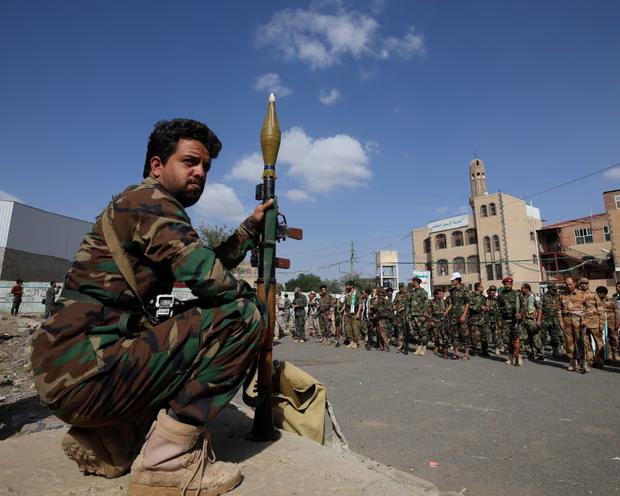
Earlier this month, Houthi forces made territorial gains in Yemen and launched missile and drone attacks against Saudi territory. Riyadh responded with airstrikes on Houthi positions, raising concerns about a return to a broader war.
Pakistan’s obligations became more consequential in August when Türkiye joined the defence arrangement, which was renamed the Mecca Joint Defence Agreement.
Under the pact, an armed attack on one member is to be treated as an attack on all three.
The agreement has therefore become a central issue in discussions about Pakistan’s possible role if the Saudi-Houthi confrontation escalates further.
Analysts Question Pakistan’s Readiness for a Wider Conflict
Ayesha Siddiqa, a defence analyst and senior fellow at King’s College London, questioned whether Pakistan’s military leadership had fully anticipated the speed at which regional security conditions could deteriorate.
She suggested that the possibility of Pakistani troops being required for combat operations may not have received sufficient consideration when the arrangement was negotiated.
Saudi Arabia possesses extensive military equipment, including advanced fighter aircraft, but analysts cited in the original report argued that Pakistan’s operational experience could be valuable in a confrontation with the Houthis.
Pakistan already has thousands of military personnel stationed in Saudi Arabia for training-related assignments.
Some analysts believe that Saudi activation of the defence agreement could result in pressure on Islamabad to deploy troops in support of the kingdom.
However, the precise nature of any Pakistani military involvement would depend on how the agreement is invoked and the decisions taken by the participating governments.
Economic Dependence Adds to Islamabad’s Dilemma
Pakistan’s economic relationship with Saudi Arabia is another important factor.
Riyadh has provided Islamabad with substantial financial assistance and investment, including a reported $8 billion in funds and investments.
This support has strengthened the economic dimension of the countries’ strategic partnership.
In recent statements, Pakistani ministers and senior military officials have reiterated their commitment to Saudi Arabia’s security. Officials have described that commitment as unconditional and indicated that Islamabad would take extensive measures to defend the kingdom.
Yet the prospect of involvement in another regional conflict presents significant challenges for Pakistan.
The country is already managing economic pressures, deteriorating security conditions along its border with Afghanistan and increased militant activity in several areas.
A new military commitment in the Middle East could place additional demands on Pakistan’s armed forces and financial resources.
Relations with Iran Complicate the Defence Equation
Pakistan’s relationship with neighbouring Iran makes the situation particularly sensitive.
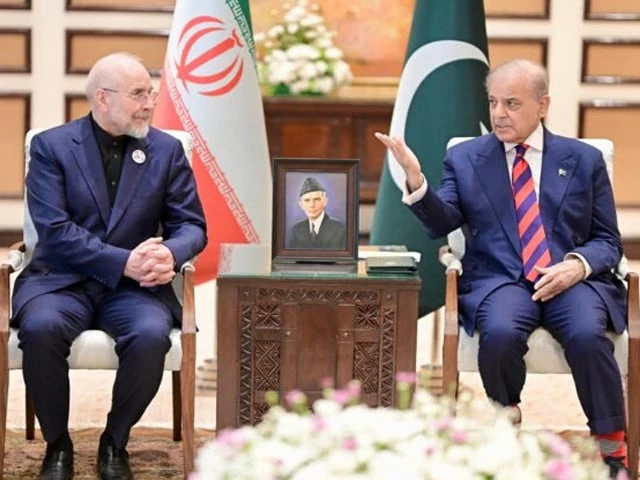
Islamabad has sought to maintain diplomatic engagement with Tehran while preserving its defence partnership with Saudi Arabia.
Before the latest regional war, Pakistan maintained working relations with Iran. Munir also used those contacts in efforts to facilitate negotiations and secure a ceasefire.
As the conflict has continued, however, disagreements between Islamabad and Tehran have become more pronounced.
The Guardian reported that Pakistani officials have grown increasingly frustrated with Iran, while trust between the two countries has weakened.
If Pakistan were to participate directly in military operations against the Houthis, such involvement could be interpreted by Tehran as Islamabad taking a position against an Iran-aligned group.
That possibility would complicate Pakistan’s efforts to act as an intermediary in the wider Middle East conflict.
The Saudi defence pact has consequently created a difficult set of considerations for Islamabad: maintaining its security commitments to Riyadh, managing its relationship with Tehran and avoiding additional military burdens while confronting economic and domestic security challenges.