
The latest US-Iran diplomacy reveals a deeper problem: the countries trying to end the conflict have urgent economic and strategic interests of their own.
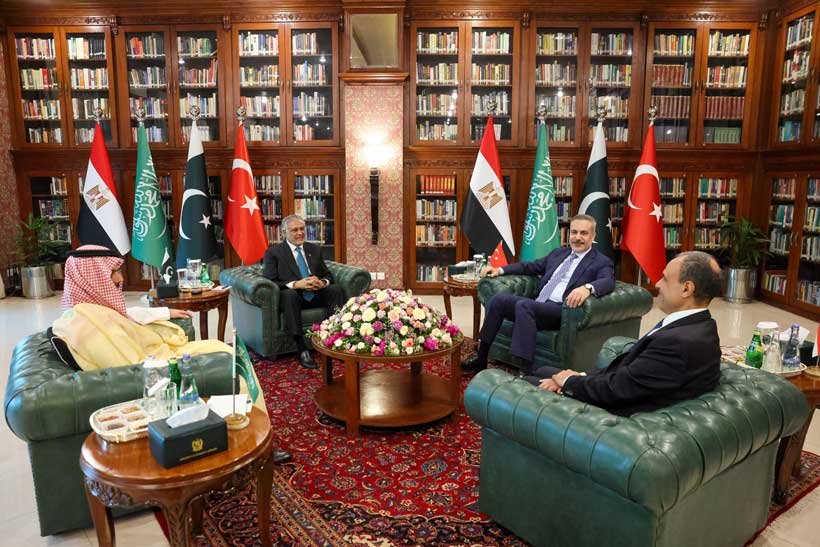
The latest attempt to bring Washington and Tehran back towards a ceasefire has once again placed Qatar, Pakistan and Egypt at the centre of Middle Eastern diplomacy. Yet their growing importance as intermediaries also exposes a fundamental weakness in the negotiating process: none of them approaches the conflict as a detached mediator.
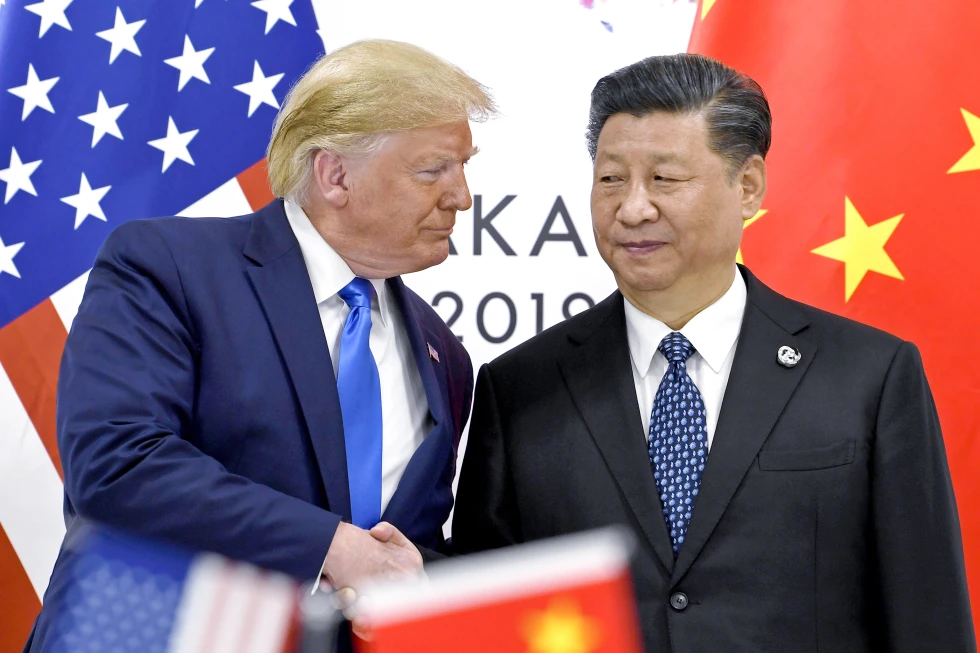
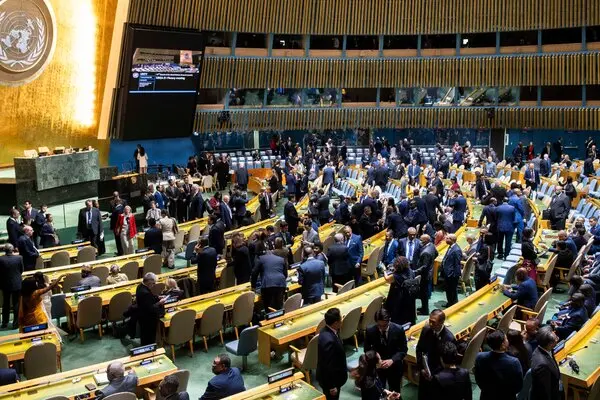
When Iranian Foreign Minister Abbas Araghchi met Steve Witkoff and Jared Kushner at the United Nations on September 23, representatives of Qatar, Pakistan and Egypt were present as mediators. Within two days, Tehran had proposed reopening the Strait of Hormuz and resuming nuclear negotiations within seven days in exchange for an end to the US blockade, oil-sale waivers and a ceasefire extending to Lebanon.
President Donald Trump rejected the proposal on September 26.
The episode was strikingly familiar. Iran’s offer substantially resembled the diplomatic framework developed only months earlier. The June memorandum, negotiated with many of the same intermediaries, had promised a ceasefire, freer navigation through Hormuz, an easing of the blockade and an ambitious reconstruction arrangement. Yet within weeks, the framework had unravelled.
The recurring problem may lie not only with Washington and Tehran, but also with the structure of the mediation itself.
From Neutral Hosts to Interested Intermediaries
US-Iran diplomacy once relied heavily on countries whose principal value was their ability to provide discreet channels of communication. Oman hosted nuclear negotiations, while Switzerland traditionally represented American interests in Tehran.
The current conflict has changed that architecture.
Pakistan has emerged as an increasingly important intermediary. Qatar continues to serve as a communication channel between competing regional actors. Egypt has also become involved as the economic consequences of instability in the Red Sea and surrounding waterways have grown.
These countries may possess greater political access than traditional neutral hosts. But they also have direct interests in achieving a rapid settlement.
That distinction matters.
An interested mediator can sometimes be more effective than a neutral one. Governments with economic, military or diplomatic leverage may be capable of persuading parties to make concessions that a detached facilitator cannot secure.
The difficulty arises when the mediator has a strong incentive to obtain an agreement quickly but limited capacity to ensure that the agreement survives.
That appears to be the central weakness confronting the present diplomatic process.
Qatar Needs Hormuz Open
For Qatar, the conflict is inseparable from energy security.
Its economic interests depend heavily on the movement of liquefied natural gas through the Strait of Hormuz. Disruption to shipping therefore creates immediate commercial pressure on Doha.
This gives Qatar a compelling reason to support any arrangement capable of restoring maritime traffic.
But an agreement that gets LNG tankers moving is not necessarily the same as an agreement that resolves the political and security disputes underlying the conflict.
Doha’s immediate priority is understandably stability in the Gulf and reliable access to international energy markets. That urgency, however, may favour an interim arrangement over a comprehensive settlement.
Pakistan’s Currency Is Diplomatic Influence
Pakistan approaches the crisis from a different position.
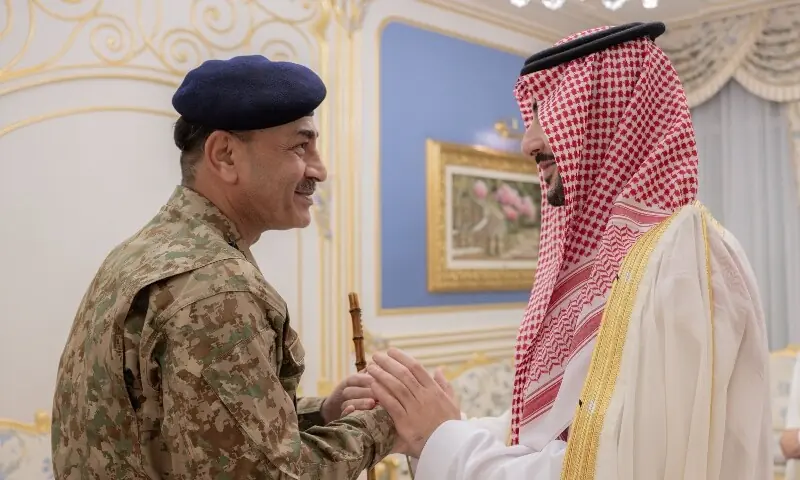
Its role as an intermediary between Washington and Tehran has increased its diplomatic relevance. Islamabad’s access to Iranian officials, combined with its renewed engagement with Washington, has given it an unusual position between competing regional actors.
But Pakistan also has interests that complicate any description of it as completely neutral.
Its economy remains highly exposed to Gulf energy supplies, while its security relationship with Saudi Arabia has deepened. As tensions involving Saudi Arabia and the Houthis intensify, Islamabad faces the difficult task of maintaining relations with Tehran while honouring its own strategic commitments elsewhere in the region.
Pakistan consequently benefits from mediation in another way: diplomatic relevance.
Successfully bringing opposing parties to negotiations enhances Islamabad’s standing in Washington, Tehran and the wider Middle East. But helping produce an agreement and guaranteeing its implementation are two very different responsibilities.
Pakistan can facilitate negotiations. It cannot independently determine whether Washington, Tehran or other regional actors will continue observing an agreement months later.
Egypt Needs the Red Sea Stabilised
Egypt’s interests are more directly connected with the Suez Canal and Red Sea.
Regional insecurity has already imposed substantial economic costs on Cairo through declining canal traffic. Continued instability around the Bab el-Mandeb and Red Sea shipping routes threatens further losses.
Egypt therefore has a powerful incentive to support an arrangement that reduces regional hostilities and restores commercial shipping.
That also means Cairo needs any settlement involving Tehran to be sufficiently broad to affect developments in Yemen and the Red Sea.
Yet broad agreements frequently become vague agreements.
The more actors and conflicts a diplomatic framework attempts to accommodate, the harder it becomes to establish precise obligations that every participant will accept.
The Problem With the June Memorandum
The earlier memorandum illustrates this dilemma.
Critical questions remained unresolved or ambiguous. Competing approaches existed over shipping routes through Hormuz. The ceasefire arrangements did not comprehensively resolve the question of Israeli military activity. The proposed reconstruction package raised another obvious issue: who would actually finance it?
These were not minor technical details. They concerned the mechanisms through which the agreement was supposed to function.
Resolving such questions would have required prolonged negotiations.
But Qatar faced pressure over energy exports. Egypt needed commercial shipping restored. Pakistan had an interest in maintaining diplomatic momentum.
All three therefore had understandable reasons to favour immediate progress.
The resulting lesson is uncomfortable: a signed agreement can satisfy a mediator’s short-term objectives without resolving the disputes that determine whether the agreement will endure.
Oman Demonstrates How Neutrality Has Become Harder
Oman’s changing position further illustrates the problem.
For years, Muscat’s strength in regional diplomacy came from patience and relative detachment. It could provide space for adversaries to negotiate without demanding an immediate political result.
The Strait of Hormuz crisis has made that position more complicated.
As a state bordering the waterway, Oman now has its own direct interest in negotiations concerning navigation and maritime arrangements. The geography that once strengthened its usefulness as a mediator increasingly makes it a stakeholder in the outcome.
This does not mean Oman, Qatar, Pakistan or Egypt cannot mediate effectively. It means the distinction between mediator and interested party has become increasingly blurred.
Leverage Is Useful — But Who Guarantees the Agreement?
There is a legitimate argument in favour of interested mediators: leverage can matter more than neutrality.
History provides examples of negotiations succeeding precisely because mediators possessed sufficient political influence to push the parties towards compromise.
But leverage becomes most effective when accompanied by the ability to guarantee implementation.
Qatar cannot independently police the Strait of Hormuz. Pakistan cannot determine the military decisions of every regional actor. Egypt cannot by itself secure Red Sea shipping. Nor can these states individually guarantee the financing of a massive reconstruction programme.
Their influence can help bring parties to the negotiating table. Their ability to enforce what happens afterwards is considerably more limited.
That difference may explain why diplomacy repeatedly produces frameworks that appear promising at signing ceremonies but struggle when confronted with implementation.
The Next Agreement Must Be More Precise
The next round of diplomacy will therefore be judged less by whether another memorandum is signed than by what that memorandum actually contains.
The Strait of Hormuz should be an immediate test.
Any durable arrangement would need clearly understood navigation procedures rather than competing interpretations of how commercial and military vessels may move through the waterway. Similar clarity would be required regarding sanctions, ceasefire obligations, regional military activity and any reconstruction commitments.
A shorter document with enforceable provisions could ultimately prove more valuable than an ambitious agreement containing unresolved questions.
The central issue is not whether Qatar, Pakistan and Egypt should mediate. Their relationships, access and interests make their involvement almost inevitable.
The real question is whether the diplomatic process can move beyond the mediators’ understandable desire for an immediate breakthrough and address the difficult issues required for a sustainable settlement.
Qatar wants its energy routes functioning. Pakistan values the diplomatic influence mediation provides. Egypt needs commercial traffic to return to the Suez Canal and Red Sea.
Those interests can help generate urgency. They can even bring adversaries into the same negotiating process.
But urgency is not the same as durability.
The success of the next US-Iran diplomatic initiative will therefore depend not simply on whether another agreement is reached, but on whether negotiators are willing to spend enough time resolving the questions that previous agreements left unanswered.
A signature can end a negotiating round. Only workable terms can prevent the next one.