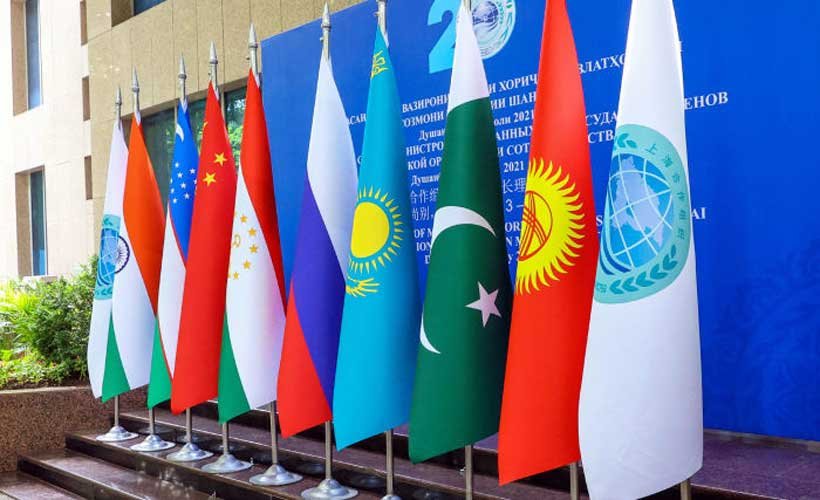

Pakistan’s year-long chairmanship of the Shanghai Cooperation Organization comes with an opportunity that extends well beyond hosting meetings and managing diplomatic calendars. The real test will be whether Islamabad can translate the organisation’s broad ambitions into practical regional cooperation.
The first meeting of the SCO Council of National Coordinators in Islamabad marks the beginning of that process. Representatives of the organisation’s 10 member states are gathering from September 28 to 30 to prepare the programme for Pakistan’s 2026-27 chairmanship, which will culminate in the Council of Heads of State summit in Islamabad in August 2027.
Pakistan has appropriately chosen “Turning Vision into Action: Connectivity, Innovation and Shared Prosperity” as the theme of its chairmanship. The phrase, however, will acquire significance only if it is accompanied by initiatives capable of producing measurable cooperation.
The SCO brings together countries with enormous populations, natural resources, markets and geographical reach. Yet its potential as a platform for economic integration remains constrained by political differences, uneven connectivity and competing national priorities. Pakistan’s challenge will therefore be to identify areas where common interests are sufficiently strong to produce tangible outcomes.
Connectivity Should Be at the Centre
For Pakistan, regional connectivity is not an abstract diplomatic objective. Geography gives the country the potential to connect Central Asia with South Asia and maritime trade routes through the Arabian Sea.
The SCO provides a platform through which discussions on transport corridors, trade facilitation, energy connectivity and digital infrastructure can be advanced collectively.
Pakistan’s chairmanship should consequently focus on converting connectivity from a frequently repeated diplomatic expression into workable projects and institutional arrangements.
The same principle applies to economic cooperation. Meetings should ultimately be judged by whether they make it easier for businesses to trade, investors to operate and member states to develop mutually beneficial economic relationships.
Innovation Can Give the SCO a Forward-Looking Agenda
Pakistan’s emphasis on innovation is equally important.
The future of regional economic cooperation will increasingly involve artificial intelligence, digital payments, data connectivity, technological skills and digitally enabled trade. Cooperation in these areas could give the SCO greater relevance to younger populations and emerging industries across its member states.
Pakistan can use its chairmanship to encourage collaboration among universities, technology companies, researchers and public institutions rather than limiting engagement to governments alone.
People-to-people cooperation should similarly move beyond ceremonial exchanges. Academic partnerships, research programmes, professional networks and cultural interaction can create relationships that survive political disagreements between governments.
Managing Political Differences Will Remain Difficult
The SCO is not a politically uniform organisation. Its membership includes China, Russia, India, Pakistan, Iran, Belarus and the Central Asian states, each with different foreign-policy priorities and security concerns.
That diversity gives the organisation geopolitical significance, but it also limits how easily consensus can be achieved.
Pakistan cannot eliminate these differences during a single year of chairmanship. Nor should success be measured by ambitious declarations alone. A more realistic objective would be to concentrate on areas where cooperation remains possible despite political disagreements.
Regional security, trade, transport, technology, energy and cultural engagement offer such possibilities.
From Hosting Summits to Producing Outcomes
Pakistan has experience hosting major SCO gatherings, including the Council of Heads of Government meeting in Islamabad in October 2024. The 2026-27 chairmanship, however, carries greater responsibility because Pakistan will oversee the organisation’s broader agenda before hosting its highest decision-making body next August.
This makes the coming year an important diplomatic test.
Pakistan can treat the chairmanship primarily as an opportunity for diplomatic visibility, or it can use the platform to advance practical initiatives capable of surviving beyond its tenure.
The distinction is important. Multilateral organisations rarely suffer from a shortage of declarations. Their greater challenge is implementation.
Pakistan’s chosen theme already recognises this problem: turning vision into action.
The success of its SCO chairmanship will ultimately depend on how effectively Islamabad can give practical meaning to those words by promoting connectivity, encouraging innovation, expanding economic cooperation and creating durable links among the peoples and institutions of member states.
For Pakistan, the opportunity is therefore larger than hosting another international summit. It is an opportunity to demonstrate that regional diplomacy can produce practical regional outcomes.