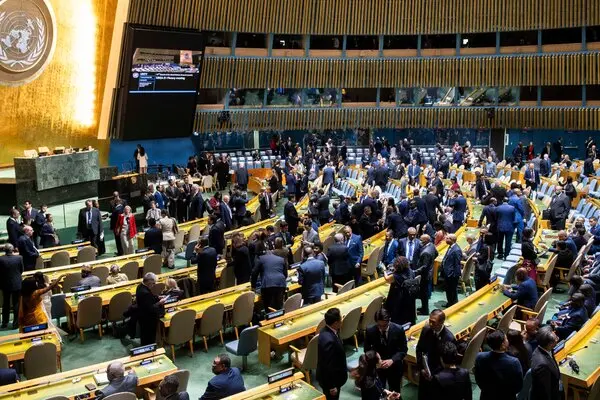

A peace agreement can be drafted by diplomats, endorsed by governments and formalised through international institutions. But implementing it requires something considerably harder: states willing to place their personnel on the ground and accept the political and security risks that follow.
That challenge has become increasingly apparent in efforts to establish Gaza’s post-war security framework.
The proposed International Stabilization Force (ISF), operating within the broader transitional arrangement for Gaza, is intended to perform responsibilities extending well beyond conventional ceasefire monitoring. Its envisaged role includes civilian protection, support for humanitarian operations, assistance in rebuilding Palestinian policing capacity and involvement in the decommissioning of weapons and military infrastructure. Pasted text
The difficulty is no longer simply designing such a force. It is finding governments prepared to provide the soldiers necessary to make it credible.
Peacekeeping or Peace Enforcement?
This distinction lies at the heart of the problem.
Protecting humanitarian convoys, observing a ceasefire and helping train Palestinian police are missions that governments can more readily present as stabilization or humanitarian responsibilities. Supporting demilitarization is fundamentally more sensitive.
The proposed mandate includes assistance with destroying military infrastructure and permanently decommissioning weapons belonging to non-state armed groups. Israeli withdrawal, meanwhile, is linked to verified progress on that process. Pasted text
This creates the possibility that international troops could eventually face circumstances in which they are expected not merely to preserve an agreed peace but to help enforce contested provisions of it.
For potential troop-contributing countries, that difference is critical. Governments must consider not only whether their forces can perform the mission, but whether they are politically prepared to accept the consequences if cooperation among the parties collapses.
Indonesia Illustrates the Mandate Problem
Indonesia demonstrates how large troop commitments can coexist with significant restrictions.
Jakarta initially contemplated a substantial contribution, potentially reaching thousands of personnel. Yet it described its proposed role as humanitarian and non-combatant, requiring Palestinian consent, while excluding participation in the demilitarization of any party. Its deployment was subsequently put on hold amid wider regional escalation and uncertainty surrounding implementation arrangements. Pasted text
The lesson is important: the number of soldiers pledged does not necessarily reveal how much operational responsibility a country is prepared to accept.
A stabilization force could therefore appear sizeable on paper while remaining constrained in practice if individual contingents operate under sharply different mandates.
Why Arab Participation Matters — and Why It Is Difficult
The limited commitment of large Arab contingents presents another challenge.
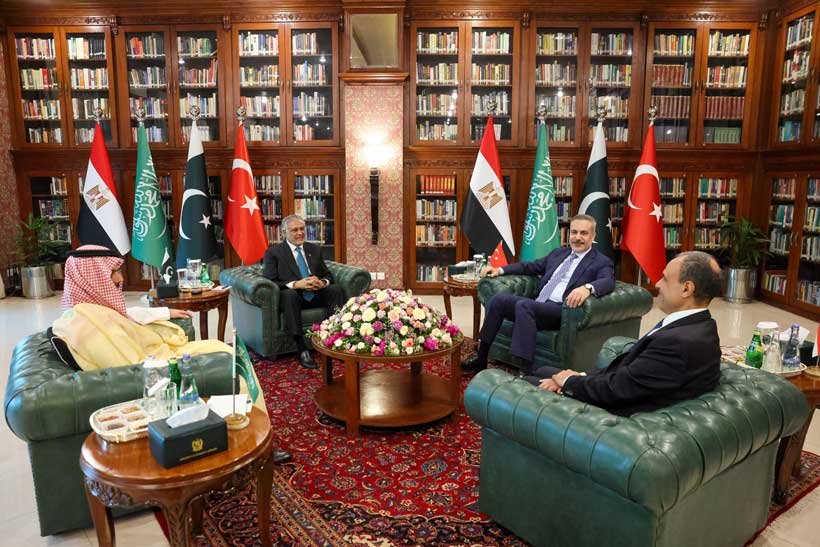
Regional governments including Saudi Arabia, the United Arab Emirates, Egypt, Jordan and Qatar have supported aspects of Gaza’s political transition. Yet diplomatic backing, financial assistance and institutional support have not automatically translated into willingness to deploy substantial numbers of soldiers. Pasted text
The political calculation is understandable.
Arab troops could find themselves positioned between Israeli forces and armed Palestinian groups. If demilitarization became coercive, participating governments could face accusations that their forces were enforcing an externally constructed political settlement rather than protecting Palestinians and maintaining peace.
Casualties would make that dilemma even more politically sensitive.
At the same time, substantial Arab participation could provide regional legitimacy that a force composed predominantly of more distant countries might struggle to achieve.
The very countries whose involvement could strengthen the ISF politically are therefore among those facing the greatest risks from joining it.
Smaller Contributors Can Help, but Cannot Solve Everything
Countries with less direct exposure to the Israeli-Palestinian conflict may have greater room to participate.
Kosovo has offered specialist personnel, including expertise in demining, while Albania has planned contributions to the command structure. Morocco brings another dimension because of its position as an Arab and Muslim-majority state maintaining diplomatic relations with Israel. Pasted text
Such contributions matter. Technical specialists, medical personnel, planners and command officers can provide essential capabilities and broaden the international composition of the mission.
But specialist teams cannot substitute indefinitely for the large formations that would be necessary if the ISF were expected to maintain security throughout Gaza.
Numbers, capabilities and political legitimacy must therefore be considered together.
The Sequencing Problem
An even deeper difficulty concerns the order in which the transition is expected to occur.
Israeli withdrawal is connected to progress on demilitarization. Yet implementing demilitarization itself is linked to Israeli withdrawal and other elements of the wider political roadmap. The stabilization force is supposed to provide security during precisely this transition. Pasted text
That creates a circular dilemma.
Governments may prefer to deploy troops only after meaningful political progress has reduced the risks facing their forces. But political progress may itself depend on having a credible international force already deployed to provide reassurance and security.
The ISF consequently needs political progress before governments become comfortable contributing troops, while the political process may need the ISF before that progress can safely proceed.
The Real Test Is Political Confidence
The debate over troop contributions should therefore not be reduced to a manpower shortage.
The composition of the ISF is effectively a measure of how much confidence governments are prepared to place in Gaza’s proposed political transition. Providing humanitarian assistance or supporting diplomacy involves one level of commitment. Sending soldiers into an unsettled post-war environment involves another. Pasted text
Gaza’s proposed post-war order may possess an institutional blueprint, but institutions on paper cannot themselves provide security.
For the stabilization force to become credible, participating governments will need greater clarity about its mandate, rules of engagement, relationship with Palestinian institutions, connection to Israeli withdrawal and responsibilities if demilitarization encounters resistance.
That is ultimately the central challenge confronting Gaza’s post-war framework: a peace plan can be negotiated before every political disagreement has been settled, but the soldiers expected to secure that peace cannot operate on ambiguity alone.