
By Republic Policy
The 2026 US midterm elections have delivered a political shock to Donald Trump’s presidency and exposed tAmerica’s Midterm Tsunami: An Opportunity to Rebuild Democracy
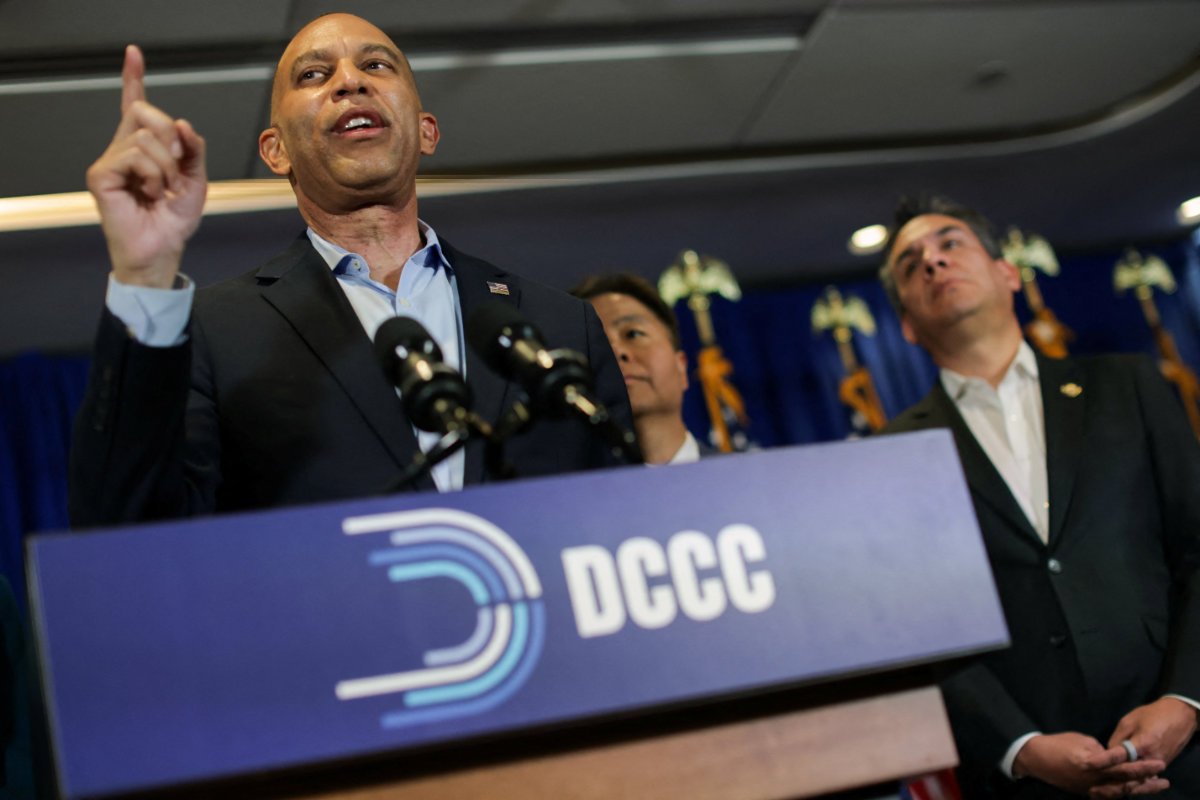
he limits of the political movement built around his leadership. The scale of the Democratic gains represents more than a setback for the Republican Party. It signals a public demand for a different direction in American politics—one in which constitutional restraints, institutional accountability and economic security must once again become central to the functioning of government.
The result offers Democrats an opportunity, but it also places a substantial responsibility on their shoulders. Electoral victories can change the balance of power in Washington; they cannot, by themselves, repair institutions weakened by political confrontation, executive overreach and declining public confidence. The real test of the election will therefore be whether the Democratic Party can translate its political advantage into a sustained programme of democratic renewal.
The danger for Democrats is to interpret the result simply as a rejection of Trump and his political movement. Such an interpretation would be incomplete. American voters may have been motivated by several concerns, including the cost of living, economic uncertainty and dissatisfaction with the administration’s policies. Yet the broader significance of the election lies in the relationship between these everyday concerns and the health of democratic institutions. A government that operates without effective accountability cannot reliably deliver economic security, protect citizens’ rights or maintain public trust.
Beyond the rejection of Trump
Donald Trump’s political strategy has consistently relied on personal authority, political polarisation and the portrayal of institutional constraints as obstacles to executive action. His administration’s confrontational relationship with independent institutions has raised fundamental questions about the resilience of the American constitutional system.
The midterm results suggest that this approach carries political costs. Elections remain one of the most important mechanisms through which citizens can hold governments accountable. When voters use them to change the balance of power, they reaffirm a basic democratic principle: political authority is temporary and must remain answerable to the public.
However, defeating a political movement at the ballot box is not the same as dismantling the conditions that enabled it to emerge. The political, economic and institutional grievances that contributed to Trump’s rise will not disappear simply because Democrats have won a decisive electoral victory. Nor will public confidence automatically return to institutions whose credibility has been damaged by years of political conflict.
Democrats must therefore resist the temptation to treat the election as a mandate for political retaliation. Their task is not to reproduce the politics of personal confrontation under a different party leadership. It is to demonstrate that democratic government can be more accountable, more effective and more responsive to ordinary citizens.
The rule of law is an economic necessity
Affordability may have been among the most immediate concerns influencing voters, but economic security cannot be separated from institutional quality. Inflation, housing costs, healthcare expenses, employment insecurity and declining purchasing power shape the daily lives of citizens. These pressures demand practical policy responses, not merely political messaging.
Yet the ability of a government to address economic problems depends heavily on the quality of its institutions. Predictable laws, independent regulators, transparent public spending and accountable administration create the conditions in which businesses can invest, workers can plan their futures and citizens can trust public decisions.
When political power is exercised arbitrarily, the consequences extend beyond constitutional disputes. Uncertainty discourages investment, selective enforcement undermines fair competition, and institutional interference weakens the credibility of public policy. The rule of law is therefore not an abstract constitutional ideal reserved for lawyers and judges. It is an essential component of economic stability.
For Democrats, this connection should inform their legislative priorities. If they want to respond to voters’ concerns about affordability, they must also address the institutional weaknesses that prevent governments from delivering consistent and equitable outcomes. Economic policy and democratic reform should not be treated as competing agendas. They are mutually reinforcing requirements of effective government.
Congress must recover its constitutional role
A Democratic majority in Congress creates an opportunity to restore legislative oversight and strengthen the constitutional balance between the executive and legislative branches. Congress is not merely a platform for opposing the president. It is an independent institution with responsibilities to scrutinise executive decisions, examine public expenditure, protect constitutional rights and ensure that federal authority remains within legal limits.
The effectiveness of this role will depend on the seriousness with which Democratic lawmakers approach it. Oversight must be evidence-based, consistent and guided by constitutional principles. Investigations should establish facts and enforce accountability rather than become instruments of political theatre.
The same standard must apply to legislation. A parliamentary majority is not an unrestricted licence to impose party preferences. Democratic institutions function best when major decisions are debated openly, affected communities are heard and laws are designed to serve the public interest beyond the immediate electoral cycle.
Congress must also rebuild its capacity to formulate policy. Legislative institutions become weaker when they surrender too much authority to the executive, rely excessively on partisan messaging or fail to develop independent expertise. A stronger Congress requires capable committees, serious policy research and a willingness to scrutinise decisions regardless of which party occupies the White House.
The objective should be institutional independence, not simply a transfer of political advantage.
Rebuilding public trust
The erosion of democratic confidence is among the most serious challenges confronting the United States. Public trust cannot be restored through slogans about democracy or declarations of victory. It requires institutions that demonstrate fairness, competence and accountability in their daily operations.
Independent courts, a professional civil service, credible electoral institutions and a free press are essential elements of this framework. Their legitimacy depends on their ability to function without political intimidation or partisan interference. Equally important is the willingness of elected officials to accept institutional limits, respect lawful decisions and recognise that political opponents remain legitimate participants in democratic life.
Democrats should approach institutional reform with a long-term perspective. Changes designed only to constrain the current administration may become ineffective or even counterproductive when political power changes hands again. Reforms should instead establish durable standards that apply to every administration, irrespective of party affiliation.
This includes strengthening transparency, protecting the independence of oversight bodies, improving public access to government information and reinforcing safeguards against the misuse of executive authority. Such measures would help ensure that accountability does not depend on the political preferences of whoever holds power.
The challenge of governing after victory
The Democratic Party now faces a difficult balancing act. It must hold the Trump administration accountable while demonstrating that it can govern constructively. It must respond to economic grievances without reducing every policy debate to an argument about the president. Most importantly, it must avoid allowing the intensity of opposition politics to replace the difficult work of institutional reconstruction.
There is also a need to recognise the diversity of the electorate. Not every voter who supported Democrats did so for identical reasons, and not every voter who backed Trump necessarily endorsed every aspect of his administration. A durable democratic recovery requires engaging citizens beyond established party constituencies and addressing the concerns that cut across political divisions.
This demands a politics of public service rather than permanent electoral mobilisation. Housing affordability, healthcare, education, employment and the cost of essential goods require practical solutions, administrative competence and sustained legislative attention. Voters will ultimately judge the Democratic majority by whether their lives improve, not by the number of political victories it announces.
An opportunity larger than an election
The 2026 midterm election has created an opening to reconsider the foundations of American governance. Its significance extends beyond the immediate weakening of Trump’s political position. It offers an opportunity to restore constitutional accountability, strengthen legislative institutions and reconnect democratic government with the material concerns of citizens.
But electoral momentum is temporary. Political coalitions change, public expectations evolve and the next election will arrive with its own demands. The institutions that sustain democracy, by contrast, must remain credible across administrations and generations.
The central lesson is that democracy cannot be protected by elections alone. Elections provide citizens with the means to reward or punish political leadership, but the rule of law, institutional independence and accountable government determine whether their choices translate into meaningful public outcomes.
For Democrats, the midterm tsunami is therefore not an invitation to celebrate the defeat of their opponents indefinitely. It is a mandate to prove that democratic institutions can deliver better government. If they use their victory merely to reverse partisan fortunes, they will squander its significance. If they use it to rebuild constitutional safeguards, improve economic governance and restore public confidence, the election could become a turning point in American democratic life.