
Op-Ed / Tariq Mahmood
The debate over Pakistan’s governance cannot be reduced to administrative efficiency or the performance of individual institutions. It must begin with a more fundamental question: does the structure of the state reflect the constitutional identity of the country?
Pakistan’s constitutional identity is that of a Federal Republic. Yet, in practice, the country continues to operate through a highly centralised and bureaucratic model of governance, shaped in significant part by its colonial administrative inheritance. This contradiction lies at the heart of Pakistan’s institutional difficulties. The Constitution envisages a federal democratic state, but the exercise of public authority often remains concentrated within adminiPakistan Must Be Understood as a Federal Republic: Rethinking the Foundations of Governance
strative structures that have historically operated with considerable autonomy from elected representation.
Addressing this contradiction requires more than isolated administrative reforms. It requires a serious reconsideration of the philosophy, constitutional foundations and institutional architecture of the state.
The concepts of Federalism and Republicanism provide an essential framework for this reconsideration. Federalism concerns the constitutional distribution of authority between the federation and its constituent units, while Republicanism places public authority in the hands of the people and recognises elected representatives as the legitimate agents through whom that authority is exercised. Together, these principles offer a way to examine not only how government functions, but also where its authority comes from, how it is distributed and in whose interests it is exercised.
Article 1 of Pakistan’s Constitution is central to this debate. It defines Pakistan as a Federal Republic. This is not merely a formal description of the country. It establishes a constitutional identity against which the state’s institutions, distribution of powers and administrative arrangements must be understood and evaluated. If Pakistan is constitutionally a Federal Republic, its governance structures should reflect both the federal distribution of authority and the republican principle of public sovereignty.
The distance between this constitutional commitment and the country’s administrative reality is substantial. Pakistan inherited a colonial system in which authority was concentrated in the executive and exercised through a powerful bureaucracy. That system was designed primarily to maintain administrative control rather than facilitate democratic participation, institutional accountability or the autonomous functioning of constituent political units. Although the country has undergone constitutional and political changes, important features of this inherited administrative structure continue to influence the way public authority is organised and exercised.
The result is a governance model in which bureaucratic institutions frequently occupy a position far greater than their constitutional role would suggest. Public administration is indispensable to the functioning of the state, but administrative authority cannot become a substitute for political representation. Civil servants are responsible for implementing the law, advising elected governments and carrying out public functions within the constitutional framework. They are not an alternative source of popular sovereignty, nor can administrative institutions replace the authority and responsibility of elected representatives.
This distinction is fundamental to Republicanism. The state does not belong to its administrative machinery. Its authority derives from the people, and public power must be exercised through institutions that are constitutionally accountable to them. When unelected administrative structures acquire a dominant role in determining public priorities and controlling the exercise of state authority, the relationship between citizens, elected representatives and the state becomes distorted.
Federalism addresses another dimension of this problem: the concentration of power at the centre. A genuine federal system requires a meaningful constitutional distribution of powers, institutional respect for the autonomy of constituent units and an understanding that provincial authority is not simply a delegation of administrative convenience. Federal units are constitutional components of the federation, not subordinate offices of the central government. Their autonomy must be reflected in the actual distribution and exercise of public authority.
The same principle extends to local government. Devolution cannot be treated merely as an administrative adjustment or a change in the organisation of government offices. It requires the transfer of meaningful political, administrative and financial authority to institutions operating closer to citizens. Without resources, decision-making powers and accountability, local government remains an incomplete expression of democratic decentralisation.
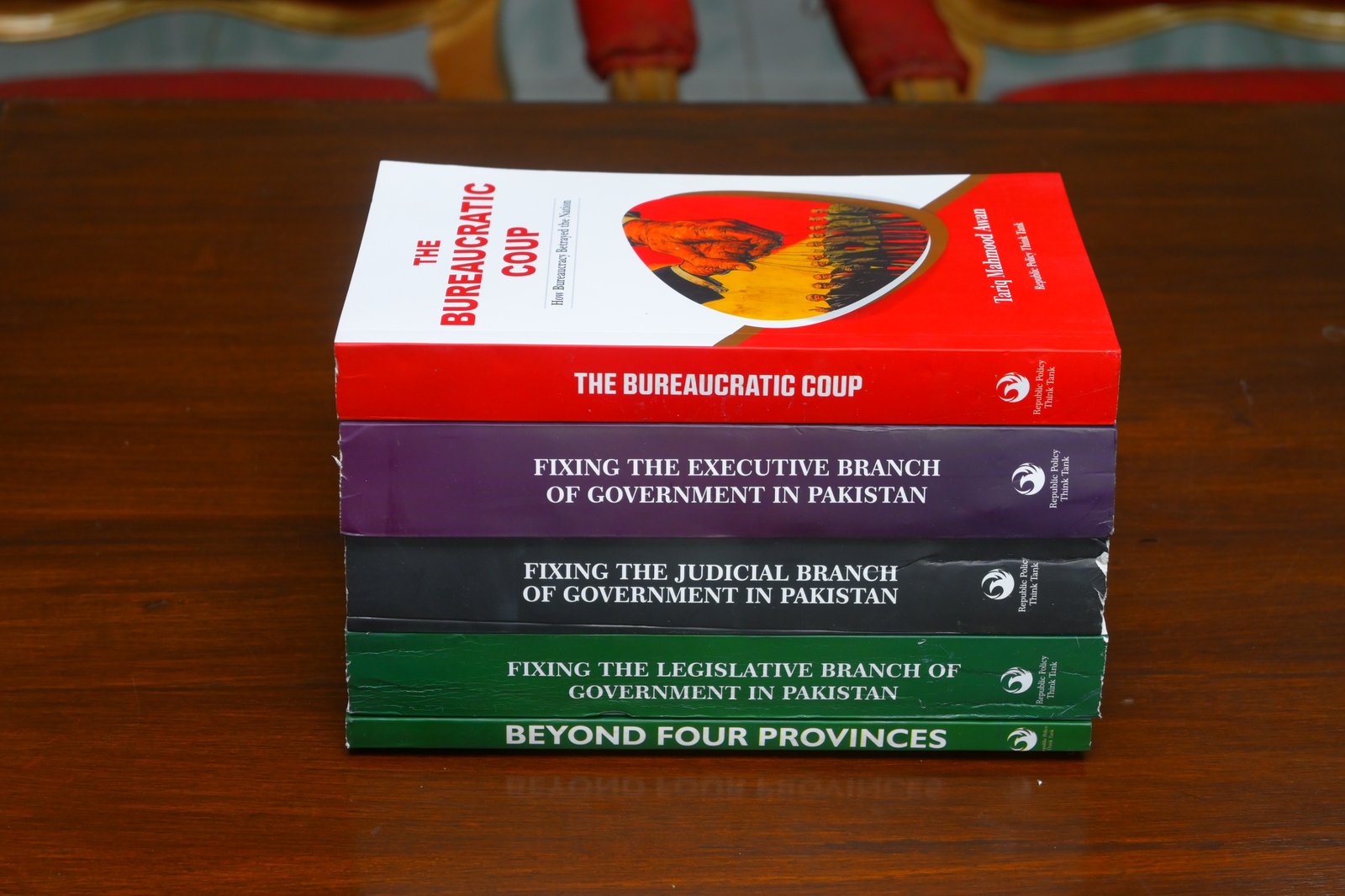
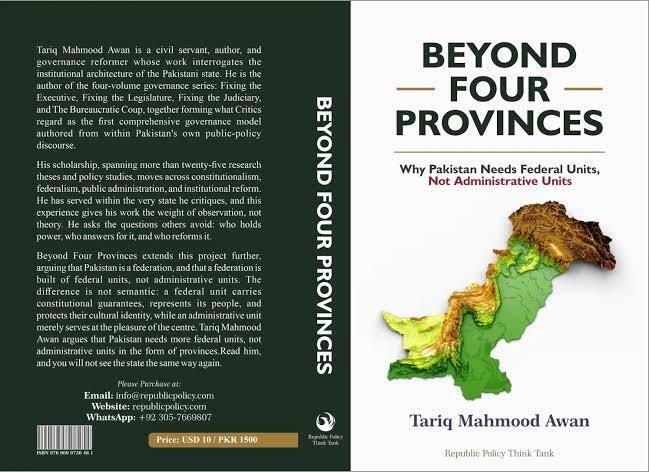
These principles form the foundation of a governance model developed across eight books examining Pakistan’s constitutional and institutional arrangements. The work includes Fixing the Executive, Fixing the Legislature, Fixing the Judiciary, The Bureaucratic Coup and Federal Units, Administrative Units and Local Government, among other publications. Taken together, these books examine the historical evolution of the state, the institutional consequences of colonial administrative structures, constitutional contradictions and the possibilities of an alternative governance framework.
The purpose of this work is not to criticise one institution, political party or professional group. It is to examine the state as a complete constitutional system. The legislature, judiciary, executive, bureaucracy, federal units, administrative units and local governments cannot be understood in isolation. Their respective powers and responsibilities are interconnected, and the performance of the entire system depends on whether these relationships reflect the constitutional principles on which the state is founded.
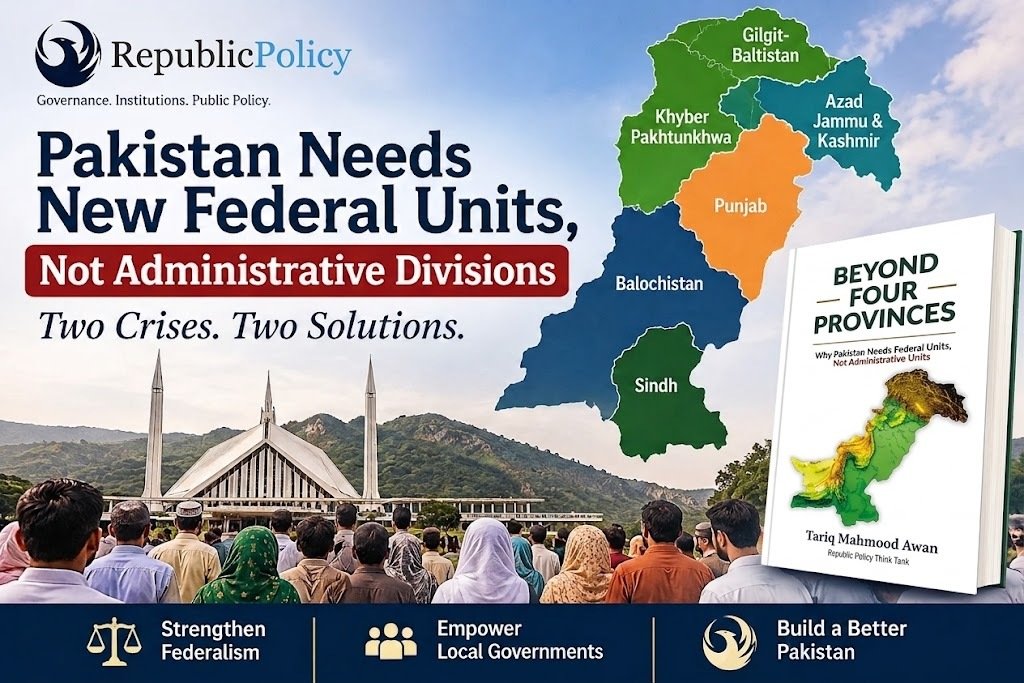
An important part of this argument concerns the distinction between federal units and administrative units. The two are often treated as interchangeable in public discussion, despite representing fundamentally different arrangements. Federal units derive their status from the constitutional structure of the federation. Administrative units, by contrast, are internal arrangements created for the organisation and delivery of government services. Confusing the two can obscure questions of constitutional authority, autonomy and political representation. Similarly, strengthening local government does not require weakening the federation; it requires making the distribution of authority more meaningful at every level.
The central argument, therefore, is that Pakistan does not simply need a more efficient bureaucracy. It needs a governance structure in which every institution operates within its constitutional role. Administrative capacity matters, but it must be accompanied by democratic accountability. Federal autonomy matters, but it must be supported by institutional capacity and responsible governance. Local government matters, but it cannot function effectively without meaningful powers and financial resources. These are complementary requirements of a Federal Republic, not competing administrative preferences.
The proposed model has not yet received a sustained scholarly counterargument that engages directly with its central premises. There has been criticism of the work, including criticism directed at its author, but personal objections cannot replace intellectual engagement. The relevant questions are constitutional and institutional: Is the interpretation of Federalism convincing? Does the proposed understanding of Republicanism accurately explain the source and exercise of public authority? Are the institutional arrangements proposed in the books workable? Do they offer a coherent response to Pakistan’s governance problems? These are the questions that deserve serious examination.
A mature intellectual environment should welcome such scrutiny. No governance model should be beyond criticism, and the presentation of an alternative framework does not establish its correctness by itself. Its arguments must be tested against constitutional provisions, historical evidence, institutional realities and practical consequences. Equally, criticism should engage with the substance of those arguments rather than rely on personal preferences, professional sensitivities or resistance to institutional change.
The difficulty of introducing these ideas into Pakistan’s political and administrative debate is understandable. For decades, public discussion has largely been shaped by centralised administrative thinking. In Punjab particularly, federalism and Republicanism have not always received the attention they deserve as foundational concepts of governance. Consequently, proposals to reconsider established institutional arrangements can be viewed as challenges to familiar structures rather than attempts to bring the state closer to its constitutional design.
Yet the status quo cannot be treated as constitutionally justified simply because it has endured. The persistence of an administrative arrangement does not make it consistent with the Constitution. Nor should the prospect of institutional resistance become a reason to avoid examining the distribution of public authority. Reform, in this context, is not about transferring power from one group to another for its own sake. It is about ensuring that power is exercised by the appropriate institutions, at the appropriate level, under constitutional rules and with public accountability.
Pakistan’s governance debate must therefore move beyond personalities and narrow administrative questions. The country needs a serious discussion about the relationship between constitutional authority, democratic representation, federal autonomy and bureaucratic administration. Such a discussion should neither idealise existing institutions nor dismiss their contribution. It should establish clear constitutional boundaries and ensure that every institution has the authority, resources and responsibilities necessary to perform its role.
Ultimately, the challenge is to transform a centralised, colonial administrative state into a functioning Federal Republic. This is a constitutional and philosophical undertaking, not merely a programme of administrative adjustment. Pakistan’s institutions must be assessed against the identity declared in Article 1 of the Constitution. The real test of any proposed governance model is whether it brings the exercise of public authority closer to the people, strengthens the constitutional federation and makes public institutions more accountable.
The debate over this model should be conducted through research, evidence and constitutional argument. Its author, like any other scholar or public-policy thinker, must remain open to criticism. But criticism must address the ideas themselves. Pakistan needs an intellectual contest over the nature of its state, not a personal contest over those who question its existing structures. Only through such engagement can the country begin to close the gap between the Federal Republic promised by its Constitution and the centralised bureaucratic system that continues to shape its governance.
Republic Policy | Governance. Institutions. Public Policy.
Order our books: 0341-4222501