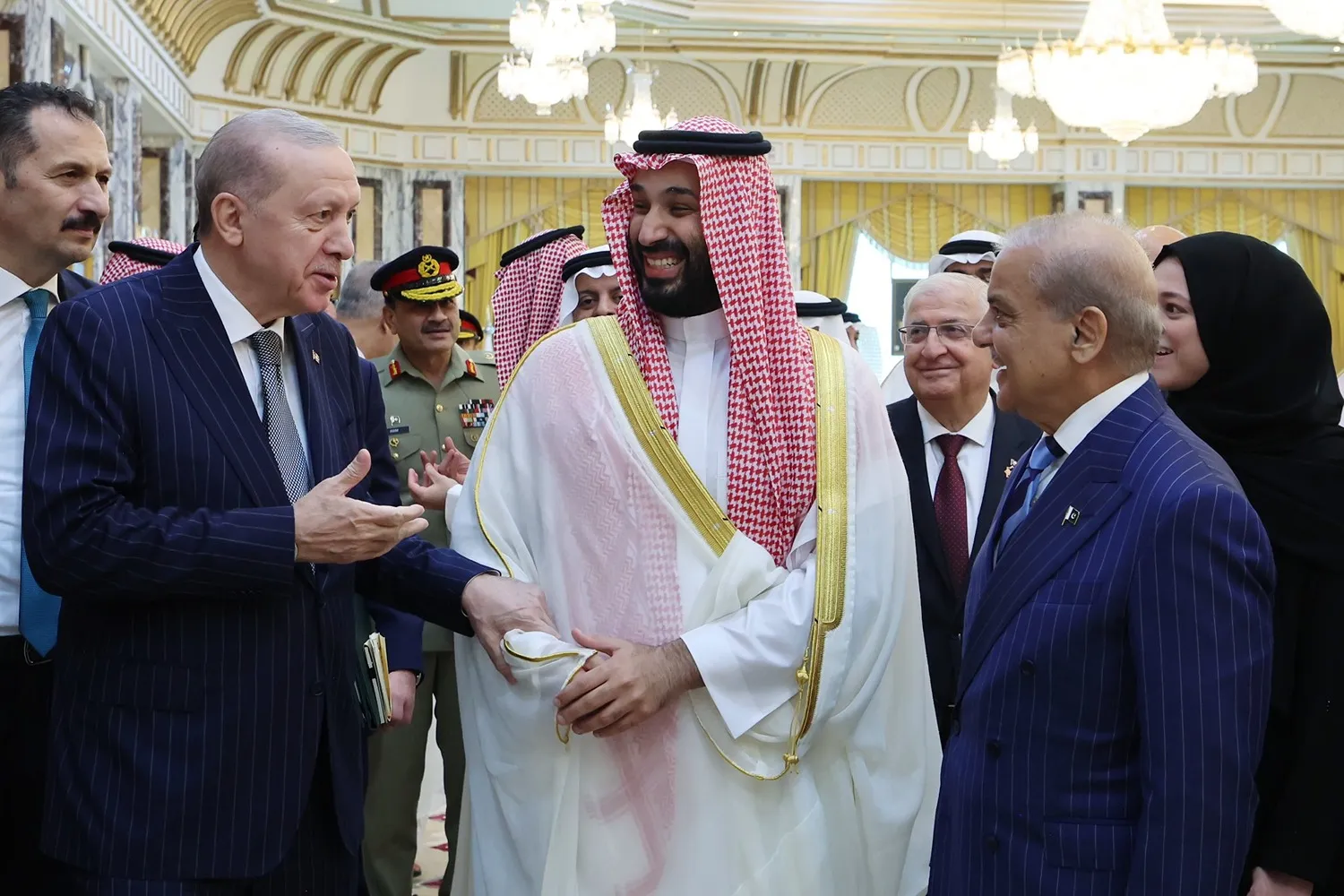

Pakistan, Saudi Arabia and Türkiye to assess regional security situation as trilateral defence pact moves towards deeper political and military coordination
ISLAMABAD: Pakistan, Saudi Arabia and Türkiye will convene an emergency meeting of the Strategic Political and Defence Committee (SPDC) of the Makkah Joint Defence Agreement in Riyadh next week amid escalating Houthi attacks on Saudi Arabia and diplomatic efforts to prevent a wider regional confrontation.
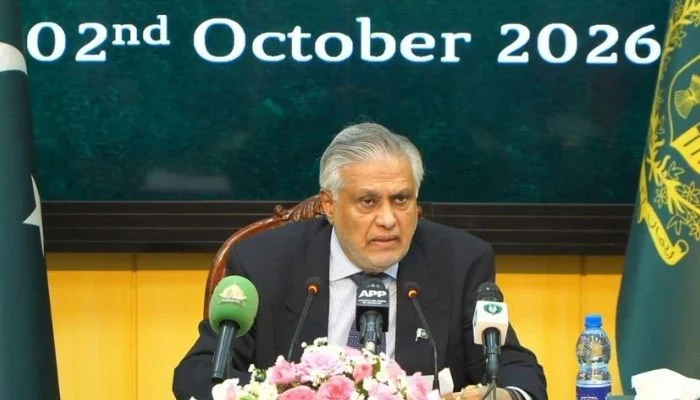
Deputy Prime Minister and Foreign Minister Ishaq Dar said on Friday that the meeting would examine the situation on the ground, particularly following attacks on Saudi civilian and economic infrastructure, including the recent strike on a power facility in Madinah.
The meeting represents another step towards institutionalising the trilateral defence arrangement signed on August 7. Under the agreement, an armed attack against any one of the three members is to be considered an attack against all three.
Alliance Steps Up Military Coordination
The emergency meeting follows consultations among the three countries during the United Nations General Assembly in New York.
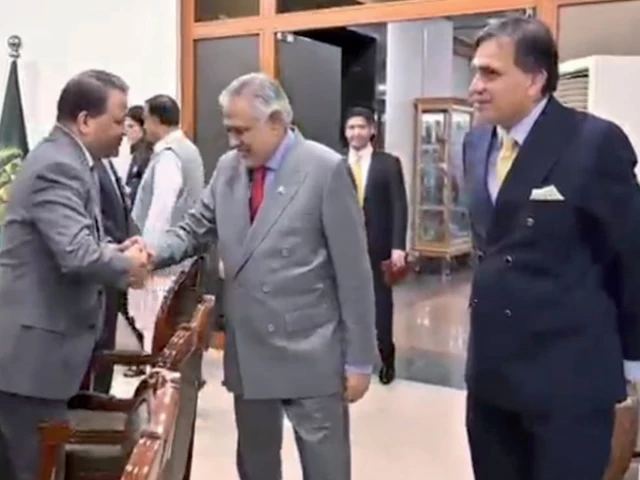
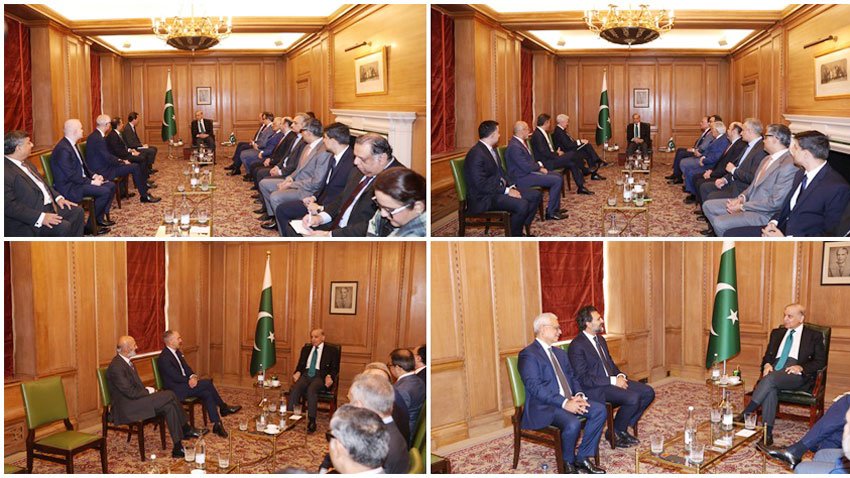
Dar, Saudi Foreign Minister Prince Faisal bin Farhan and Turkish Foreign Minister Hakan Fidan met on September 24 to discuss implementation of the agreement and agreed that the three countries’ military chiefs should hold urgent consultations.
The military leadership subsequently met in Riyadh on September 25, reviewing threats confronting Saudi Arabia and discussing intelligence sharing, military coordination and greater integration of defence capabilities.
The three sides reaffirmed their commitment to collective defence and to translating the Makkah agreement into practical security cooperation.
The latest diplomatic and military activity has gained urgency following a series of attacks attributed by Saudi Arabia to Yemen’s Houthis, including the attack on an electricity distribution facility in Madinah.
Pakistan strongly condemned the incident and reiterated its support for Saudi Arabia’s sovereignty and the security and sanctity of the Two Holy Mosques. The Houthis have denied responsibility for the Madinah attack.
Iran Favours Political Engagement With Houthis
Dar also disclosed discussions with Iranian Foreign Minister Abbas Araghchi over the regional crisis.
According to Dar, Araghchi indicated that Iran was distancing itself from the Houthis and Iraqi armed groups and suggested that political engagement with such groups should be pursued instead of military action.
Dar said the Iranian foreign minister had conveyed Tehran’s desire for the crisis to be resolved. Pakistan, however, made clear that it was now bound by a defence agreement and would honour its commitments.
Dar stressed that the discussion did not constitute a formal Iranian proposal. Rather, it was an exchange of views between the two foreign ministers. Whether political engagement could provide an alternative to military action is expected to be considered by the SPDC.
The development highlights Pakistan’s delicate diplomatic position as it seeks to fulfil its defence commitments to Saudi Arabia while maintaining dialogue with neighbouring Iran and advocating regional de-escalation.
Permanent Secretariat Being Established in Riyadh
The alliance is simultaneously developing its permanent institutional framework.
Its first SPDC meeting was held in Istanbul on August 31 and brought together the foreign ministers, defence ministers and military chiefs of Pakistan, Saudi Arabia and Türkiye.
The meeting agreed to establish a permanent secretariat in Saudi Arabia, with Pakistan initially providing the secretary general for a three-year term.
Retired Lieutenant General Nauman Mahmood was subsequently appointed the alliance’s first secretary general, while Riyadh was selected to host the secretariat.
The agreement also envisages cooperation in defence industries, joint technological development and production.
More Than Six Countries Interested in Membership
Dar said more than six countries had expressed interest in joining the Makkah defence framework.
However, he indicated that expansion would be considered only after the alliance’s secretariat and institutional mechanisms became fully operational.
Dar reiterated that the pact was strictly defensive and did not have an offensive objective. While membership remains open to other states willing to accept its founding principles, any expansion would require a joint decision by Pakistan, Saudi Arabia and Türkiye.
Afghanistan and Regional Security
Dar said Pakistan had also highlighted terrorism originating from Afghanistan as an important regional security concern.
He credited Field Marshal Asim Munir, Chief of Defence Forces, with contributing to mediation efforts between the United States and Iran.
Discussing Pakistan’s wider diplomatic role, Dar said Islamabad had worked to strengthen multilateralism during its presidency of the United Nations Security Council. He said a Pakistan-sponsored resolution on multilateralism and the peaceful settlement of disputes had been unanimously adopted for the first time in 12 years.
He further said Pakistan had helped bring the United States and Iran to the negotiating table for the first time in 47 years, with six sessions spanning 21 hours and culminating in a signing on June 18.
Energy Crisis and Strategic Waterways
Dar also addressed the economic consequences of instability around the Strait of Hormuz and Bab-el-Mandeb, saying disruptions had affected international supply chains and contributed to a sharp increase in energy prices in Pakistan.
Despite fiscal pressures and commitments under the IMF programme, he said the government had introduced a fuel relief scheme benefiting millions of users of motorcycles, three-wheelers and small cars of up to 800cc.
On the broader Middle East conflict, Dar argued that prolonged warfare could not provide a sustainable solution, noting that even major global wars ultimately ended through negotiations and institution-building.
Pakistan Reiterates Kashmir and Water Positions
Turning to India, Dar reaffirmed Pakistan’s position that the people of Jammu and Kashmir should determine their future through a plebiscite in accordance with United Nations Security Council resolutions.
He said India’s actions of August 5, 2019, should be reversed and opposed demographic changes in occupied Kashmir.
Dar also referred to the Pahalgam incident, arguing that Pakistan had countered Indian allegations internationally by immediately proposing an independent and neutral investigation. He further challenged Indian claims concerning subsequent military exchanges and said New Delhi had damaged its own credibility.
On the Indus Waters Treaty, Dar reiterated that Pakistan did not accept India’s decision to hold the agreement in abeyance. He said the country’s civil and military leadership remained determined to protect Pakistan’s water rights.
Pakistan Expands Multilateral Engagement
Dar said he had participated in several diplomatic engagements concerning Gaza, Afghanistan, Kashmir and emerging global challenges.
These included a meeting of the eight-member Arab-Islamic group on Gaza hosted by Egypt, a four-country regional meeting involving Pakistan, Saudi Arabia, Türkiye and Egypt, and a UN Security Council briefing on artificial intelligence.
He also attended meetings of the Organisation of Islamic Cooperation contact groups on Jammu and Kashmir and Afghanistan, which he said Pakistan had advocated should convene regularly.
The upcoming Riyadh meeting will therefore take place at a critical stage for the Makkah Alliance as its three founding members seek to respond to immediate security challenges while building the political, military and institutional structures of their new collective defence framework.