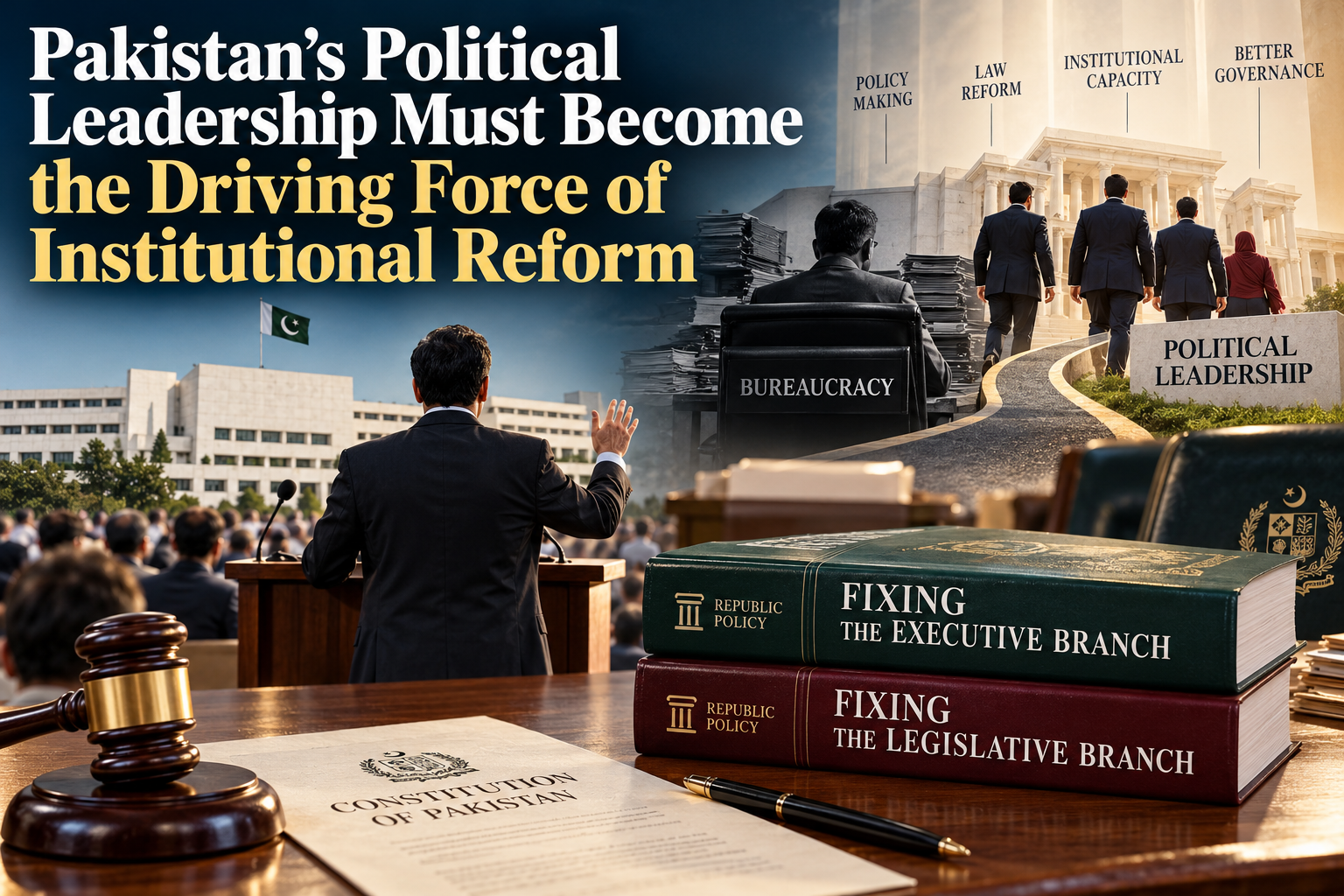

Constitutional authority may rest with elected representatives, but the institutions that control information, procedures, legal drafting and implementation can exercise decisive influence over how the state is governed.
The distribution of power within a state cannot be understood merely by examining its constitution. A constitution establishes the formal authority of institutions, defines their responsibilities and determines who is legally empowered to make decisions. Yet the actual exercise of state power is considerably more complex. Authority does not reside exclusively in the institution authorised to decide. It also resides in the institution that determines what information reaches the decision-maker, how a problem is defined, which solutions are presented, how legislation is drafted and when an approved decision is implemented.
This distinction between constitutional authority and administrative power is fundamental to understanding the political influence of bureaucracy.
In a parliamentary democracy, elected representatives possess the constitutional mandate to formulate public policy and exercise political oversight. Bureaucracy is expected to provide professional assistance and implement lawful decisions. However, when administrative institutions acquire disproportionate control over the processes preceding and following political decisions, they can influence the substance of governance without formally assuming political responsibility.
The result is a structural imbalance: elected governments remain publicly accountable for decisions whose formulation and implementation may be substantially shaped by unelected officials.
Five institutional mechanisms explain how bureaucracy acquires, exercises and preserves this influence.
1. Control Over Information and Administrative Procedures
The first source of bureaucratic power is control over information and official procedures.
Government decisions rarely emerge directly from political instructions. They ordinarily pass through administrative files, briefing notes, departmental summaries, legal opinions and procedural examinations. Bureaucratic institutions prepare these documents and determine how competing considerations are presented to political authorities.
This gives administrators considerable influence over the choices available to decision-makers.
An official preparing a policy summary may emphasise certain legal constraints, financial implications or administrative difficulties while giving less attention to alternative approaches. The resulting recommendation can shape a minister’s understanding of both the problem and its possible solutions.
Such influence need not involve unlawful conduct. It arises from the ordinary organisation of government, in which officials possess greater familiarity with departmental procedures than political officeholders.
The democratic concern emerges when control over information becomes a means of controlling policy itself.
A government cannot exercise meaningful authority if it depends entirely on the institution it supervises to determine what it is permitted to know, consider or implement.
Effective democratic governance therefore requires transparent administrative procedures, access to independent policy advice and institutional arrangements that allow elected authorities to examine competing recommendations.
2. Institutional Memory and Administrative Continuity
The second source of bureaucratic influence is institutional memory.
Political governments operate within electoral cycles. Ministers assume office, change portfolios or leave government. Political priorities evolve, and successive administrations may pursue different programmes.
Bureaucratic institutions, however, possess a continuity that political administrations generally lack.
Senior officials may spend decades within the same administrative structure, acquiring extensive knowledge of its procedures, informal practices, internal relationships and historical decisions.
This continuity is essential for effective government. Without institutional memory, every political transition would threaten administrative stability.
Nevertheless, continuity also creates an imbalance of knowledge and experience.
A newly appointed minister may possess constitutional authority over a department but have limited familiarity with its operational history. Senior officials, by contrast, may understand which decisions were previously attempted, why certain proposals failed and how departmental procedures can accelerate or delay implementation.
The bureaucracy consequently becomes the principal interpreter of institutional experience.
When this knowledge is used to assist elected governments, it strengthens administration. When it is used to preserve established privileges, resist reform or restrict political choices, it becomes a mechanism of institutional dominance.
The distinction lies not in the existence of administrative continuity but in the purpose for which that continuity is employed.
3. Technical Expertise and the Politics of Interpretation
The third mechanism is the concentration of technical, legal and administrative expertise.
Modern government involves complex questions of public finance, regulation, procurement, legislation, personnel management and institutional coordination. Political representatives cannot reasonably be expected to possess specialist knowledge of every field.
They must therefore rely on professional advice.
This reliance gives bureaucracy an indispensable role in governance. Yet expertise is not politically neutral merely because it is presented in technical language.
Legal provisions can permit competing interpretations. Administrative problems may have several workable solutions. Financial constraints can be assessed through different assumptions, while policy proposals may distribute benefits and costs differently across institutions and communities.
Officials who provide technical advice may also belong to institutions whose powers, resources or privileges are affected by the decisions under consideration.
This creates the possibility of institutional conflicts of interest.
An administrative recommendation may be legally defensible and technically sophisticated while simultaneously protecting the authority of the department responsible for preparing it.
The problem is not that civil servants possess expertise. Professional competence is indispensable to public administration.
The problem arises when specialised knowledge becomes an exclusive source of authority that political institutions cannot independently examine.
Democratic oversight requires the capacity to question expert advice, obtain alternative assessments and distinguish objective administrative requirements from institutional preferences.
Without such safeguards, technical expertise can become a means through which unelected institutions influence political outcomes.
4. Exploiting Political Transitions and Weak Oversight
The fourth mechanism concerns periods of political transition.
Changes of government, caretaker administrations and institutional uncertainty can weaken the ordinary mechanisms through which political authorities supervise administrative decisions.
During these periods, elected oversight may become less effective, political responsibility may be dispersed and administrative officials may enjoy greater practical discretion.
Bureaucratic institutions retain their organisational continuity while political leadership undergoes transition.
This creates opportunities for administrative decisions with lasting consequences to be initiated, approved or implemented when scrutiny is comparatively limited.
Appointments, service regulations, institutional restructuring and changes in administrative authority can have consequences extending well beyond the transitional period in which they occur.
Such decisions may subsequently constrain the choices available to elected governments.
This does not mean that every administrative action taken during a political transition is improper. Governments must continue functioning, and routine administration cannot be suspended.
The critical question is whether temporary weaknesses in political accountability are used to establish permanent institutional advantages.
A constitutional democracy must therefore distinguish between necessary administrative continuity and decisions that alter the distribution of public authority without adequate democratic examination.
5. Changing the Law to Protect Administrative Practice
The fifth and perhaps most consequential mechanism is the capacity to influence legislation so that existing administrative practices receive legal protection.
The conventional principle of constitutional government is straightforward: administrative conduct must conform to law.
Public officials exercise only those powers granted by the constitutional and legal framework. Where an administrative practice conflicts with the law, the practice must be corrected.
However, bureaucratic influence over legal drafting and governmental procedures can create the possibility of reversing this relationship.
Instead of modifying an administrative practice to comply with existing law, the relevant institution may seek legislative or regulatory changes that accommodate the practice.
This possibility is particularly significant when officials involved in implementing a disputed arrangement also prepare the legal proposals intended to validate or preserve it.
Legislative amendment is not inherently illegitimate. Democratic legislatures possess the authority to change laws, and legal reform is frequently necessary.
The concern arises when the process is driven primarily by administrative self-interest rather than a publicly examined policy objective.
In such circumstances, the formal legality of an arrangement may conceal deeper questions about accountability, institutional privilege and the appropriate distribution of constitutional power.
Restoring the Constitutional Balance
These five mechanisms reveal why bureaucratic reform cannot be reduced to improving efficiency, professional training or administrative capacity.
The central issue is the relationship between authority and accountability.
Bureaucracy must possess sufficient expertise, continuity and operational independence to perform its lawful responsibilities. But these qualities must not develop into institutional autonomy from democratic oversight.
Elected institutions require the capacity to scrutinise administrative information, evaluate technical advice, supervise implementation and examine proposed legal changes.
Parliamentary committees, transparent decision-making procedures, independent legal assessments and effective institutional accountability are therefore essential components of democratic governance.
The fundamental principle is that administrative expertise must serve constitutional authority, not replace it.
A bureaucracy becomes indispensable when it enables the state to function competently. It becomes politically problematic when its control over procedures, information and implementation allows it to determine public outcomes without bearing corresponding democratic responsibility.
The real test of constitutional government is not simply whether elected representatives possess the legal power to decide. It is whether they can exercise that power effectively, independently and with full knowledge of the choices before them.
A democratic state cannot function according to its constitutional design if the authority to decide rests with elected institutions while the practical power to shape, delay or redefine those decisions remains beyond meaningful public accountability.
The purpose of bureaucratic reform must therefore be to restore the proper relationship between political authority, administrative responsibility and constitutional accountability.
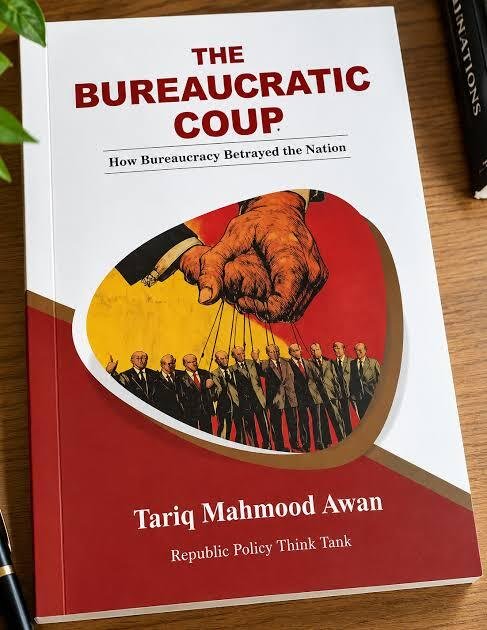
The best-selling books of Republic Policy Think Tank, including the landmark book The Bureaucratic Coup, are available at Vanguard Books, Liberty Books, Readings, Kitab Sarai, Sang-e-Meel, Saeed Book Bank Islamabad, National Book Foundation, and others across Pakistan. Contact for home delivery: 0341-4222501 (WhatsApp)