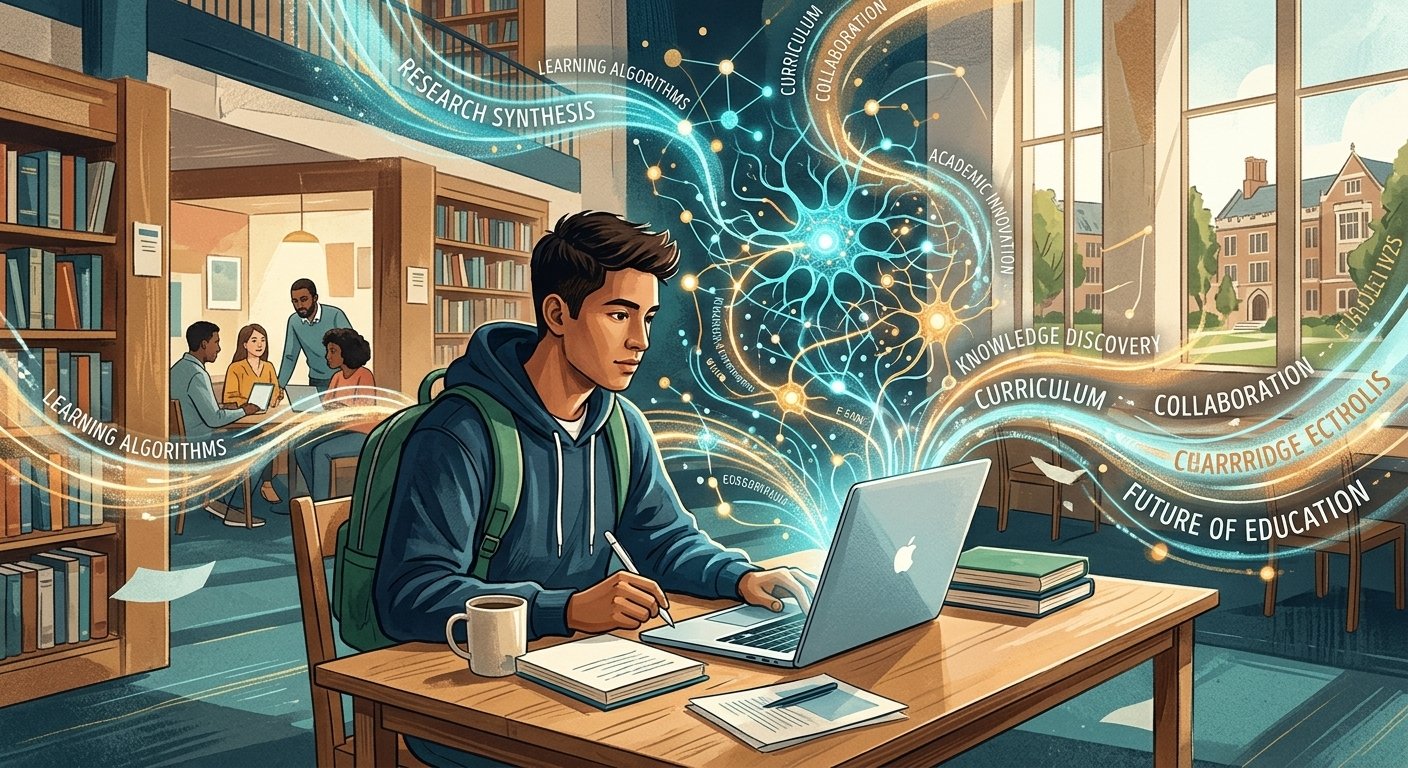

Editorial
The rapid advancement of generative artificial intelligence has fundamentally disrupted higher education, presenting colleges and universities with unprecedented challenges. With this year’s senior classes being the first to spend nearly their entire college careers in the age of generative AI, academic institutions are facing deep questions about integrity, evaluation, and the future of learning.
The Scale of the Disruption
Generative AI tools—such as ChatGPT, Claude, and Google Gemini—have rapidly integrated into student life, with a recent survey revealing that 86% of college students now use these technologies for schoolwork. Tasks that once required hours or days of drafting and revision can now be completed in minutes, blurring the line between genuine human scholarship and automated generation. For professors, reading polished yet impersonal AI-generated essays has transformed teaching into a stressful balancing act that often feels more like policing. Furthermore, detection software remains imperfect and prone to false positives, leaving many students caught in the middle of wrongful accusations.
Moving Beyond Prohibition to Integration
While some institutions have attempted strict bans, many educators and administrators are realizing that prohibition is unsustainable. Because students will inevitably encounter and use these tools in the professional world, universities are shifting toward proactive adaptation.
Forward-thinking institutions are implementing clear frameworks:
- Syllabus-Level Clarity: Empowering professors to explicitly define acceptable AI use for their specific classrooms within their syllabi.
- AI Fluency Initiatives: Developing campus-wide programs—such as those at Ohio State University—that require students across disciplines to learn how to ethically and effectively use AI tools.
- Redefining Assignments: Restructuring coursework to emphasize critical thinking, original analysis, and human insight that AI cannot replicate.
The Path Forward
The integration of generative AI is not a temporary trend; it is a permanent restructuring of the modern intellectual landscape. As the job market evolves, universities must decide what can be offloaded to technology and what human value must be preserved. By embracing AI as a sophisticated learning aid rather than viewing it solely as a cheat code, higher education can prepare students to thrive in a technologically transformed world without sacrificing academic integrity.