
Editorial
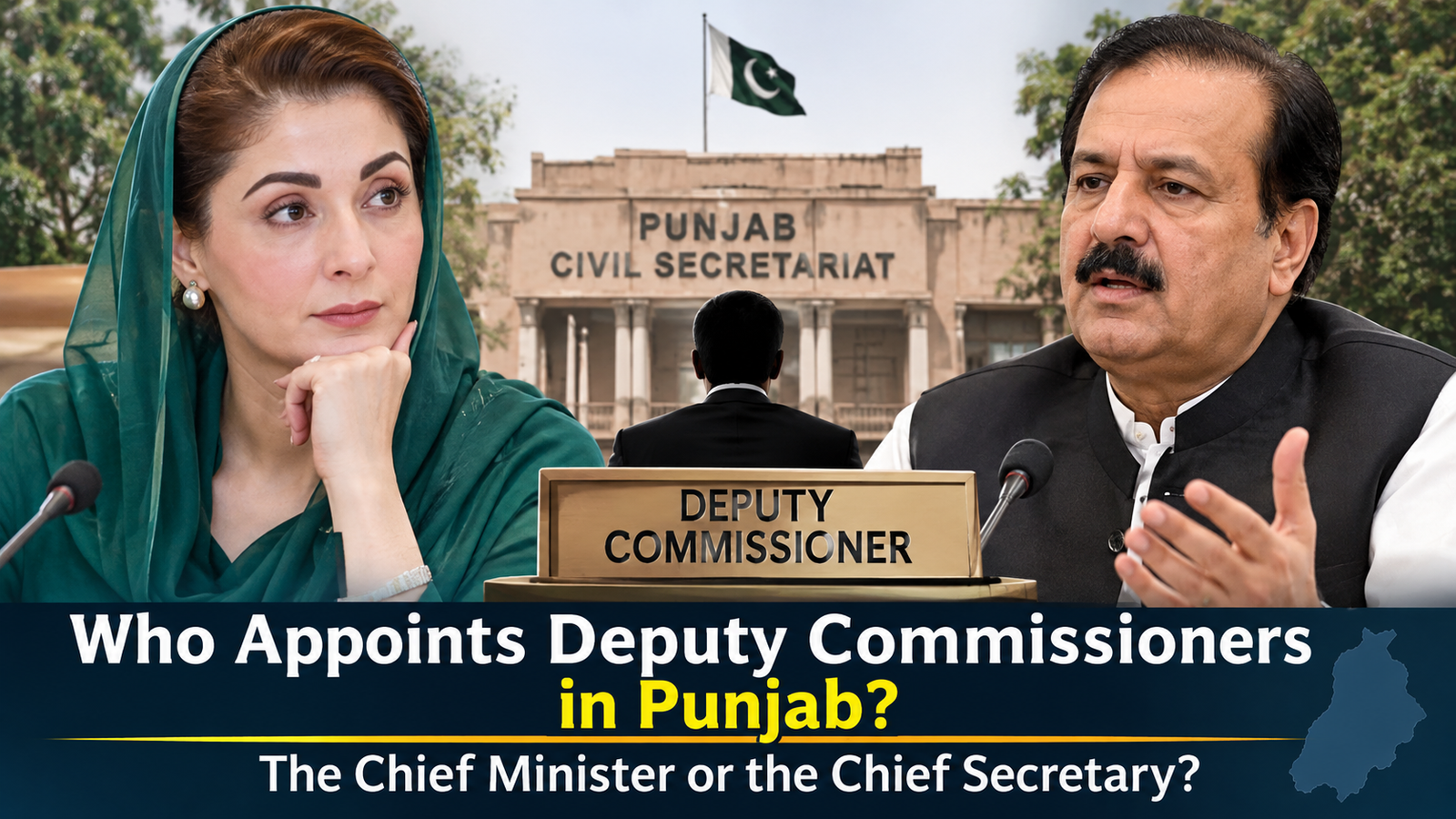
The debate over the appointment of deputy commissioners in Punjab has raised a fundamental question about the distribution of executive authority within the provincial government: does the Chief Minister make the decision, or does the bureaucracy determine the choices before the political leadership is asked to approve them?
The reported disagreement between Punjab Chief Minister Maryam Nawaz and Chaudhry Salik Hussain has brought this question into public discussion. Beyond the immediate political exchange, the issue deserves attention because it exposes a deeper governance problem: the difference between the formal exercise of executive authority and the actual control of administrative decisions.
Deputy commissioners occupy a significant position in Punjab’s administrative structure. They exercise important responsibilities relating to district administration, revenue matters, coordination among government departments and the implementation of provincial policies. Their decisions can directly affect public services, development priorities and the everyday relationship between citizens and the state. The process through which these officers are appointed is therefore not merely an internal personnel matter. It is an important question of governance and democratic accountability.
According to accounts attributed to sources within Punjab’s bureaucracy, the formal appointment authority rests with the Chief Minister, but the process leading to the final decision is heavily influenced by the Chief Secretary. The reported procedure involves preparing a panel of officers for consideration by the Chief Minister. For an individual district, two, three or four names may be proposed. In other cases, a combined panel of eight to ten officers may be prepared for appointments across several districts.
The crucial question is not simply who approves the final appointment. It is who determines which officers are placed before the approving authority in the first place.
If the panel is prepared through the preferences and approval of the Chief Secretary, the political leadership is effectively choosing from a list whose composition has already been determined by the bureaucracy. For example, if twelve officers are shortlisted for four district appointments, the Chief Minister may formally interview or consider all twelve. However, the meaningful question is whether the Chief Minister has a genuine opportunity to consider candidates beyond that predetermined group.
This creates a distinction between de jure and de facto authority. The Chief Minister may exercise the formal or legal authority to approve appointments, while the Chief Secretary may exercise considerable practical influence over the available choices. The final notification may carry the authority of the elected executive, but the process that shapes the decision may remain largely within the administrative hierarchy.
This arrangement raises an important institutional concern. A system in which the bureaucracy controls the composition of the shortlist can narrow the scope of political choice without openly transferring the formal appointment power. The elected leadership remains publicly responsible for the appointment, while the administrative machinery may exercise decisive influence over the options presented to it.
The issue also challenges a familiar argument within bureaucratic circles: that political involvement in the appointment of district officers should be minimised or treated as inherently undesirable. There are legitimate reasons to oppose political victimisation, nepotism, personal favouritism and unlawful pressure on civil servants. But these concerns should not be used to exclude elected representatives from the governance process altogether.
Political interference and democratic oversight are not the same thing. An elected government must have the ability to set policy priorities, direct the implementation of its programme and ensure that senior administrative appointments are consistent with its lawful governing responsibilities. Civil servants, in turn, must act professionally, impartially and within the law. The objective should be to establish a relationship in which political authority is exercised constitutionally and administrative expertise is protected from arbitrary or unlawful pressure.
Article 2A of the Constitution, which incorporates the Objectives Resolution as a substantive part of the constitutional framework, provides an important principle for this discussion. It states that the authority to govern is to be exercised by the people through their chosen representatives. The Chief Minister derives political authority from the elected provincial legislature and operates within the constitutional and legal framework. The bureaucracy is an essential instrument of government, but it cannot claim an independent political mandate or place itself beyond the authority of the elected executive.
This does not mean that every administrative appointment should be dictated by individual politicians or that legislators should be able to demand postings for personal or partisan purposes. Rather, it means that the process must recognise the constitutional position of the elected government while ensuring that appointments are based on professional competence, integrity and suitability.
An earlier experiment during the government of former Punjab chief minister Parvez Elahi reportedly involved a committee-based process for recommending officers for deputy commissioner appointments. That experience offers a possible starting point for a more institutionalised approach. Instead of allowing the process to depend predominantly on the discretion of one administrative office or a restricted list of names, a formal mechanism could establish transparent criteria, structured recommendations and clear accountability.
Republic Policy believes that elected members of the National and Provincial Assemblies representing the relevant districts should have a formal and meaningful consultative role in the appointment process. Such participation would not require elected representatives to make appointments themselves. Nor should it give them the power to demand the selection of particular officers without regard to merit. Its purpose would be to ensure that the appointment process takes account of district-level governance requirements and the concerns of the communities those representatives serve.
Deputy commissioners work in districts where elected representatives are directly accountable to citizens for public services, development outcomes and the performance of government. If the district administration operates without meaningful coordination with elected representatives, the consequences can extend beyond administrative inconvenience. Public priorities may be misunderstood, development initiatives may lack coordination, and the elected government may find itself held responsible for decisions over which it has limited practical influence.
A consultative framework could help bridge this gap. It should, however, be governed by clear rules. Professional qualifications, administrative experience, integrity and performance should remain central to the selection process. Elected representatives should be able to communicate district requirements and provide structured feedback, while the bureaucracy should be required to explain its recommendations against objective criteria. The final decision should remain with the constitutionally authorised executive authority and be properly documented.
The larger principle is that neither political officeholders nor senior civil servants should exercise unchecked discretion. Political appointments driven by personal loyalty can damage administrative professionalism. Equally, bureaucratic control over the available choices can weaken democratic accountability. A credible system must protect the civil service from unlawful political pressure without allowing it to become an autonomous centre of power.
This is particularly important in Punjab, where the relationship between the Chief Minister’s Office and the Chief Secretary’s Office has wider implications for the provincial governance structure. The Chief Secretary should provide professional advice, coordinate the administrative machinery and ensure that decisions comply with the law. The office should not become an alternative political authority operating behind the formal powers of the Chief Minister.
The Chief Minister, meanwhile, should not rely exclusively on the recommendations of the same administrative hierarchy whose performance and appointments require political oversight. An effective executive must develop independent channels of information, obtain assessments from relevant stakeholders and evaluate the advice presented by senior officials. Maryam Nawaz should therefore seek structured, third-party feedback on the role of the Chief Secretary and the bureaucracy in the appointment process, rather than relying solely on the administrative account of how these decisions are made.
Ultimately, the question is not simply whether Maryam Nawaz appoints deputy commissioners or whether the Chief Secretary selects them. The more important question is whether the appointment system reflects the constitutional relationship between elected political authority and the permanent civil service.
Punjab needs a process that is transparent, merit-based, consultative and institutionally accountable. The bureaucracy must remain professional and politically impartial, but it must also operate under the lawful authority of the elected government. The Chief Minister should exercise more than a formal approval function, while elected representatives should have a meaningful opportunity to communicate the needs of their constituencies.
The purpose of reform should not be to replace bureaucratic discretion with arbitrary political control. It should be to ensure that administrative expertise serves democratic government rather than displacing it. A province cannot achieve accountable governance when the elected leadership carries responsibility for administrative outcomes but does not have a meaningful role in shaping the decisions that produce them.
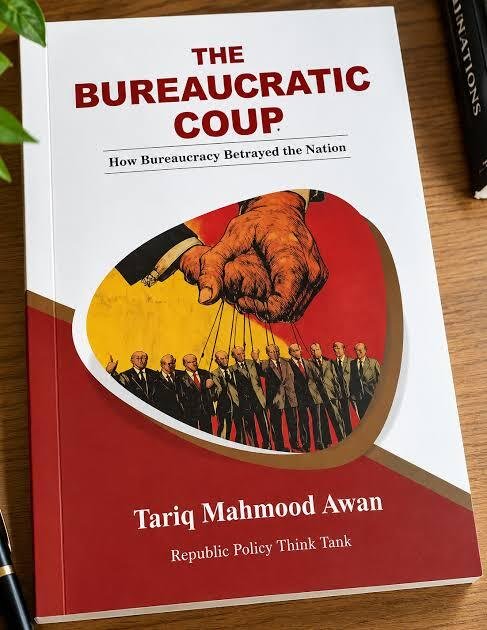
For a deeper examination of bureaucratic power, administrative structures and the relationship between elected authority and the civil service in Pakistan, read The Bureaucratic Coup by Tariq Mahmood Awan.
To order the book, contact Republic Policy at +92 341 4222501.
Republic Policy | Governance. Institutions. Public Policy.