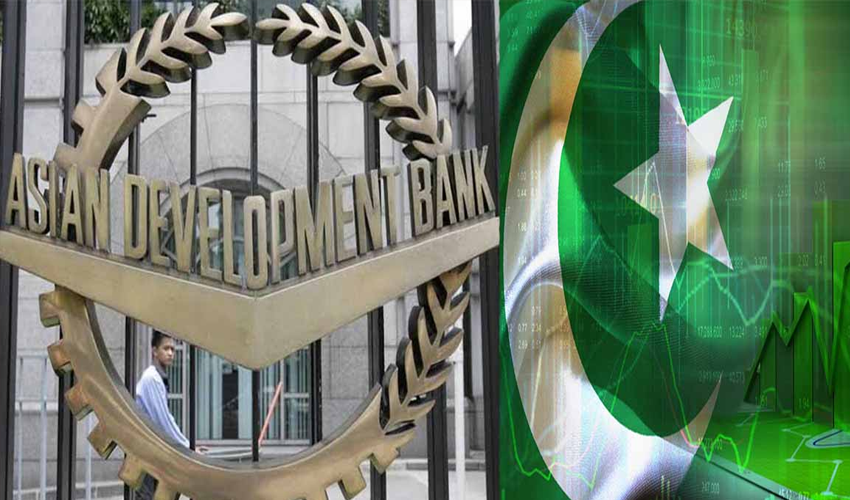

ISLAMABAD: The Asian Development Bank (ADB) has approved contingent disaster financing facilities of up to $500 million for Pakistan, providing the country with access to emergency budget support following eligible natural disasters. The financing is intended to strengthen Pakistan’s ability to respond to floods, earthquakes and other emergencies while reducing the economic and fiscal damage caused by such events.
The approval, announced by the Manila-based development bank on Wednesday, comes as Pakistan continues to face growing climate and disaster risks. Recurrent floods, extreme weather events and other natural hazards have exposed the country’s vulnerability, particularly in rural districts and among communities with limited resources to recover from economic shocks.
According to the ADB, disasters cause Pakistan estimated average annual losses of around $2 billion. The scale of the challenge was demonstrated by the devastating floods of 2022, which caused an estimated $14.9 billion in direct damage and $15.2 billion in economic losses. The disaster also pushed as many as 9.1 million people into poverty, according to the bank.
The newly approved financing is part of the second subprogramme of the Climate and Disaster Resilience Enhancement Programme. It is designed to provide prompt financial support after eligible disaster events and strengthen the country’s broader framework for disaster preparedness and risk management.
The approval is significant because Pakistan’s disaster management challenge is no longer limited to responding to emergencies after they occur. It concerns the country’s ability to anticipate risks, protect vulnerable communities, maintain essential services and prevent recurring disasters from reversing development gains.
From emergency response to financial preparedness
Contingent disaster financing is designed to make funds available when specified disaster conditions are met. Unlike conventional project financing, which is generally allocated to particular development activities, these facilities provide budget support after eligible emergencies. This can help governments meet immediate financial requirements without waiting for lengthy funding arrangements to be negotiated after a disaster.
For Pakistan, the availability of such financing could strengthen the government’s capacity to respond to sudden fiscal pressures. Large-scale disasters place enormous demands on public budgets. Governments must finance relief operations, restore infrastructure, support affected households and maintain essential public services, often while revenue collection and economic activity are under pressure.
The ADB said its programme would strengthen Pakistan’s disaster risk financing framework and improve the availability of funds following disaster events. It also supports reforms aimed at improving preparedness, strengthening risk management and integrating resilience measures into development planning and investment.
The distinction between emergency financing and disaster prevention is important. Financial resources can help a government respond when a disaster occurs, but they cannot independently prevent infrastructure from being damaged, communities from being displaced or livelihoods from being destroyed. Financing must therefore operate alongside effective planning, enforcement of building standards, resilient infrastructure and local preparedness.
A country that repeatedly spends large sums recovering from preventable damage cannot achieve lasting resilience simply by increasing its emergency borrowing capacity.
The economic and social cost of disasters
The ADB’s assessment highlights the disproportionate impact of disasters on poor and rural communities. These populations often have fewer financial resources, weaker housing and limited access to insurance, healthcare and alternative sources of income. When floods destroy homes, crops, roads or local businesses, recovery can take years.
Women and girls are also disproportionately affected, according to the bank. Disasters can disrupt education, healthcare, access to essential services and household security, placing additional burdens on women in already vulnerable communities.
The experience of the 2022 floods demonstrated how quickly a natural disaster can become a national development crisis. Beyond the immediate destruction of homes and infrastructure, agricultural losses, interrupted economic activity and displacement pushed millions of people into deeper poverty. The consequences extended well beyond the areas directly affected by floodwaters.
These losses expose the limitations of treating disasters as temporary emergencies. For vulnerable households, a single major event can destroy years of accumulated savings and investment. For the state, repeated disasters can divert public resources from education, healthcare, infrastructure and other development priorities towards reconstruction and relief.
The financial consequences also extend to national economic stability. Damage to roads, bridges, energy infrastructure and agricultural production can disrupt supply chains, increase prices and weaken economic activity. The cost of recovery can place additional pressure on public finances, particularly when the country is already facing debt and fiscal constraints.
The governance gap behind disaster vulnerability
The approval of ADB financing comes against a wider debate about Pakistan’s institutional preparedness. A report compiled by the Jinnah Institute in May highlighted persistent governance failures and weak community-level systems as major obstacles to effective disaster preparedness and response.
The report called for urgent reforms to build long-term resilience in vulnerable districts. Its findings followed the devastating floods of 2025, which submerged entire districts, displaced millions and destroyed livelihoods. The disaster exposed continuing weaknesses despite years of policy frameworks, institutional reforms and international commitments.
One of the report’s central arguments was that reliance on reactive disaster management has become inadequate in the face of intensifying climate stress. This is a critical point for Pakistan’s policy debate. Disaster management cannot remain limited to emergency declarations, relief camps, compensation announcements and reconstruction after destruction has already occurred.
Preparedness must begin before a disaster. Local authorities need reliable information about vulnerable populations, flood-prone settlements, drainage systems, evacuation routes and available emergency resources. Communities must know how to respond when warnings are issued. Public infrastructure must be designed and maintained with foreseeable environmental risks in mind.
These responsibilities require coordination across government departments and levels of administration. National institutions may establish policies and provide financial resources, but implementation depends heavily on provincial departments, district administrations and local institutions. Where responsibilities are fragmented, information is incomplete or local authorities lack the resources to act, national preparedness plans may fail to translate into effective protection on the ground.
The weakness of community-level systems is particularly consequential. Local communities are often the first to experience a disaster and the first to respond. Yet they may have limited access to emergency information, trained personnel, equipment and financial support. Strengthening local capacity is therefore not an optional addition to national disaster management. It is a basic requirement.
Making climate resilience part of development planning
The ADB programme seeks to integrate resilience measures into Pakistan’s development planning and investment. This is an important policy direction because infrastructure decisions made today can determine how severely communities are affected by future disasters.
Roads, bridges, schools, hospitals, drainage networks and housing schemes should be assessed against the environmental and climate risks they may face during their operational lives. Development projects that ignore these risks can create future liabilities for the state and expose communities to avoidable danger.
For example, infrastructure built without adequate flood assessments may obstruct natural water flows or become unusable during heavy rainfall. Urban development that ignores drainage capacity can increase the risk of urban flooding. Agricultural planning that does not account for water stress and changing weather patterns can leave farmers more exposed to economic shocks.
Resilience must therefore become a routine consideration in public investment decisions rather than a separate policy objective activated only after a major disaster.
This requires stronger technical capacity, reliable data, transparent project evaluation and effective monitoring. It also requires accountability for development decisions that increase public exposure to foreseeable risks. Public money should not repeatedly be spent rebuilding infrastructure that was poorly planned or inadequately maintained in the first place.
International financing and domestic responsibility
The ADB’s approval of up to $500 million provides Pakistan with an additional financial instrument for managing disaster-related shocks. In 2024, the bank had also approved a separate $500 million policy-based loan to support climate change, disaster risk reduction and resilience in Pakistan.
These commitments reflect the importance of international development financing in supporting countries exposed to climate risks. However, external funding cannot replace domestic institutional reform. International partners can provide loans, technical assistance and policy support, but the effectiveness of these resources depends on the quality of national planning and implementation.
Contingent financing also needs to be understood within the broader fiscal context. The approved facility is a loan-based financing arrangement, not an unconditional grant. Its availability may help the government respond quickly to eligible disasters, but borrowing still creates financial obligations. Pakistan must therefore combine emergency financing with investments that reduce the likelihood and cost of future damage.
The wider international climate finance debate remains relevant. Developing countries argue that climate-vulnerable economies need predictable and affordable financial support to adapt to a crisis they have contributed relatively little to causing. Pakistan’s exposure to floods and other climate-related hazards strengthens the case for international cooperation. But the country must also demonstrate that resources are directed towards measurable improvements in preparedness, resilience and protection for vulnerable communities.
The real test is implementation
ADB Country Director for Pakistan Emma Fan said that vulnerable communities suffer the greatest consequences when disasters strike and that investment in preparedness can protect lives, livelihoods and development gains. She described the programme as support for reforms needed to build a more resilient future.
The challenge now is to translate the financing approval into institutional improvements. Pakistan needs a disaster management system that can identify risks before they become emergencies, coordinate responses across administrative levels and ensure that assistance reaches affected communities without unnecessary delays.
The effectiveness of the new facility will ultimately depend on how well it is integrated with domestic preparedness systems. Financial support must be linked to reliable risk assessments, functioning local institutions, transparent procedures and effective monitoring. The government must also address the governance weaknesses identified by the Jinnah Institute rather than treating international financing as a substitute for reform.
Pakistan cannot afford to approach every major flood or climate emergency as an unexpected event. The country’s experience has made the risks increasingly visible. The priority must now shift from repeatedly financing recovery to systematically reducing vulnerability.
The ADB’s $500 million approval offers an important opportunity to strengthen disaster preparedness. But money alone cannot create resilience. That requires capable institutions, accountable administration, effective local government and development planning that takes environmental risks seriously. The real measure of success will not be the amount of financing approved after a disaster, but the lives, livelihoods and public resources protected before the next one strikes.