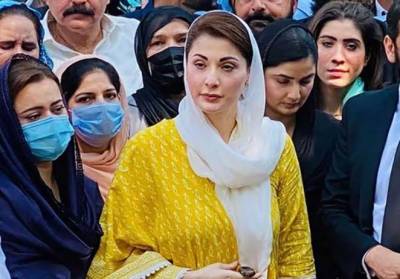

LAHORE: Punjab Chief Minister Maryam Nawaz has directed deputy commissioners (DCs) across the province to visit universities and colleges in their respective districts and brief students on the provincial government’s ongoing development projects and public welfare initiatives. The move signals an effort to strengthen the government’s engagement with young people by using senior civil servants to communicate its performance directly to students.
The directive was issued during a meeting on the performance of deputy commissioners in Lahore on Thursday. The chief minister instructed all DCs to visit higher education institutions and explain the government’s development schemes and initiatives.
The decision reflects the Punjab government’s growing focus on student engagement and publicising its performance through direct outreach to educational institutions. The administration has also launched a large-scale laptop distribution programme for students as part of its broader effort to strengthen its connection with younger segments of society.
Political outreach and the youth vote
The initiative also carries a political dimension. A senior PML-N leader, speaking to Dawn, said the party recognised that a substantial section of young people supported jailed former prime minister Imran Khan. According to the leader, Maryam Nawaz and the provincial government were therefore making a concerted effort to improve their standing among students by highlighting development projects and pro-student measures.
The party leader acknowledged that sending deputy commissioners to universities might not necessarily change students’ political preferences. However, the initiative would provide students with an opportunity to learn about what the government considers its major development achievements and compare them with the performance of the previous PTI government in Punjab, led by Usman Buzdar.
The arrangement places district administrations in an unusual position, combining their conventional administrative responsibilities with a public communication role. It also raises a broader question about the boundaries between the professional responsibilities of civil servants and the political messaging of an elected government. While explaining public projects and facilitating access to information are legitimate administrative functions, such engagement must remain factual, impartial and institutionally neutral.
District economic plans and development priorities
Alongside the student outreach initiative, Maryam Nawaz directed deputy commissioners to prepare District Economic Plans to stimulate economic activity and identify the development potential of their respective areas.
The proposed plans are intended to give district administrations a more active role in identifying local economic opportunities. Their effectiveness, however, will depend on whether they are supported by credible data, consultation with local stakeholders, clear priorities and coordination with relevant provincial departments.
The chief minister also ordered a complete halt to the burning of crop residues and warned officials in Okara and other districts over their failure to prevent such incidents. The directive comes amid continuing concerns about agricultural burning and its contribution to air pollution, particularly during the winter season.
Tighter monitoring of municipal services
The meeting also focused on the performance of district administrations in maintaining public spaces and delivering essential municipal services.
Expressing dissatisfaction with delays and substandard work on beautification projects in several districts, Maryam Nawaz instructed officials to ensure that projects met standards of quality, sustainability and timely completion. She also directed authorities to incorporate fountains and similar features into beautification schemes.
To improve road conditions, the chief minister ordered the formation of dedicated maintenance squads. These teams will inspect roads and take corrective action within 12 hours of identifying problems.
She further instructed district administrations to ensure that streetlights remained operational, manholes were properly covered, zebra crossings were clearly marked and safety arrangements around educational institutions were improved.
These directions place considerable responsibility on deputy commissioners and local administrative officials, whose performance will be judged not only by the completion of development schemes but also by the routine maintenance of public infrastructure.
Hospitals, transport facilities and public spaces
The chief minister gave deputy commissioners three days to improve conditions in public hospitals across their respective districts. She also directed district administration officials to visit healthcare facilities daily to monitor their functioning.
Assistant commissioners were instructed to take immediate steps to restore non-functional water filtration plants and ensure the repair, maintenance and cleanliness of general bus terminals and Green Bus shelters.
Maryam Nawaz also ordered a province-wide operation against encroachments and directed officials to remove wall chalking, torn banners and other publicity material from public spaces. In addition, she called for measures to control the stray dog population across Punjab.
Administrative performance and institutional accountability
The wide-ranging directives illustrate the provincial government’s attempt to make deputy commissioners more directly responsible for development, municipal management and the monitoring of public services. They also reflect a model of district administration in which the DC serves as the principal coordinating authority for a broad range of government activities.
However, the success of such instructions will depend on more than meetings, inspections and deadlines. District administrations require adequate resources, clearly defined responsibilities, coordination with municipal institutions and measurable performance standards. Without these, frequent directives can produce short-term compliance without establishing sustainable improvements in public services.
The decision to send deputy commissioners to universities also deserves careful institutional consideration. Students should have access to reliable information about government policies and development projects, but educational institutions must remain spaces for independent discussion and political diversity. Civil servants, in particular, must communicate public information without becoming instruments of partisan campaigning.
Ultimately, the effectiveness of the initiative will be determined not by how frequently officials visit campuses or announce new instructions, but by whether citizens experience tangible improvements in education, healthcare, transport, infrastructure and the quality of district-level governance.