
Defence minister challenges PPP chairman’s call for a “political reset”, while government figures question his position on a referendum and the 27th Constitutional Amendment.
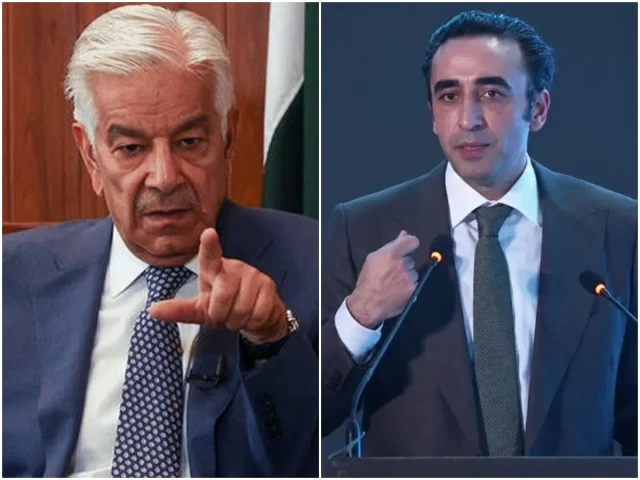
ISLAMABAD: Defence Minister Khawaja Asif has hit back at Pakistan Peoples Party (PPP) Chairman Bilawal Bhutto Zardari over his criticism of the government, asking whether the PPP leader had the moral standing to lecture others while his party had governed Sindh for 18 years.
In a post on X on Wednesday, Asif invoked the legal maxim that a person seeking equity must come with clean hands, asking Bilawal: “Are your own hands clean? Do you have the right to lecture others or issue threats?”
The exchange followed Bilawal’s speech at the Karachi Press Club a day earlier, in which he called for a “political reset” and criticised the government’s handling of governance and constitutional affairs. He also rejected proposals for a referendum on creating new provinces, questioning the motives behind the idea and warning that any attempt to divide Sindh against the wishes of its people could lead to bloodshed.
Responding to the criticism, Asif pointed to the PPP’s long tenure in Sindh, sarcastically describing the province as a “paradise” and saying Karachi’s condition was something the world viewed with envy.
He also questioned the PPP’s role in the federal coalition, noting that the party had been working with the Pakistan Muslim League-Nawaz (PML-N) in government since 2022.
“The profit is yours, while the loss belongs to the PML-N or Pakistan,” Asif said, suggesting that the PPP could not share the benefits of government while distancing itself from its shortcomings.
The defence minister said any attempt to reset the political system required public support and that citizens could not be denied a say in the country’s affairs. He argued that parliamentary debate and a public referendum could take place alongside each other, describing public participation as an essential source of democratic legitimacy.
Asif added that the central objective should be to improve the lives of ordinary Pakistanis and ensure that political authority remained a public trust rather than the inheritance of any individual or party. He said governance was not the monopoly of political leaders and that all citizens had a right to participate in national affairs.
Talal Chaudhry also challenges Bilawal
Minister of State for Interior Talal Chaudhry also criticised Bilawal’s opposition to a referendum on the creation of new provinces, questioning why the PPP chairman would fear a public vote if he believed political decisions should be made through the ballot rather than the bullet.
Chaudhry argued that a referendum could help prevent conflict by allowing people to express their views directly. He also questioned why provinces facing governance problems should remain intact while administrative units with comparatively better governance were being considered for division.
He further challenged Bilawal’s criticism of the circumstances surrounding the passage of the 27th Constitutional Amendment, recalling the PPP chairman’s earlier public support for the legislation.
Chaudhry referred to Bilawal’s speech in the National Assembly, in which he had described the establishment of a constitutional court as part of the legacy of his late mother, former prime minister Benazir Bhutto. He argued that Bilawal had previously taken credit for the amendment but was now questioning the process through which it had been passed.
The minister also accused the PPP leadership of focusing on political control over provincial resources rather than governance and public welfare. He said democracy involved not only constitutional debate but also government performance and the practical delivery of public services.
Government and opposition react
The exchange has prompted further responses from political figures across the government and opposition.
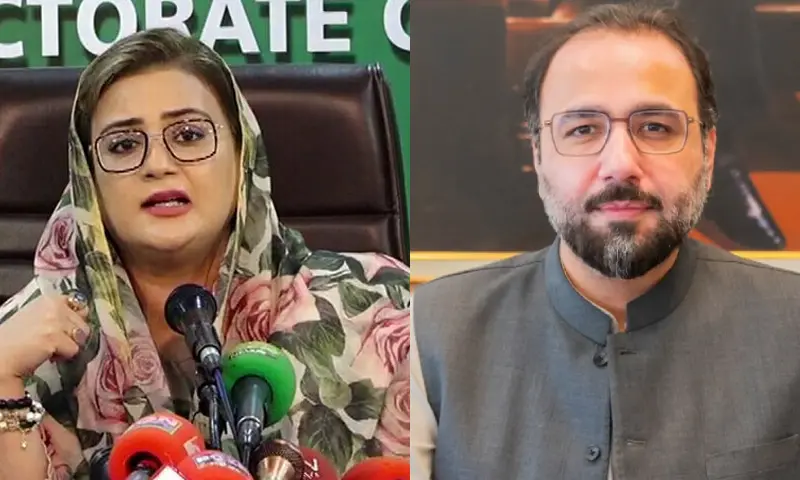
Adviser to the Prime Minister on Political Affairs Rana Sanaullah said Bilawal’s remarks about the 27th Amendment being passed under pressure could raise questions about his position as a lawmaker. He noted that the PPP had participated in the legislative process and had been part of the coalition government during the passage of the 26th and 27th amendments.
Information Minister Attaullah Tarar defended the proposed referendum, describing it as a constitutional and legal means of seeking public opinion on the creation of new provinces. He also argued that parties with long records in government could not distance themselves from the weaknesses of the existing system.
On the opposition side, Jamiat Ulema-e-Islam-Fazl spokesperson Aslam Ghauri welcomed Bilawal’s remarks, saying they reflected the party’s position that a referendum was unnecessary where the Constitution already provided a mechanism for resolving the issue.
The Tehreek-e-Tahafuz-e-Ain Pakistan also welcomed the speech in principle but pointed to what it described as a gap between the PPP’s statements and actions. Pakistan Tehreek-e-Insaf, meanwhile, said the PPP could not escape responsibility for the country’s political and economic situation while remaining part of the ruling coalition.
Debate over new provinces remains unresolved
The controversy comes amid discussion of a possible 28th Constitutional Amendment and proposals to reorganise Pakistan’s administrative structure. Reports have referred to a plan involving 12 provinces, including four in Punjab, three each in Khyber-Pakhtunkhwa and Balochistan, and two in Sindh.
However, no final draft or formally approved 28th Amendment has been presented. The proposal remains part of the political debate, while the idea of a referendum was floated by Interior Minister Mohsin Naqvi as a way to ascertain public opinion on the creation of new provinces.
The latest exchange highlights a broader political dispute over constitutional reform, provincial boundaries and the accountability of parties that have shared power at both federal and provincial levels. It also raises a central question: whether calls for restructuring the political system will be accompanied by a serious assessment of the governance record of those proposing or opposing change.