

In an open letter to the chief justices of three superior courts, the former prime minister raises concerns over his and Bushra Bibi’s health and calls for the implementation of earlier court orders; the government maintains that he is receiving regular medical supervision.
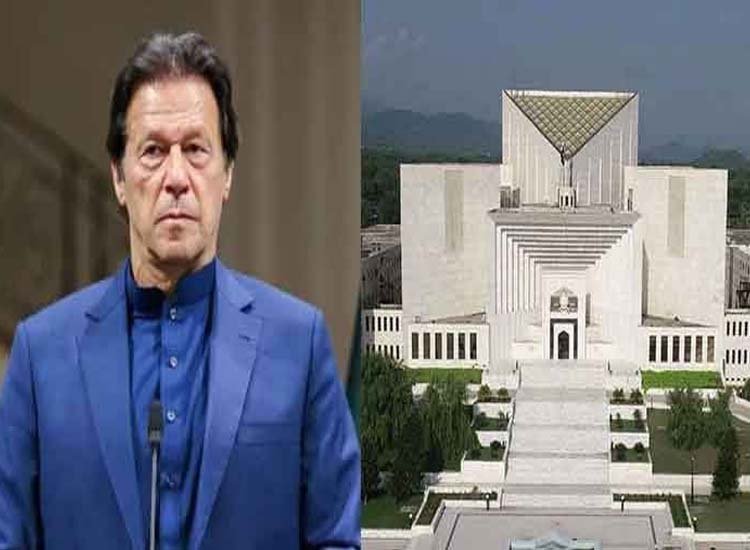
ISLAMABAD: Former prime minister and Pakistan Tehreek-e-Insaf (PTI) founder Imran Khan has appealed to the country’s senior judiciary for urgent medical treatment for himself and his wife, Bushra Bibi, warning that his deteriorating health could put his life at risk.
In an open letter dated November 16, addressed to the chief justices of the Federal Constitutional Court (FCC), Supreme Court of Pakistan and Islamabad High Court (IHC), Khan called for the implementation of previous court orders concerning his medical treatment and prison conditions.
The letter was conveyed through his lawyer, Barrister Salman Safdar, who met Khan at Adiala Jail on November 2 and November 11. According to Safdar, the former prime minister instructed him during their latest meeting to communicate his concerns directly to the judges.
“At 74, this unrelenting state is taking me to a place from which I may not return alive,” Khan wrote, describing what he said was a deterioration in his physical and mental health during imprisonment.
He said that he was not seeking special treatment but the implementation of judicial orders and access to appropriate medical care for himself and his wife.
Khan raises concerns over blood pressure and heart condition
In the letter, Khan claimed that his blood pressure had become increasingly unstable during his confinement, rising to 192 and 193 on November 10.
He said doctors had warned him that he was highly vulnerable to a brain haemorrhage and cardiac arrest and that his heart had already suffered damage.
Khan also referred to concerns about his eyesight, claiming that he had lost approximately 85 per cent of the vision in his right eye. He said his family and legal representatives had not initially been informed about the condition.
According to his account, his lawyer discovered the extent of the vision loss during a visit to Adiala Jail in February, after the Supreme Court appointed Safdar as amicus curiae.
Khan further alleged that he had been kept in solitary confinement for up to 22 hours a day, with restricted access to family members, lawyers, books and television. He said he had been allowed to meet his legal counsel only four times during the year.
He described the restrictions and prolonged isolation as a violation of prisoners’ rights and said the conditions had taken a significant toll on his mental health.
Bushra Bibi’s eyesight also a concern
The former prime minister also expressed concern over the medical condition of his wife, Bushra Bibi, who is incarcerated in connection with corruption cases.
Khan claimed that she suffered a detached retina in April 2026 and underwent complicated eye surgery. He alleged that her medical records had been withheld and that access to her preferred doctors had been restricted.
Referring to a meeting with his wife in November, he said she was unable to tolerate light or open her eyes comfortably. He warned that without further surgery she could permanently lose her eyesight.
He also raised concerns about her access to legal representation and the progress of her legal proceedings.
Appeal for implementation of Supreme Court orders
A central element of Khan’s appeal concerns an order issued by the Supreme Court on August 18.
According to the letter, the court had directed that he be transferred to Shifa International Hospital within two days, examined by a medical board and allowed regular interaction with his family.
Khan maintained that the order had not been implemented and that the matter was awaiting further proceedings before the Federal Constitutional Court.
He questioned why other legal proceedings, including the hearing of his appeal in the Al-Qadir Trust case, were taking place while his requests concerning medical treatment and the implementation of judicial orders remained unresolved.
“I will only remain able to prove my innocence if I stay alive,” he wrote, appealing to the judges to ensure that he and his wife received proper medical treatment.
Government rejects allegations of inadequate medical care
The government has disputed Khan’s allegations, maintaining that he is receiving appropriate medical attention and access to basic facilities in prison.
Parliamentary Affairs Minister Tariq Fazal Chaudhry said claims regarding the denial of medical treatment and other facilities were contrary to the facts.
According to the minister, Khan’s health is reviewed weekly by qualified medical specialists. He said the former prime minister had been taken to the Pakistan Institute of Medical Sciences (PIMS) eight times for medical examinations, where doctors assessed his condition as satisfactory.
Chaudhry also said that a doctor from London who practises in Pakistan had been specifically called to examine Khan’s blood pressure, which he described as satisfactory according to medical assessments.
The minister maintained that Khan was being provided with meals of his choice, books and television facilities. He said the government had not neglected his medical care and would not permit any negligence in the future.
He also urged PTI not to turn a sensitive matter involving a prisoner’s health into a political controversy.
Health concerns and judicial responsibility
Khan has been imprisoned since August 2023 and faces multiple criminal cases, which he maintains are politically motivated. His wife, Bushra Bibi, has also been incarcerated in connection with legal proceedings against her.
The competing accounts have brought renewed attention to the conditions of his imprisonment, access to medical treatment and the implementation of judicial orders.
The matter involves questions extending beyond political differences: the right of prisoners to appropriate healthcare, access to legal representation, compliance with court directions and the responsibility of prison authorities to safeguard the health of people in their custody.
While the government maintains that Khan is receiving regular medical supervision, his letter raises specific questions about the implementation of the Supreme Court’s reported directions, access to independent medical assessment and the treatment of his wife.
The immediate issue is whether the concerns raised by the former prime minister will receive timely judicial consideration and whether the relevant medical arrangements will be independently assessed. The government’s assurances and Khan’s allegations present conflicting accounts that require examination through verifiable medical records and the applicable judicial orders.