

Sana Khan
China’s decision to extend the suspension of rare-earth export controls until January 10, 2027, may appear to be a welcome development for global manufacturers and governments concerned about supply-chain disruptions. Yet the significance of Beijing’s November 9 decision lies less in the continuation of the truce than in its unusually short duration. A suspension lasting two months, rather than another year, preserves access to critical materials while keeping the future of that access firmly within China’s strategic reach.
In an increasingly competitive global economy, control over critical minerals is becoming a powerful instrument of geopolitical influence. China does not necessarily need to impose a complete export ban to exercise that influence. The ability to determine when restrictions are introduced, suspended, extended or reinstated can itself generate leverage. By keeping the suspension temporary, Beijing has effectively transformed a trade concession into a continuing source of uncertainty for businesses, governments and competing industrial economies.
The distinction is important. A long-term suspension allows manufacturers to plan production, investors to commit capital and governments to pursue diversification strategies within a predictable policy environment. A short extension, by contrast, postpones immediate disruption without resolving the underlying uncertainty. Companies must continue to operate, but their confidence in future supply remains conditional on political and regulatory decisions that could change within weeks.
The strategic importance of a short deadline
China’s Ministry of Commerce extended the suspension of export controls on November 9, one day before the previous arrangement was due to expire. The new deadline, January 10, 2027, is substantially shorter than the original year-long pause agreed following the October 2025 Busan summit.
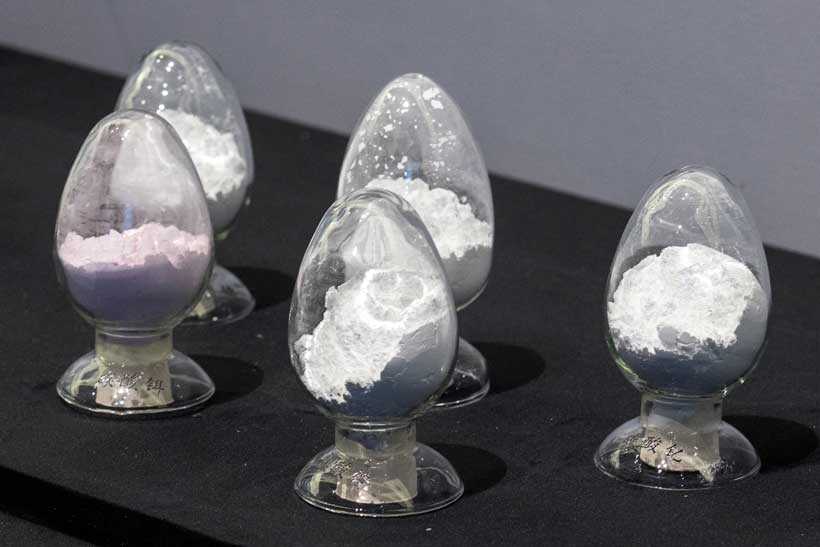
The extended package involves more than a handful of rare-earth materials. It includes licensing controls on five rare earths—holmium, erbium, thulium, europium and ytterbium—alongside restrictions involving foreign-made magnets and targets containing Chinese-origin rare earths, processing equipment and technology, high-energy lithium batteries, synthetic graphite anode materials and superhard materials.
The breadth of these controls illustrates why the issue cannot be reduced to a conventional bilateral trade dispute. Critical materials sit at the foundation of advanced manufacturing, energy technologies, electronics, industrial machinery and strategic production capabilities. Restrictions affecting their availability can travel through supply chains, influencing production costs, procurement strategies, investment decisions and the competitiveness of downstream industries.
China’s decision to maintain the suspension offers immediate relief. But the limited extension means that the relief is accompanied by a deadline. The question facing industrial economies is no longer merely whether China will restrict exports, but how long the current arrangements will remain in place.
This introduces a different kind of pressure. Manufacturers may not experience an immediate shortage, yet uncertainty itself can influence their decisions. Businesses that depend on reliable access to specialised materials must account for the possibility of regulatory changes, alternative sourcing costs and disruptions to production. Even without an actual embargo, the possibility of restrictions becomes part of the commercial environment.
Supply control is not the only source of power
The conventional understanding of economic coercion focuses on the direct denial of supply. An export ban, tariff or licensing restriction creates an identifiable disruption, allowing affected countries to respond through diplomatic pressure, countermeasures or alternative sourcing.
But the power to manage uncertainty can be equally consequential. When a supplier controls a critical resource and the future terms of access remain uncertain, dependent economies are forced to make decisions under conditions they cannot fully control. They may delay investments, maintain additional inventories, seek alternative suppliers or reconsider the economics of industrial projects.
Such uncertainty is particularly significant in industries where replacing suppliers is neither immediate nor inexpensive. Supply chains are built around specialised production capabilities, established commercial relationships, technical standards and infrastructure. Diversification requires time, investment and coordination. The existence of alternative sources does not automatically mean that those sources can replace existing supply at competitive prices or at the scale required.
China’s short extension therefore preserves its ability to influence the strategic calculations of other countries without necessarily triggering the economic and diplomatic consequences of an immediate confrontation. The suspension prevents an immediate escalation while leaving the underlying instrument of pressure intact.
The challenge for Western industrial policy
For the United States, Europe and other industrial economies, the episode reinforces the urgency of developing resilient supply chains for critical minerals. Yet diversification is easier to announce than to accomplish.
Reducing dependence on concentrated supply requires investment in mining, processing, refining, manufacturing, technological innovation and infrastructure. It also requires commercial viability. New facilities must compete on cost, quality and reliability, while governments must determine how much public support is justified for industries whose strategic value may exceed their immediate profitability.
This is where the rare-earth dispute exposes a broader weakness in Western economic strategy. Governments increasingly recognise the security implications of dependence on critical materials, but building alternative supply chains involves long timelines, regulatory hurdles, capital-intensive projects and coordination across countries and industries. Strategic vulnerability cannot be eliminated through political declarations alone.
A temporary export-control suspension may provide breathing space, but it cannot substitute for structural investment. If governments treat every extension as a victory rather than an opportunity to accelerate diversification, they risk becoming accustomed to a cycle in which immediate relief repeatedly postpones difficult adjustments.
The danger is not necessarily that China will abruptly cut off every critical material. It is that dependent economies may continue to organise their production around assumptions of access that remain politically contingent.
Beijing’s leverage and the limits of economic diplomacy
China’s approach also demonstrates the changing nature of economic diplomacy. Trade agreements and temporary suspensions are not merely mechanisms for resolving disputes; they can become instruments for managing strategic relationships over time.
By extending the suspension for a limited period, Beijing avoids the immediate consequences of renewed restrictions while retaining flexibility over future decisions. This does not, by itself, establish China’s precise intentions. The ministry’s brief announcement offered no explanation for the duration of the extension. Nevertheless, the structure of the decision has a clear strategic implication: access remains subject to a continuing policy timetable rather than being secured through a durable settlement.
This gives diplomacy a recurring character. Governments and businesses cannot assume that the issue has been resolved simply because restrictions have been temporarily suspended. They must continue to monitor negotiations, prepare contingency plans and assess the possibility of policy changes.
Such a strategy can also carry risks for China. The more uncertain international buyers perceive their access to critical materials to be, the stronger the incentives to invest in alternative sources, technologies and supply arrangements. Economic leverage can influence the behaviour of dependent countries in the short term, but its prolonged use may encourage them to reduce dependence in the long term.
The balance between leverage and lost markets is therefore not straightforward. China may retain considerable influence over existing supply chains, but the strategic value of that influence depends partly on how other economies respond.
The real lesson of the January deadline
The rare-earth suspension should not be interpreted as a permanent resolution of the critical-minerals dispute. Nor should the short extension automatically be treated as evidence that another confrontation is inevitable. Its significance lies in the uncertainty it leaves behind.
The emerging contest over critical minerals is about more than who possesses the resources. It is about who controls processing capacity, industrial expertise, market access and the ability to make supply reliable over time. In this contest, predictability is itself an economic asset.
China’s two-month extension offers the global economy temporary stability while preserving the possibility of renewed pressure. For countries seeking industrial security, that is an important distinction. A truce can prevent immediate disruption, but it cannot eliminate structural dependence.
The strategic question for the world’s industrial economies is whether they will use this window to build resilience or simply wait for the next extension. The January deadline may be temporary. The lesson it carries is not.