
Editorial
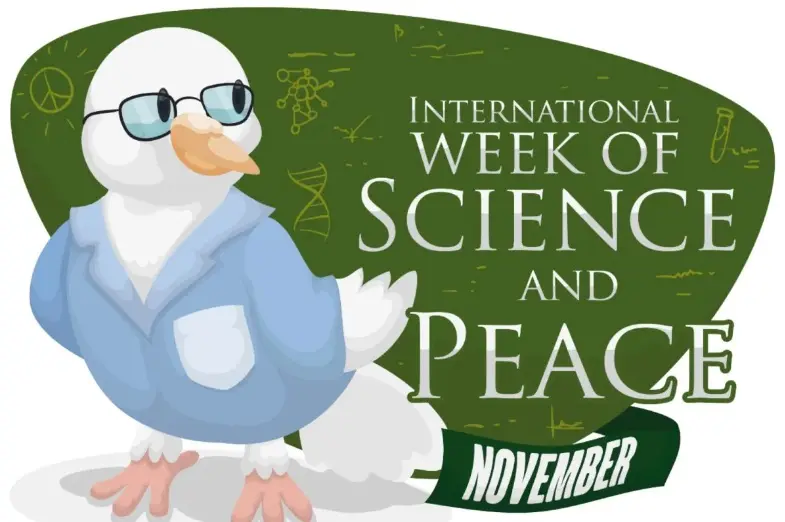
The International Week of Science and Peace is an annual observance that aims to promote the role of science in advancing peace and development in the world. It was first observed in 1986 as part of the International Year of Peace and later proclaimed by the United Nations General Assembly in 1988. The week coincides with the World Science Day for Peace and Development, which is celebrated on 10 November every year.
The week provides an opportunity for scientists to share their research and discoveries with the public and to foster international cooperation and collaboration among scientific communities. It also highlights the ethical and social responsibilities of scientists and the need to uphold the values and principles of the UNESCO Recommendation on Science and Scientific Researchers.
The week raises awareness of the importance and relevance of science in our daily lives and the potential of science to address the global challenges we face, such as climate change, health, poverty, and education. It also encourages the public to engage in scientific debates and activities and to develop a critical and informed understanding of scientific issues. It also underscores the role of science in promoting peace and security and in preventing and resolving conflicts.
The week supports the achievement of the Sustainable Development Goals (SDGs), which are a set of 17 global goals that aim to end poverty, protect the planet, and ensure peace and prosperity for all by 2030. Science is essential for the implementation and monitoring of the SDGs, as it provides the evidence, innovation, and solutions needed to tackle the complex and interrelated problems that affect humanity and the environment. It also empowers people and communities to participate in the decision-making processes that affect their lives.
Please, subscribe to the monthly magazines of republicpolicy.com
Lastly, the International Week of Science and Peace is a significant observance that celebrates the contributions of science to peace and development and fosters a culture of science and scientific literacy among the public. It also calls for the support and protection of science and scientists and the promotion of international cooperation and dialogue in science. By linking science more closely with society, the week aims to ensure that science serves the common good of humanity and the planet. Accordingly, Pakistan should also implement the day’s objectives in letter and spirit.
Please, subscribe to the YouTube channel of republicpolicy.com