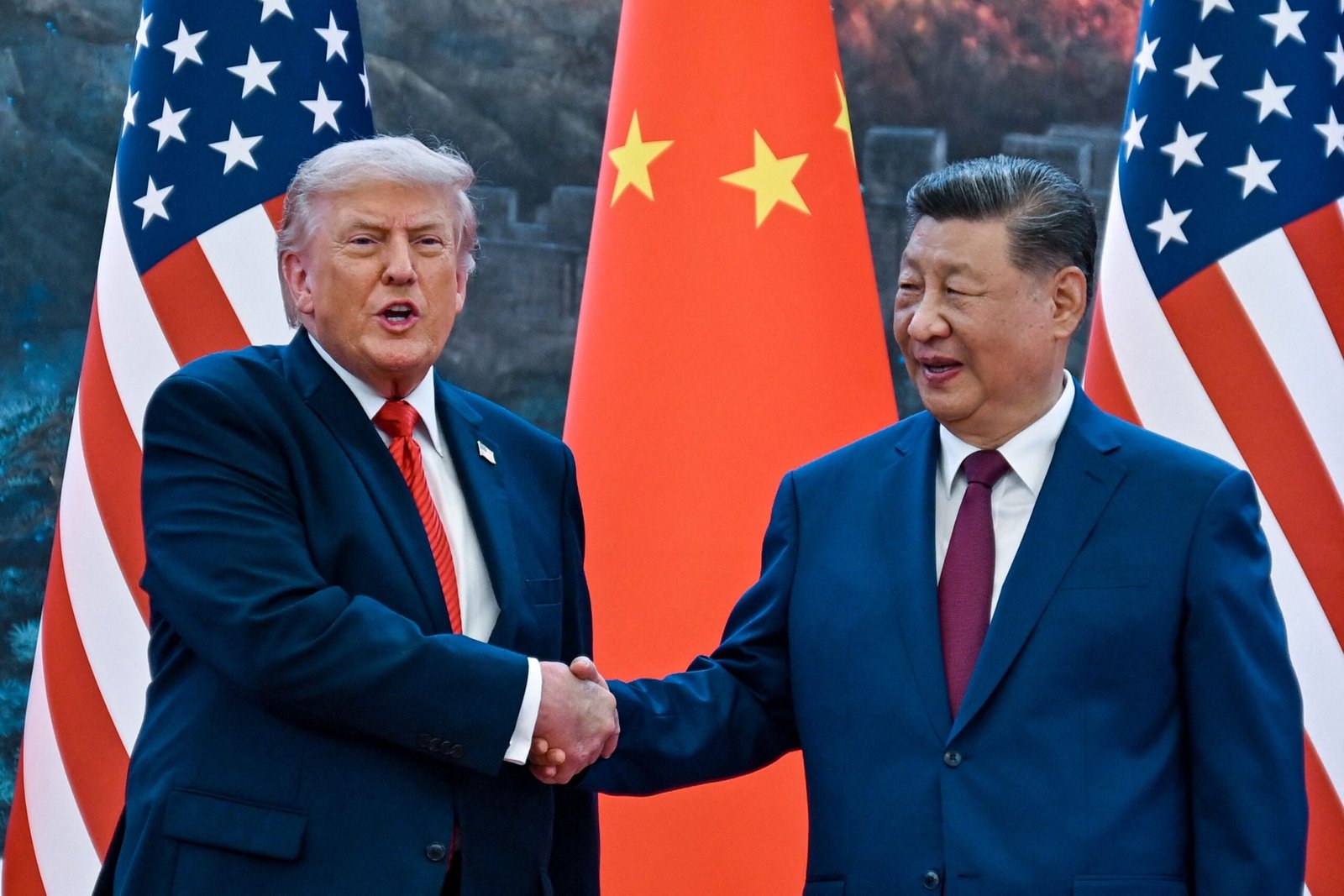

Donald Trump arrived in Beijing with America’s corporate titans in tow and departed with little more than a lavish banquet and a Boeing deal far below anyone’s expectations. The much-anticipated summit between Trump and Xi Jinping has confirmed what seasoned observers of US-China relations long suspected: Washington has quietly retreated from its maximalist position, and Beijing has emerged the steadier power.
A year ago, the Trump administration imposed 145 percent tariffs with revolutionary ambition, threatening to reshape the entire architecture of global trade. Today, those tariffs have been quietly walked back, the demands for structural reform in China’s economy have disappeared from official statements, and Washington cannot even summon the political will to extend its own leverage through sanctions on Chinese banks. This is not diplomacy. This is capitulation dressed in the language of pragmatism.
Xi Jinping, by contrast, appears entirely comfortable with what he calls “constructive strategic stability” — a phrase that, translated honestly, means China has successfully absorbed the pressure and returned the relationship to a manageable equilibrium on its own terms. Beijing held firm on critical minerals, refused unilateral concessions, and watched Washington blink.
The summit produced nothing on China’s industrial overcapacity, nothing on the Indo-Pacific military buildup, and nothing on AI chip access that Washington’s own hawks privately celebrated as a bullet dodged. Even the war in Iran, which has rattled global markets, failed to extract any meaningful Chinese commitment.
America’s executives flew to Beijing and came home with photo opportunities. The American people were promised transformative leverage over China; they received agricultural agreements and a partial aircraft order. When a summit’s most honest defence is that it “projected stability,” something has gone profoundly wrong. Stability built on retreat is merely postponed defeat.