
Tariq Mahmood Awan
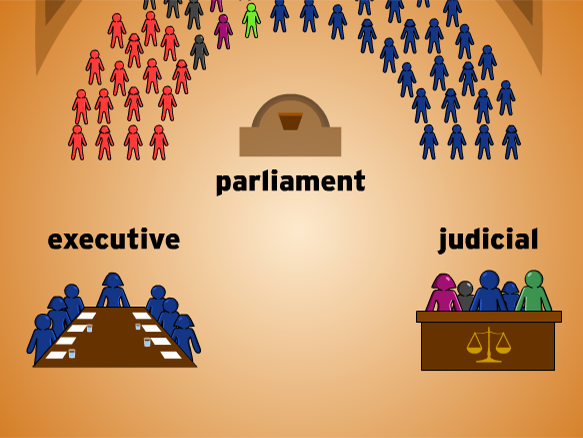
The parliamentary form of government, also known as Westminster democracy, stands as a distinct pillar among democratic systems. Unlike its counterpart, the presidential system, it fosters a unique interplay between the executive and legislative branches, weaving a complex tapestry of structures, foundations, and procedures. Let’s embark on a critical exploration of this intricate system.
Foundations:
- Parliamentary Sovereignty: The cornerstone of this system lies in the supremacy of the legislature, often referred to as Parliament. This body holds the ultimate power to make laws, scrutinize the government, and even dismiss it through a vote of no confidence.
- Fusion of Powers: Unlike the separation of powers in a presidential system, the parliamentary system allows for a degree of fusion. The executive emerges from the legislature, with the Prime Minister and Cabinet members being drawn from elected representatives. This fosters closer collaboration and accountability.
- Party Politics: Political parties play a pivotal role. The party with the majority in the lower house (usually the House of Commons) forms the government, with its leader becoming the Prime Minister. This creates a clear line of responsibility and accountability.
Structures:
- Head of State vs. Head of Government: The parliamentary system often distinguishes between the ceremonial head of state (e.g., King or Queen) and the head of government (Prime Minister). While the head of state holds symbolic power, the Prime Minister wields the real political authority.
- Parliament: This bicameral body typically comprises an upper house (e.g., House of Lords) and a directly elected lower house (e.g., House of Commons). The lower house holds greater power, including the ability to pass laws and initiate no-confidence votes.
- Cabinet: This group of senior ministers, chosen by the Prime Minister, heads various government departments and collectively makes key decisions. They are accountable to the Parliament and can be removed through a vote of no confidence.
Procedures:
- Elections: Regular elections are held, allowing citizens to choose their representatives in the Parliament. The party or coalition securing the most seats forms the government.
- Formation of Government: The leader of the majority party becomes the Prime Minister and appoints a Cabinet. This team works together to develop and implement policies.
- Lawmaking: Parliament is responsible for drafting and passing legislation. The government presents bills, which are debated and voted upon by parliamentarians.
- Accountability: The executive is accountable to the legislature through various mechanisms, including question sessions, committee hearings, and no-confidence votes. If the government loses a no-confidence vote, it must resign or call for new elections.
Critical Analysis:
The parliamentary system offers several advantages. It fosters close collaboration between the executive and legislature, leading to potentially more efficient decision-making. Additionally, the constant threat of a no-confidence vote keeps the government accountable to the people’s representatives. However, this system also has its downsides. The dominance of the majority party can lead to concerns about minority rights and representation. Additionally, the Prime Minister’s power can be significant, potentially raising concerns about unchecked authority.
The parliamentary system, with its intricate structures, foundations, and procedures, represents a distinct approach to democratic governance. While it offers numerous advantages, it is crucial to critically examine its potential drawbacks and ensure a balance between power and accountability. By understanding its nuances, we can engage in informed discussions about the effectiveness and potential improvements of this complex system.
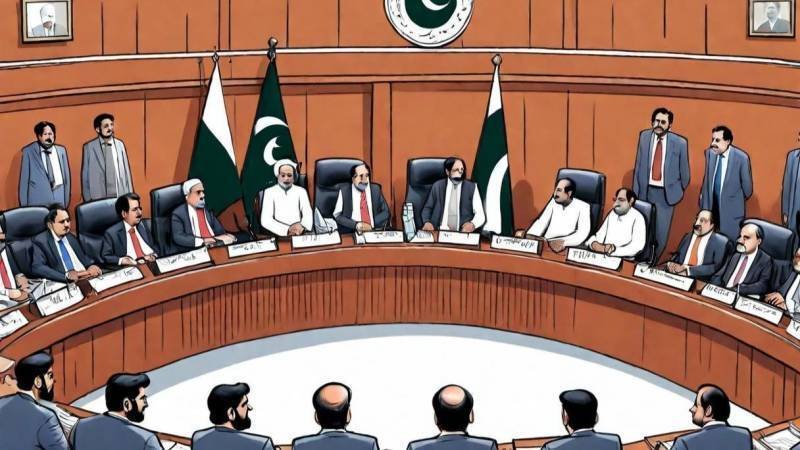
Pakistan operates under a federal parliamentary system, a unique blend of the Westminster model and features tailored to its specific needs. However, like any system, it faces both strengths and weaknesses that necessitate critical evaluation and potential reform. Let’s delve into the intricate details of Pakistan’s parliamentary system and explore avenues for its enhancement.
Structures and Procedures:
- Bicameral Parliament: Pakistan has a bicameral legislature comprising the National Assembly (lower house) and the Senate (upper house). The National Assembly holds more power, with members directly elected by citizens.
- Executive Branch: The Prime Minister, chosen by the majority party in the National Assembly, leads the Cabinet and holds significant executive authority. The President serves as a symbolic head of state.
- Judiciary: An independent judiciary, with the Supreme Court at its apex, safeguards fundamental rights and interprets the Constitution.
- Federalism: Pakistan is a federation, with power divided between the federal government and provincial governments.
Strengths:
- Popular Representation: Direct elections for the National Assembly ensure citizens’ voices are heard through their chosen representatives.
- Accountability: The Prime Minister and Cabinet are answerable to the National Assembly, fostering accountability and responsiveness.
- Separation of Powers: The division between the executive, legislature, and judiciary provides checks and balances against undue concentration of power.
- Federalism: Power distribution between the federal and provincial governments caters to diverse regional needs and aspirations.
Weaknesses:
- Dominant Party System: The tendency towards a two-party system can marginalize smaller parties and voices, potentially hindering inclusivity and diverse perspectives.
- Instability: Frequent no-confidence motions can create political instability and hinder long-term policy implementation.
- Weak Institutions: Challenges like corruption and inadequate resource allocation can weaken the effectiveness of key institutions like the judiciary and accountability mechanisms.
- Imbalances in Federalism: Concerns exist regarding unequal resource distribution and decision-making power between the federal and provincial governments.
Strengthening the System:
- Electoral Reforms: Introducing proportional representation or mixed electoral systems can ensure greater representation of diverse voices and political parties.
- Strengthening Institutions: Investing in capacity building, transparency, and accountability mechanisms can empower institutions like the judiciary and anti-corruption bodies.
- Empowering Provinces: Implementing true devolution of power and resources to the provincial level can address concerns about federal overreach and promote regional autonomy.
- Building Consensus: Fostering dialogue and collaboration among political parties can promote stability and consensus-building on key national issues.
Pakistan’s parliamentary system, though facing challenges, remains a dynamic framework for governance. Recognizing its strengths and weaknesses is crucial for undertaking reforms that enhance its effectiveness. By addressing issues like political instability, institutional weaknesses, and imbalanced federalism, Pakistan can pave the way for a more robust, inclusive, and accountable parliamentary system that serves the needs of its diverse population. Therefore, it is critical for the federation of Pakistan to continue with the parliamentary system of governance for effective federalism and governance.