
Fajar Khan Niazi
The newest security assessment released by the Pakistan Institute for Conflict and Security Studies (PICSS) tells a story that no citizen of this country can afford to read casually. It is a story written in numbers, and every number represents a life extinguished, a family broken, a soldier who will not come home. July 2026, according to this assessment, was the bloodiest month the country has endured all year. Two hundred and five people lost their lives, among them one hundred and twelve members of the security forces. In response, the state’s forces killed four hundred and one militants in counter-terrorism operations across the country. These are not abstract statistics. They are the measure of a war that continues to be fought on Pakistani soil, against Pakistani citizens, by enemies who have shown no sign of retreating.
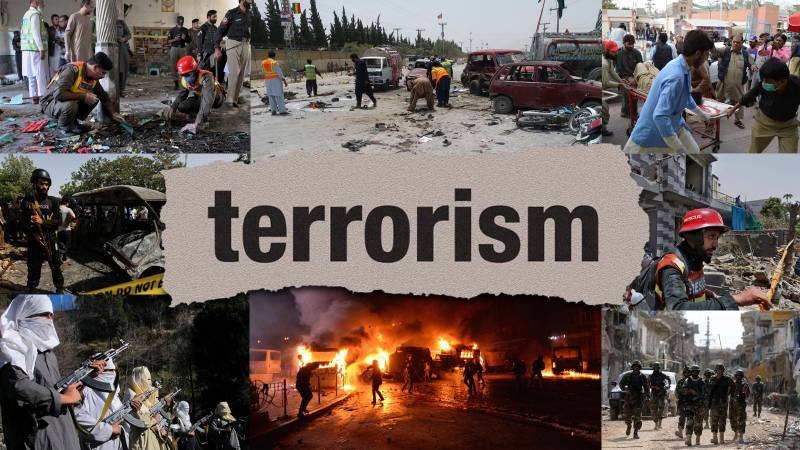
Before the country had time to process the weight of these figures, tragedy struck again. On August 2, in Swat, a suicide bomber walked into a crowd gathered near Kabal police station and detonated his explosives. At least twenty-four people were killed. They were not soldiers on a battlefield. They were ordinary citizens, gathered peacefully to protest against the lawlessness that has crept back into their region. That such a protest itself became the target of an attack speaks to something deeply troubling: even the act of demanding safety has become dangerous in parts of this country. Taken together, the numbers from July and the horror of Swat point to an unavoidable truth. Terrorism remains, without exaggeration, one of the gravest threats to Pakistan’s national survival.
What should worry policymakers most is not simply the scale of the violence but its geography and its methods. The sharpest increases have come from Baluchistan and Khyber Pakhtunkhwa, provinces that have borne the heaviest cost of this long conflict. The tactics on display, suicide bombings, vehicle-borne explosives, improvised explosive devices, and kidnappings for ransom, reveal something the state cannot ignore: these are not the desperate last acts of a defeated insurgency. They are the calculated operations of networks that retain both the capability and the logistical depth to strike when and where they choose. Years of sustained military pressure have degraded these networks but have not broken them.
There is a temptation, understandable but mistaken, to treat the elimination of four hundred and one militants as the defining achievement of the month. It is a genuine accomplishment, and it reflects real capability within Pakistan’s security apparatus. But a nation cannot measure success purely by the body count of its enemies while its own losses remain so staggering. When one hundred and twelve security personnel are killed in thirty days, when two dozen unarmed protesters can be slaughtered in a single blast, the ledger cannot be called balanced simply because the other side lost more.
The soldiers who died in July deserve more than solemn statements and ceremonial wreaths. They were fighting under brutal conditions against an adversary that keeps changing its methods, and that courage has to be met with something more durable: a national strategy that actually keeps pace with the threat. That means sharper intelligence gathering, real coordination between agencies that too often work in isolation from one another, modern equipment for police and paramilitary forces who are frequently outgunned, and operational responses fast enough to prevent attacks rather than merely avenge them.
The deaths of civilians and peace committee volunteers carry their own bitter lesson. It is ordinary Pakistanis, not just uniformed personnel, who continue to pay the price of this war. Security analysts have made an important point that deserves more attention than it usually receives: sanctuaries across the border in Afghanistan matter, but they are only part of the equation. These groups also depend on facilitators, financiers, and recruitment pipelines operating inside Pakistan itself. Cross-border havens cannot be wished away, but neither can the domestic networks that make these attacks possible be allowed to persist unchallenged.
This is why Pakistan’s counter-terrorism posture must shift decisively from reaction to prevention. Intelligence-led operations, serious threat analysis, tighter control of border crossings, and genuine cooperation between the military, police, and civilian intelligence services should form the backbone of national policy, not its afterthought. The National Action Plan, drafted with much fanfare years ago, needs to be implemented with the seriousness it was always meant to have, free from the political point-scoring that so often derails institutional coordination in this country.
Pakistan has survived worse before, and its people have shown a resilience that few nations could match. But resilience is not a strategy, and it cannot substitute for one against an enemy that keeps adapting. The grim toll of July and the bloodshed in Swat are not isolated events to be mourned and forgotten. They are warnings. The country’s security forces have already shown their resolve, often at the cost of their lives. What remains is for the state to match that sacrifice with sharper intelligence, real institutional coordination, and a strategy determined to stay ahead of those who seek to spread fear across this land.
The best-selling books of Republic Policy Think Tank, including the landmark book The Bureaucratic Coup, are available at Vanguard Books, Liberty Books, Readings, Kitab Sarai, Sang-e-Meel, Saeed Book Bank Islamabad, National Book Foundation, and others across Pakistan. Contact for home delivery: 0300 9552542.