
Democrats prepare to use their new congressional majorities to scrutinise the Trump administration, challenge its policies and demand accountability. The president acknowledges the electoral defeat but signals that he may cooperate with the opposition, provided it does not pursue what he calls destructive politics.
WASHINGTON: Democrats Turn Midterm Victory into a Challenge for Trump as Republicans Face a Major Congressional Setback
Democrats have pledged to use their sweeping victories in the November 3 midterm elections to place new limits on President Donald Trump’s political and legislative agenda, setting the stage for a potentially difficult final two years of his presidency. With control of both chambers of Congress shifting to the opposition, Washington is preparing for a period in which investigations, legislative confrontations and negotiations could define the relationship between the White House and Capitol Hill.
The election results marked a major setback for Republicans, who had entered the midterms with control of Congress and the presidency. Democrats secured a majority in the Senate, winning at least 54 seats against the Republicans’ 44, while gaining at least 30 seats in the House of Representatives. Senate contests in Alaska and Mississippi remained undecided on Wednesday morning, leaving open the possibility that the Democratic majority could expand further.
The outcome means Trump will face a Congress controlled by Democrats in both chambers for the first time during his political career as president. The shift is particularly significant because the president had presented the midterm elections as a public judgment on the first half of his second term, repeatedly urging Republican supporters to treat the contest as though his own name were on the ballot.
Democratic leaders now intend to turn their electoral gains into a programme centred on the cost of living, government accountability and closer scrutiny of the administration. Their challenge will be to demonstrate that control of Congress can produce practical results for voters while also holding the president and his administration politically accountable.
Democrats promise affordability and accountability
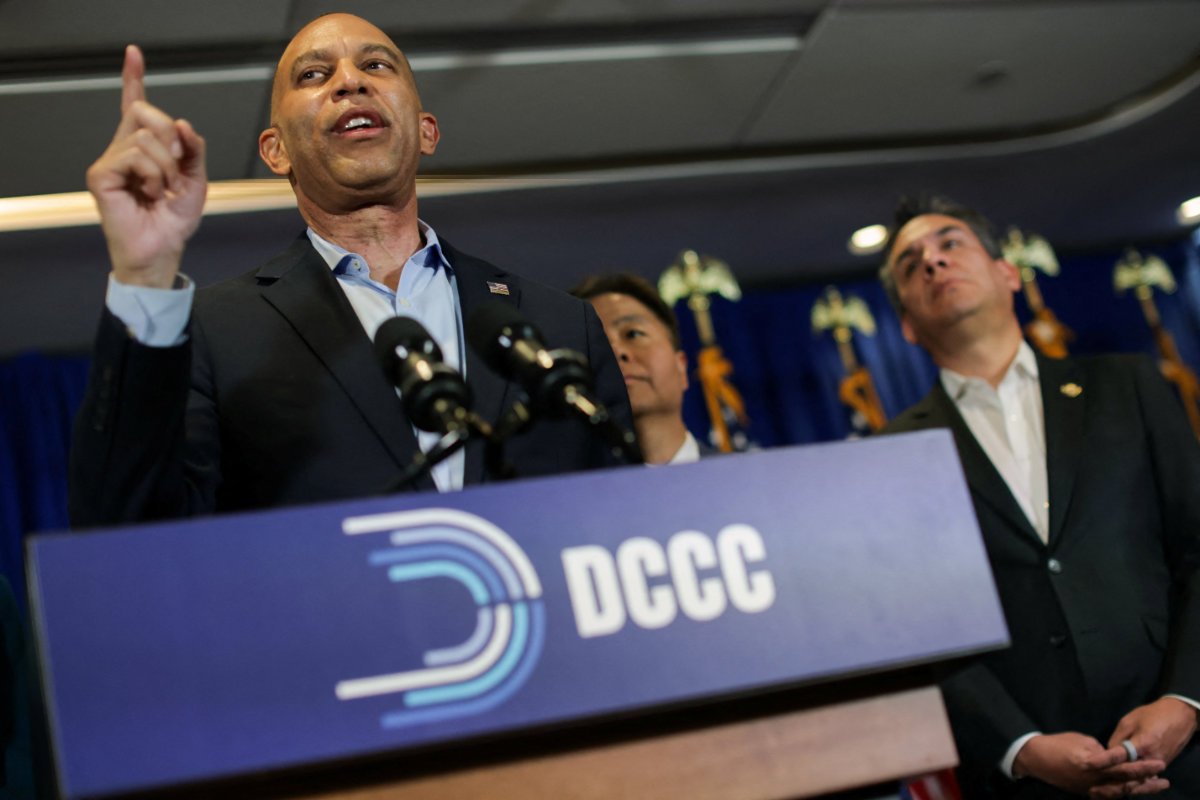
House Democratic Leader Hakeem Jeffries, who is expected to become the first Black Speaker of the House, said the incoming majority would no longer allow the House of Representatives to function as an extension of the Trump administration.
Speaking to reporters on Wednesday, Jeffries said Democrats worked for the American people rather than the president. He identified affordability and accountability as the central priorities of the new congressional majority.
His remarks signalled a clear change in the relationship between Congress and the White House. Under Republican control, the House had generally provided the administration with legislative support. With Democrats preparing to take charge, the president is likely to face greater resistance to his proposals and more sustained scrutiny of his decisions.
The Democratic victory has also raised expectations among voters who supported the party over concerns about household expenses, economic pressures and the consequences of the war with Iran. Democratic leaders will now be under pressure to translate those concerns into legislative action rather than treating the election result as an achievement in itself.
New York City Mayor Zohran Mamdani, who has become a prominent figure in the Democratic Party since his election a year ago, urged party leaders to respond directly to the everyday concerns of voters. In a social media video, he called on Democrats to address rising prices and the need for better schools and roads.
Mamdani argued that winning political power was not enough; the party would have to use its position to deliver tangible improvements. His message reflected a wider challenge facing Democrats: maintaining the coalition that produced their electoral gains by demonstrating that their priorities extend beyond opposing Trump.
Trump accepts defeat but signals possible cooperation
Trump’s first public appearance after the Republican defeat offered a striking contrast to the political developments unfolding in Washington. Rather than delivering an extended assessment of the election results, the president invited reporters to view the ballroom under construction at the White House.
The appearance came after he had devoted his final public engagement before the election to discussing renovations to the Lincoln Memorial Reflecting Pool. On Wednesday, he again focused much of his attention on the White House’s physical transformation.
Trump defended the ballroom project against criticism, describing the White House as the ultimate symbol of the United States and arguing that it should be maintained to the highest standards. He said working on the building was relaxing for him.
The president addressed the election outcome only briefly during the nearly hour-long appearance. He indicated that he would probably be able to work with Democrats, unless they pursued what he described as destructive actions. He also pointed to his presidential veto power as a means of resisting legislation he opposed.
His comments suggested that the White House may be prepared for selective cooperation, but the new congressional balance of power is likely to make disagreements over policy and oversight unavoidable. Democrats will have greater authority to shape the legislative agenda, conduct investigations and block certain presidential appointments. Trump, meanwhile, will retain the executive powers of the presidency, including the ability to veto legislation.
The resulting relationship could produce negotiations on areas of shared interest, but it could also lead to prolonged disputes over major policy decisions.
Iran war and living costs weigh on Republicans
The election results reflected widespread dissatisfaction with the administration, particularly over the economic consequences of the war with Iran and the rising cost of living.
Democrats made affordability a central theme of their campaigns, arguing that Trump’s policies had increased financial pressure on American households. They criticised tariffs on imported goods and linked the war with Iran to higher costs, while also raising questions about the financial gains made by members of the president’s family since his return to the White House.
The war became one of the most contentious issues of the campaign. Voters in several traditionally Republican areas moved towards Democratic candidates, reflecting frustration over the conflict and concern about its economic consequences.
Trump acknowledged that the war had contributed to his party’s losses, although he continued to defend his decision to launch the military action. His admission was significant because the president had repeatedly urged voters to view the election as a judgment on his leadership.
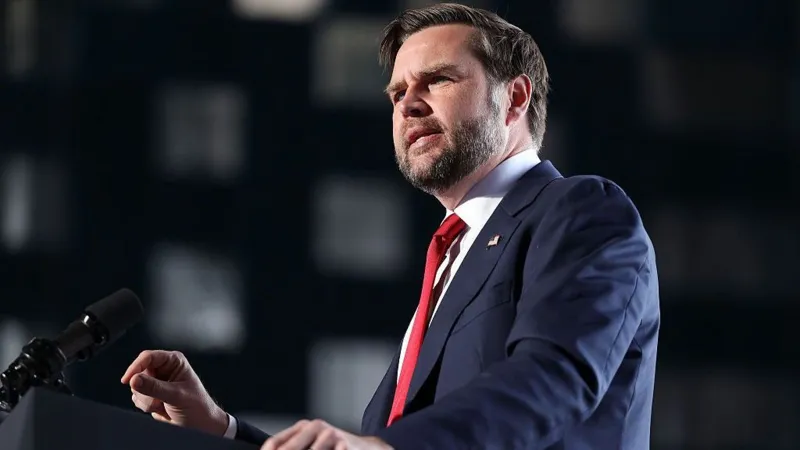
Vice President JD Vance offered a more direct assessment of the political damage. In a lengthy social media post, he attributed the Republican defeat to the war with Iran, arguing that the decision had carried a substantial political cost. He challenged supporters of the military action to explain whether they considered the loss of the Senate an acceptable price.
Vance’s remarks exposed an important debate within the Republican Party over the consequences of the conflict. While Trump defended his decision, the vice president’s comments placed the war at the centre of the party’s post-election assessment.
Historic losses in Republican strongholds
The Democratic gains were particularly notable because they extended into states that had strongly supported Trump in the 2024 presidential election.
Texas, the largest state governed by Republicans before the midterms, produced one of the most consequential results. Democrats ended a decades-long losing streak by winning their first Senate seat in the state since 1988. They also defeated three-term Governor Greg Abbott, marking a major political reversal in a state that had long been central to Republican electoral strength.
Kansas elected its first Democratic senator since the Great Depression, nearly a century ago. In South Carolina, another traditionally Republican state that Trump had carried by almost 18 percentage points in 2024, Democrats defeated the Senate candidate personally backed by the president.
These results demonstrated the geographical reach of the Democratic gains. The party did not rely exclusively on victories in its established strongholds. It also made substantial progress in conservative states, where economic concerns and opposition to the war appeared to weaken Republican support.
According to vote tallies compiled by Reuters and USA Today, Republicans lost ground in 99 per cent of approximately 2,100 counties where most ballots had been counted by Wednesday morning. Although county-level results do not by themselves determine the national political picture, the figures illustrated the breadth of the shift towards Democrats.
Senate majority could reshape Washington
The unresolved Senate races in Alaska and Mississippi remained important as the final balance of power was assessed. With Democrats already holding at least 54 seats against 44 for Republicans, victories in both remaining contests could increase their majority to 56-44.
The new majority will give Democrats considerable influence over the Senate’s agenda. Once the incoming lawmakers take their seats in January, they are expected to use their position to investigate the administration, including its policies, officials, family connections and political allies.
The Senate will also have a decisive role in considering presidential nominations. A Democratic-controlled chamber could block or delay Trump’s nominees for senior government positions. The issue could become particularly consequential if a vacancy arises on the US Supreme Court, where the court’s composition has significant implications for the country’s legal and constitutional direction.
The election has already prompted renewed discussion about the future of the court’s conservative majority, particularly in relation to its two oldest members, Justices Clarence Thomas and Samuel Alito. The Democratic victory has intensified questions about the long-term political and institutional balance of the judiciary, although any change would depend on developments within the court itself.
The new Congress will not take office immediately. Republicans retain control during the remaining period before the new lawmakers are sworn in, creating a legislative window in which the outgoing majority may seek to advance its priorities.
One important issue will be legislation to fund the federal government beyond December. Because government funding requires congressional action, the measure could become a major point of negotiation during the so-called lame-duck period. Republicans may attempt to use their remaining time in control to secure conservative policy objectives before Democrats assume their new positions.
Republican leadership faces internal pressure
The scale of the defeat has also unsettled Republican leadership in the House. Speaker Mike Johnson announced that he would not continue leading the Republican caucus next year, adding another dimension to the party’s post-election difficulties.
The leadership change comes as Republicans prepare to move from controlling the House to operating as the minority party. Their immediate challenge will be to determine how to respond to Democratic investigations, legislative initiatives and efforts to hold the administration accountable.
The defeat has also exposed disagreements over the direction of the Republican Party. Trump’s decision to attack Iran, the economic impact of the conflict and the administration’s handling of domestic concerns are likely to remain subjects of internal debate.
Florida Governor Ron DeSantis described the results as an exceptionally severe setback for Republicans, comparing the outcome to an extinction-level event. His remarks reflected the extent of concern among some Republican figures about the party’s performance.
Republicans had campaigned against Democratic positions on transgender rights and other social issues, portraying the opposition as radical. However, the results suggested that economic concerns, including household costs and the consequences of the Iran war, had greater influence on many voters than the social issues emphasised by Republican candidates.
Historic breakthroughs for Democrats
The election also produced several historic victories that could reshape the political representation of different communities in the United States.
Abdul El-Sayed, a Democrat associated with the party’s rising left wing, won Michigan’s open Senate seat, defeating Republican Mike Rogers, who had entered the race with Trump’s support. El-Sayed became the first Muslim elected to the United States Senate, marking a significant milestone in the country’s political representation.
In Georgia, Democrat Keisha Lance Bottoms won the governorship, becoming the first Black woman elected governor in American history. Her victory represented another historic development in a state that has become increasingly important in national politics.
New Mexico also elected Deb Haaland as governor, making her the first Native American woman to hold the office. The result added to a night of political breakthroughs for candidates from communities that have historically been underrepresented in the country’s highest elected positions.
These victories, alongside the party’s gains in the Senate and House, gave Democrats both a stronger congressional position and a series of symbolic milestones.
A difficult two years ahead
The midterm results have fundamentally changed the political environment in which Trump will govern during the remaining two years of his term. Democrats will enter Congress with the authority to investigate the administration, shape legislative priorities and challenge presidential nominations. Republicans, meanwhile, will have to adjust to minority status in both chambers while managing internal disagreements over the reasons for their defeat.
For Trump, the new congressional balance will make it harder to advance his agenda without negotiations with the opposition. His veto power remains an important instrument, but it does not remove the need to work with a Congress that will now be controlled by Democrats.
For Democrats, the electoral victory brings its own risks. Voters who supported the party over affordability, accountability and the war with Iran will expect visible results. The new majority will need to show that it can address those concerns while exercising its oversight responsibilities.
The election has therefore created a new phase in American politics: a Republican president facing a Democratic-controlled Congress, with economic pressures, the war with Iran and questions of government accountability at the centre of the national debate.
Whether the coming two years produce meaningful cooperation or sustained political deadlock will depend on how both parties use their powers. What is already clear is that the midterm result has ended the period in which Trump could rely on Republican control of Congress to advance his legislative agenda with limited opposition.